By Lucia Mutikani
WASHINGTON, Feb 26 (Reuters) – The average rate on the popular U.S. 30-year fixed-rate mortgage fell below 6% this week for the first time in 3-1/2 years, but economists said the improvement was likely temporary and on its own insufficient to boost housing demand unless supply increased.
The 30-year fixed mortgage rate averaged 5.98%, the lowest level since September 2022, from 6.01% last week, mortgage finance agency Freddie Mac said on Thursday. It averaged 6.76% during the same period a year ago.
The drop followed a decline in the benchmark 10-year U.S. Treasury yield after the U.S. Supreme Court on Friday struck down President Donald Trump’s sweeping tariffs, which he had pursued under a law meant for use in national emergencies.
Trump swiftly imposed a 10% global tariff for 150 days to replace some of the emergency duties, before raising the rate to 15% over the weekend. The 30-year fixed-rate mortgage tracks the 10-year Treasury yield.
“This legal tug-of-war has triggered a flight to safety among investors, pushing bond prices higher and yields lower, helping mortgage rates settle around 6%,” said Jiayi Xu, an economist at Realtor.com. “However, as this week’s decline stems from market volatility rather than fundamental economic data, more supportive economic data is needed to establish a consistent trend.”
Trump ordered the Federal Housing Finance Agency – which oversees Freddie Mac and another mortgage finance giant Fannie Mae – to purchase $200 billion of bonds issued by the two companies to help lower the cost of home loans.
But the average rate on the 15-year fixed-rate mortgage increased to 5.44% this week from 5.35% in the prior week. It averaged 5.94% during the same period a year ago.
SUPPLY IS KEY FOR THE HOUSING MARKET
Economists are skeptical that mortgage purchases will significantly improve housing affordability.
Minutes of the Federal Reserve’s January 27-28 policy meeting published last week, describing a briefing by a New York Fed official responsible for implementing monetary policy, noted that plans by the administration to buy mortgage bonds had caused “a notable decline in mortgage-backed securities yields relative to those on comparable-maturity Treasury yields.”
Despite that move in the market, the official “observed that the decline was unlikely to result in a material increase in mortgage refinancing because current mortgage rates are well above the weighted average rate of outstanding mortgages,” the minutes said.
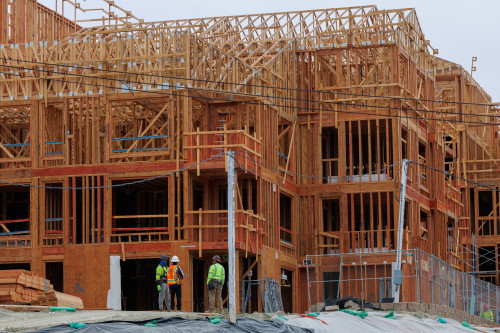
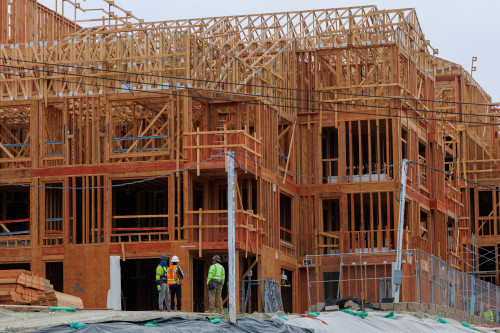
Trump is under pressure to bring down costs, including for housing, as he and his fellow Republicans face a tough battle to retain control of the U.S. Congress in this year’s mid-term elections. Economists and policymakers say a dearth of properties for sale, especially starter homes, was weighing on the housing market.
The inventory of previously owned houses is well below its pre-pandemic level. Many homeowners hold mortgages with rates below 5%, creating what has been called a rate-lock.
Though supply improved last year, progress has stalled. There have been reports of homeowners pulling their houses off the market because of lower prices. House prices increased 1.8% in the 12 months through December after climbing 2.1% in November, the Federal Housing Finance Agency said on Tuesday.
Economists and trade groups say the Trump administration’s trade and immigration policies, which have raised prices for building materials and appliances and undercut labor supply, were constraining builders’ ability to break ground on new single-family housing projects. Building lots are also scarce amid state and local government regulations.
Still, the slowdown in the 30-year fixed mortgage rate could encourage some potential sellers to list their homes, and draw prospective home buyers into the market.
“While buying power has already increased $30,000 from last year, mortgage rates below 6% could be an important psychological threshold,” said Kara Ng, senior economist at Zillow. “Round numbers matter, and that headline alone could prompt many sidelined buyers to take another peek at the housing market.”
(Reporting by Lucia Mutikani, additional reporting by Michael S. Derby and Saeed Azhar; Editing by Chizu Nomiyama and Mark Porter)