By Ragini Mathur
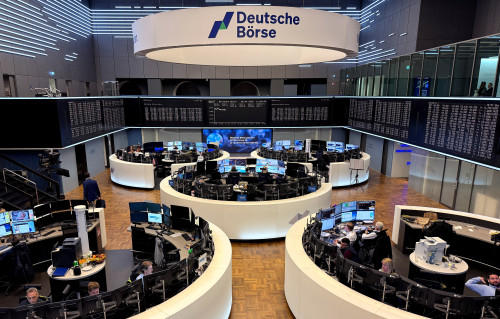
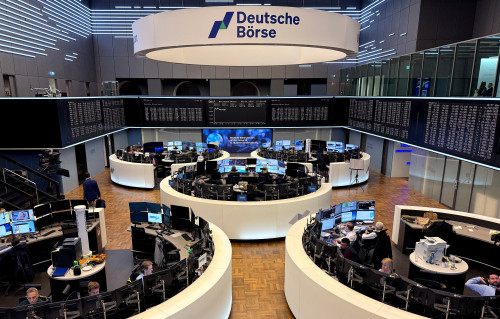
April 9 (Reuters) – European shares pulled back on Thursday, after their strongest rally in more than four years, as investors grew cautious about the durability of the fragile U.S.-Iran ceasefire and its implications for oil prices and global inflation.
The pan-European STOXX 600 index was down 0.6% at 609.59 points, as of 0838 GMT.
Regional bourses mirrored the move, with Germany’s DAX down 1.3%, while France’s CAC 40 <.FCHI> fell 0.7%.
European markets surged on Wednesday on news of a two-week ceasefire agreement in the Middle East, sparking optimism that oil and gas shipments through the strategically crucial Strait of Hormuz might soon resume normal operations.
However, that optimism faded quickly as Israel continued military operations in Lebanon on Wednesday, prompting Iran to warn it would be “unreasonable” to pursue permanent peace negotiations under such circumstances.
Meanwhile, U.S. President Donald Trump warned of a major escalation in fighting if Tehran failed to comply.
“Volatility remains stable, but the impulse is to backtrack on some of Wednesday’s moves as traders remain concerned about the passage of tankers through the Strait of Hormuz,” said Kathleen Brooks, research director at XTB.
European markets have been particularly under pressure since February when the conflict began restricting passage through the critical chokepoint, given the continent’s heavy reliance on oil imports.
On the day, the industrial sector losses weighed the most, down 1%.
Travel, banks and technology stocks all traded in the red, after logging strong gains in previous session.
Luxury sector plunged 2.3%.
On the flip side, the energy sector led the gains with 0.9% rise, as oil prices rose on the day. [O/R]
“The fact that the oil price has not broken back above $100 per barrel could be a sign that investors remain hopeful of a breakthrough in the coming days, or at least firmer foundations for the ceasefire to take hold,” Brooks added.
Despite the ceasefire, oil prices remain about 40% above pre-conflict levels, raising concerns that an inflationary surge will soon be reflected in economic data. Investors are now awaiting the release of U.S. Personal Consumption Expenditures (PCE) data later in the day for further insights into inflation trends.
Meanwhile, euro zone government bond yields edged higher after Wednesday’s sharp pullback, as market participants reassessed the durability of the U.S.-Iran ceasefire.
Though traders scaled back expectations for European Central Bank rate hikes following Wednesday’s ceasefire announcement, they still anticipate two quarter-point tightening moves before year-end.
(Reporting by Ragini Mathur in Bengaluru; Editing by Rashmi Aich)