April 27, 2026
The Trade War Nobody Actually Planned For
How US-China tariffs cracked the market — and what comes next
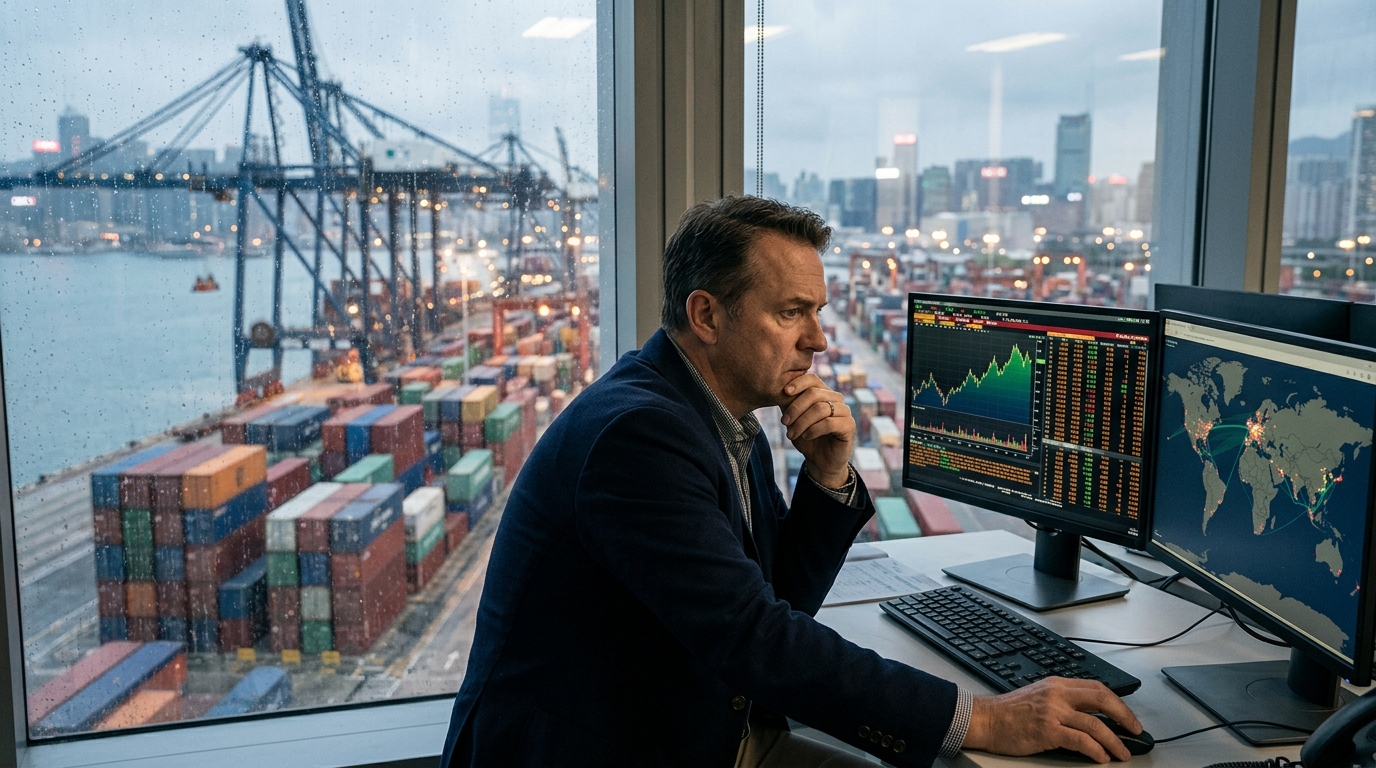
April 2nd. That’s the date that changed the math for a lot of portfolios this year.
I’ve Rarely Seen This With Silver
This combination – 20% dividends + 68% share appreciation – never happens with silver. But it is now possible thanks to a new ETF that delivers the best of worlds.
Trump called it “Liberation Day.” A 10% baseline tariff on virtually every country in the world, with a massive 145% rate locked onto China specifically. Markets had been bracing for something. Nobody was bracing for that. On April 2, 2025, President Trump declared a national economic emergency and announced sweeping new import tariffs — a baseline 10% on all foreign goods, with a 145% rate on products from China.
Below is an important message from one of our highly valued sponsors. Please read it carefully as they have some special information to share with you.
Dear Reader,
After years of research into Elon Musk’s critical technology projects, I have pinpointed an incredible opportunity off the back of his coming Starlink IPO…
An IPO set to break records as the biggest in history.
This opportunity is a single stock – revealed FREE – in this quick three-minute video.
I’m talking about a company that could absolutely explode in 2026.
On its face, it’s a chip manufacturer. They’re a dime a dozen in today’s AI age, right?
But here’s what sets this company apart:
Over the past decade, it has shipped 5 billion chips to Starlink. And they’ve said themselves that that number could double to 10 billion chips before the decade’s up.
I believe this virtually ensures that these two companies are locked into a long-term marriage…
Meaning as Starlink grows – this company will have to grow alongside it.
Here’s the best part.
Today, this company trades for less than 30 bucks.
Making it easily accessible for anyone to invest as soon as possible…
Before a potential Starlink IPO announcement on June 9.
Because of the fast-moving nature of this opportunity, I’m skipping the preamble – and giving you the ticker 100% free of charge in the video below:

Sincerely,
James Altucher
Editor, Paradigm Press
I’ve Rarely Seen This With Silver
This combination – 20% dividends + 68% share appreciation – never happens with silver. But it is now possible thanks to a new ETF that delivers the best of worlds.
The response was fast and ugly.
Hurry Before the Bell Rings
Med-X is gearing up for a Nasdaq listing (MXRX)-but the real opportunity is now, before Wall Street takes notice. Their all-natural Nature-Cide pesticides are already on shelves at e-commerce giants like Walmart, Amazon, and Kroger, with $6.4M in revenue and expansion into 41+ markets.
As climate, regulation, and consumer demand drive a $17B industry toward natural solutions, Med-X is positioned to lead. Shares are just $4.00 through a limited Reg A+ offering.
Don’t wait for the headlines-[Review the Med-X investment opportunity today]
The S&P 500 dropped 15% in under a week. The Nasdaq was down nearly 20% for the year by April 7. That’s not a correction. That’s a regime shift in sentiment. China responded almost immediately — tariffs on US imports jumped to 125%, and restrictions were placed on the export of rare earth elements, materials essential to global manufacturing.
Here’s the thing about rare earths — it’s easy to gloss over that detail. But those materials run through semiconductors, defense tech, EV batteries, wind turbines. China restricting exports there isn’t just a trade move. It’s a pressure point on the industries that define the next decade of growth. That part of the story doesn’t get enough attention.
Why markets hate this so much
It’s not just the tariffs themselves. It’s the uncertainty they create. Trade wars inject a lot of uncertainty into the economy — will more tariffs follow? Will other countries retaliate? That kind of unpredictability causes companies to delay investments and hiring, while consumers may start pulling back on spending.
Dear Reader,
‘Get me out.’
That’s how one trader described the recent panic that’s gripped the market.
And not just because of the war in Iran, which has brought huge volatility to every corner of the markets.
No… a much bigger permanent shift is playing out – driving some stocks down 80%, even as some hedge funds make billions of dollars in profits.
And it’s about to turn the stock market upside down, with huge consequences.
My name is Rob Spivey.
More than a decade ago, I co-founded a private research group called Valens Research.
Today, all the top 10 biggest money managers in the world now come to us for our research, including JPMorgan Chase, Goldman Sachs, BlackRock, and Fidelity.
But today, I’m reaching out to you to explain what’s really happening in the stock market today is directly connected to what I believe is the biggest and most important financial breakthrough ever.
It’s the reason the greatest investor of all time, Warren Buffett, made 5,000,000% returns… through every market condition imaginable.
And now (with Buffett stepping back), it’s bringing huge change to the stock market.
The next six months could see even more huge gains AND massive losses.
I show you exactly where to move your money right here.
In fact, I want to give you the name and ticker of one stock you can buy today to set yourself up for big returns this year, even if the wider market continues to suffer.
Get the name and ticker right here.
Best wishes,
Rob Spivey
Research Director, Altimetry
P.S. You won’t have to pay a single cent to get access to the ticker I want to share with you today – it’s all detailed in THIS presentation.
And then there’s valuation. Stock valuations were already elevated heading into 2025, with the market trading at 22 times forward earnings — well above the 16.5 average over 1990 to 2024. “When you have those elevated valuations, the market will be more sensitive to bad news.” So the kindling was already there. The tariff announcement was just the match.
A trade war often prompts investors to rotate out of stocks into safer assets like bonds or gold. This “risk-off” sentiment can cause broader market declines, especially in cyclical sectors like technology, energy and industrials, which are more sensitive to global trade. We saw exactly that playbook run in real time.
Then came the whipsaw. On April 9, Trump announced a 90-day pause on new tariffs for most countries — explaining it by saying people were getting “a little bit yippy,” his way of describing nervousness in the markets. The S&P 500 on Wednesday posted its biggest one-day jump since 2008, but by Thursday afternoon about a third of those gains had been reversed. Two days of trading that told the whole story — total dependence on policy, not fundamentals.
The recovery came eventually. On May 12, the US and China agreed to a temporary deal — the US would cut tariffs on Chinese products to 30% and China would cut tariffs on American products to 10% minimum for 90 days. The next day, the S&P 500 turned positive for the year. The S&P 500 recovered fully from the crash on June 27, 2025.
But here’s where I’d push back on the feel-good narrative: a temporary deal is not a resolution. It’s a pause. The underlying tension — over trade imbalances, technology competition, rare earth access, Taiwan — none of that went away. Geopolitical headlines can move markets quickly, but short-term swings do not always translate into lasting changes in the economy. That cuts both ways.
What I’m watching from here
A few things matter more than the headline tariff number at this point.
- The 90-day clock. Every temporary truce has an expiration. Watch what happens when that window runs out — whether negotiations extend, collapse, or just drift. Markets will react either way.
- Rare earth restrictions. China’s move to restrict exports of critical minerals is the quieter escalation most people aren’t tracking. It hits defense, chips, and clean energy simultaneously.
- The supply chain reshuffling. Many Chinese manufacturers have already shifted assembly operations to Southeast Asian countries like Malaysia, Thailand, Vietnam, and Cambodia. That’s a permanent structural change happening underneath the trade war noise.
- Treasury holdings. China reduced its US Treasury holdings for the third consecutive month since March, lowering them to $756.3 billion — the lowest amount since March 2009. That’s a slow-moving signal worth paying attention to.
“Investors are navigating a lot of moving parts, adding the Middle East conflict to tariff uncertainty, a change in Federal Reserve leadership and midterm elections,” according to Terry Sandven, chief equity strategist at U.S. Bank Asset Management Group. That’s a fair summary of the environment. A lot of variables, and policy is driving more of them than usual.
The market recovered. That’s real. But the conditions that caused the April crash — an over-leveraged geopolitical relationship between the two largest economies, with no clear rulebook — those conditions are still in place. The next move in this story probably won’t announce itself in advance.