May 24, 2026
A Million Computers. No Electricity.
Featured: QBTS Is Moving Fast. GFS Is Getting Dragged Along.
Hey Friend,
Everyone thinks the AI trade is about chips.
They’re wrong.
The bottleneck has moved.
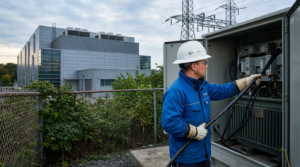
Entire data centers are sitting idle because they can’t get enough power online.
Goldman Sachs says demand is growing 15% per year – and 40% of AI facilities will be constrained by electricity shortages by 2027.
There is a company sitting on $1.5 billion in backlog orders for the exact equipment these facilities can’t operate without.
Wall Street still prices it like a sleepy industrial stock.
The math says they’re wrong.
The June SpaceX IPO will prove it.
See the math Wall Street is missing →
“The Buck Stops Here,”
Dylan Jovine, CEO & Founder
Behind the Markets
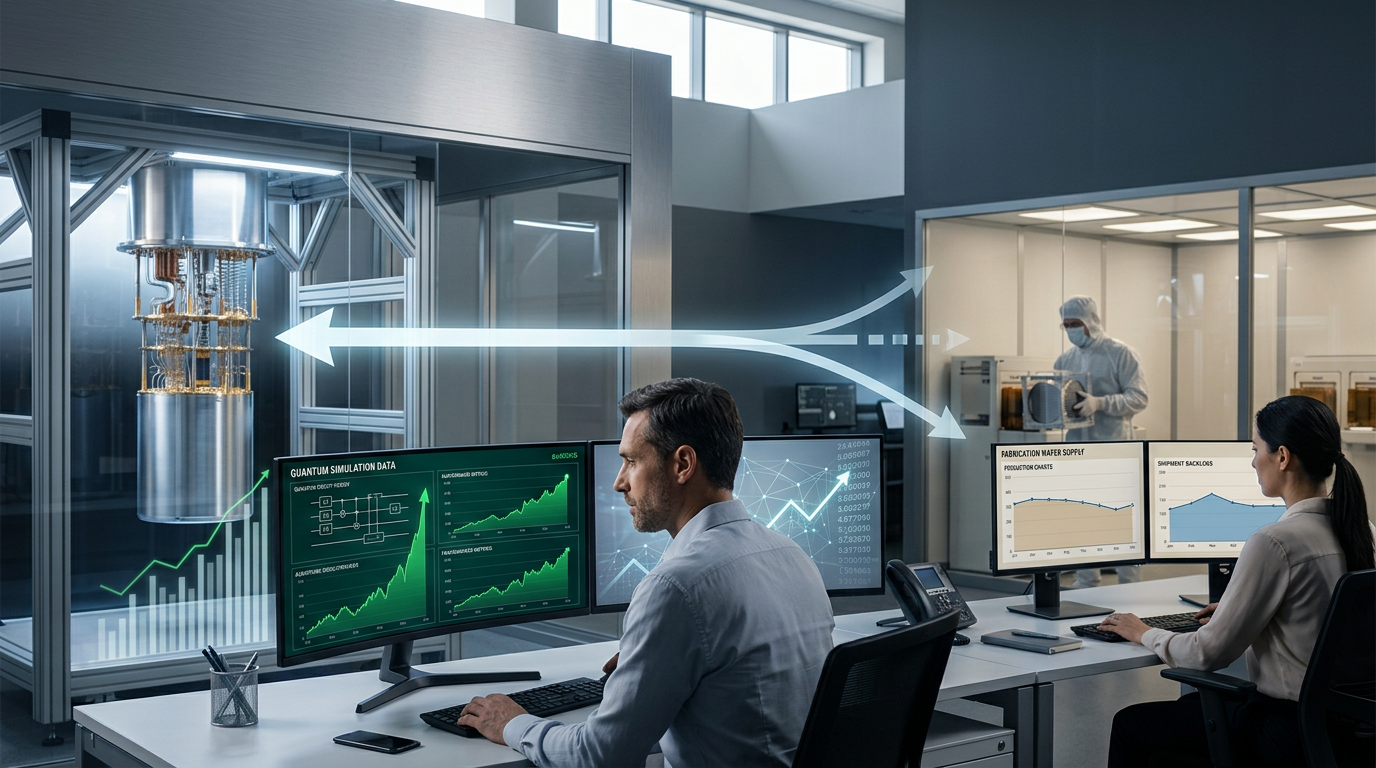
QBTS Is Moving Fast. GFS Is Getting Dragged Along.
Speculative money has a habit of doing one thing extremely well: it crowds into the most emotionally “pure” version of a theme, then it fans out into anything that looks adjacent. That’s what the quantum trade looks like right now. D-Wave Quantum (QBTS) has become a magnet, and the second-order beneficiaries are showing up as sympathetic lookups in names that can plausibly sit inside a quantum supply chain.
The facts on QBTS are worth separating into two buckets: business momentum vs. income statement reality. In its first quarter of 2026 (ended March 31, 2026), D-Wave reported record quarterly bookings of $33.4 million, up 1,994% year over year, and said cash and marketable securities were $588.4 million at quarter-end. It also reported Q1 revenue of $2.9 million and a net loss of $18.4 million (about $0.05 per share). In other words, the order flow signal is loud, while the current revenue run-rate is still small and lumpy.
That contrast is exactly why these moves can get disorderly. Bookings can accelerate faster than recognized revenue, and the market tends to price the slope before it prices the level. Sometimes that’s right. Sometimes it’s just a rush.
Now look at GlobalFoundries (GFS). If the market wants “picks and shovels,” GFS is the kind of company it reaches for because it is real manufacturing capacity with real cash flow. In Q1 2026 (ended March 31, 2026), GFS reported revenue of $1.634 billion, gross margin of 27.6% (29.0% on a non-IFRS basis), operating margin of 11.0% (16.6% non-IFRS), net cash from operations of $542 million, and adjusted free cash flow of $233 million. It also guided Q2 2026 revenue to about $1.76 billion (±$25 million) with non-IFRS gross margin around 28.5% (±100 bps).
Here’s where I’m skeptical: the “quantum supplier” label can be true in spirit while still being immaterial in dollars. GFS’s near-term results are going to hinge on mainstream end-markets and utilization, not on whether quantum enthusiasm is hot this month.
So yes, the sympathy is understandable. But traders should treat QBTS and GFS as two different instruments: one pricing optionality and capital flows, the other pricing margin durability and factory economics. When those get confused, that’s when positioning gets painful.