
June 7, 2026
OpenAi’s Backdoor
Featured: The Consumer Is Split — Here’s the Trade in MTN
From the Desk of InvestorPlace: A quick word before you read what’s below. I’ve seen a lot of IPO hype in my career. Most of it ends badly for regular investors. My colleague Luke Lango – who was once ranked No. 1 stock picker in the world by TipRanks – has a different take on how to play the OpenAI and Anthropic IPOs, and I think it’s worth two minutes of your time.
Dear Reader,
Millions of Americans are waiting for the OpenAI and Anthropic IPOs.
They think they have a plan:
Log into their brokerage account… wait for the opening bell… and buy as soon as shares start trading.
That could be exactly how ordinary investors miss the real money.
In fact, even if you get in at 9:31 a.m. – just one minute after trading begins – you may already be too late.
Because the biggest gains in tech don’t happen after the IPO frenzy begins.
They happen before.
Of course, most folks can’t get in pre-IPO. Those deals are reserved for Silicon Valley insiders, and Wall Street banks.
But a historic Pre-IPO Backdoor is open now.
And it means anyone can position themselves ahead of these historic AI IPOs.
Luke Lango
Senior Technology Analyst, InvestorPlace
P.S. Imagine the next time a friend or colleague mentions ChatGPT, you smile knowing that you own a piece of it. That’s the opportunity you have, right here and right now, with the free ticker we’re giving away. Click here to get it.
The Consumer Is Split — Here’s the Trade in MTN
The K-shaped consumer is not a theory anymore. It is showing up in the data, quarter after quarter, and the gap is widening.
Bank of America’s January 2026 Consumer Checkpoint reported card spending growth of 2.4% year-over-year for higher-income households versus just 0.4% for lower-income households. Moody’s Analytics puts it even more starkly: spending by the top 10% of households by income grew 62% between Q3 2020 and Q3 2025 — far outpacing every other income group. Meanwhile, the Philadelphia Fed’s LIFE Survey found that 58.7% of consumers earning under $40K were actively trying to reduce spending. Lower-income respondents were nearly 10 percentage points more likely than their higher-earning counterparts to report that their actual spending declined year-over-year.
Try out Musk’s new AI agent – before his big announcement
Elon just created a device he believes will be “the biggest product ever.”
He thinks it could 70x investors’ money.
And he’s about to make a major announcement… By the end of this month.
Maybe even tomorrow on X.
He’s going to make this game-changing device available to the public for the first time.
He has to sell 1 million to become a trillionaire.
Would you bet against him?
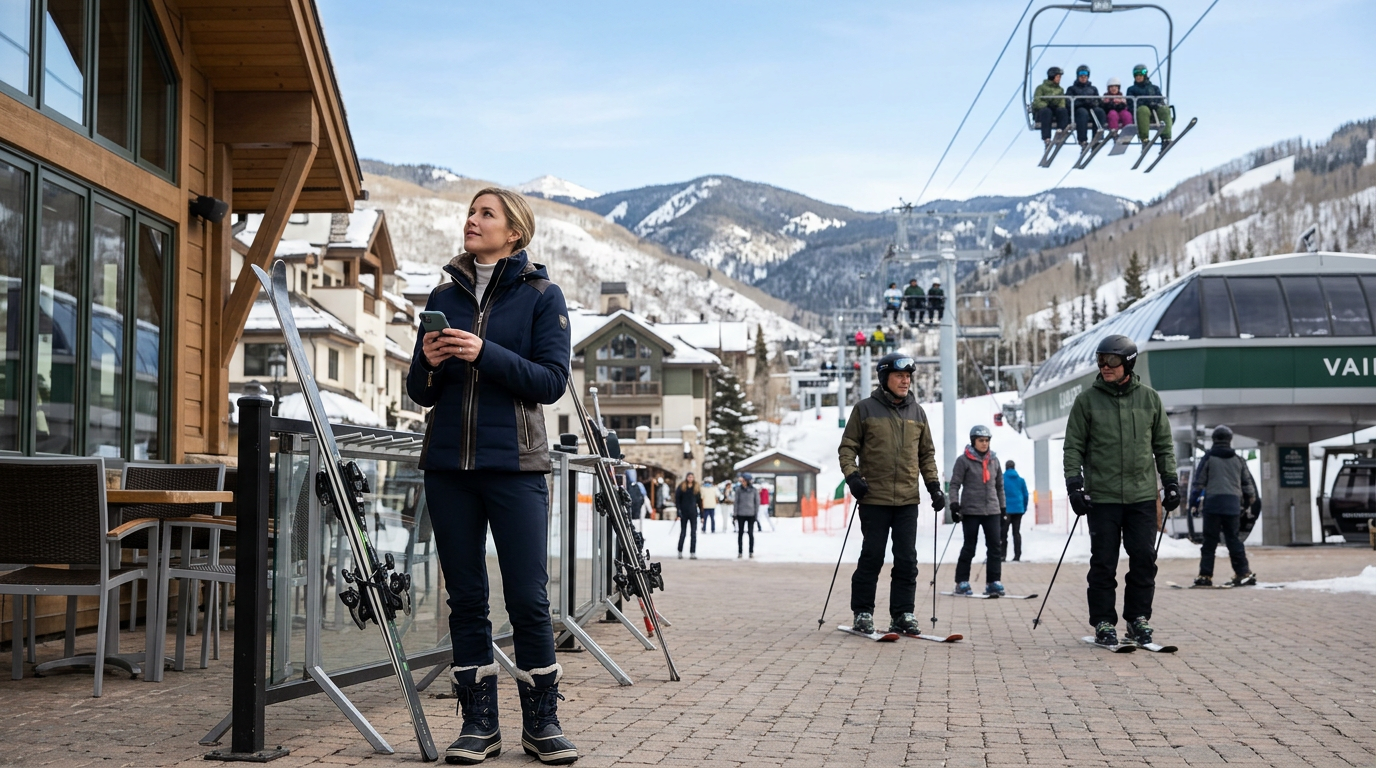
That divergence matters for how traders should think about Vail Resorts (NYSE: MTN), which reports Q3 fiscal 2026 earnings after market close on June 8.
The backdrop heading into this report is not clean. Season-to-date skier visits across MTN’s North American properties fell 14.9% year-over-year through April 19, 2026. The Rocky Mountain region — Vail’s core — saw visitation drop 25% year-over-year, the steepest decline across all regions. The company has already guided EBITDA toward the low end of its $745M–$775M full-year fiscal 2026 range, down from $844.1M in fiscal 2025. Revenue is expected to decline roughly 6.2% versus the year-ago quarter, and consensus EPS sits around $9.05 versus the $10.54 reported in Q3 fiscal 2025. MTN shares reflect much of this — currently trading near $126, well below their 52-week high of $175.51 and beneath the 200-day moving average of $149.20.
Here is the part worth separating out: the visitation decline is largely weather-driven. Snowpack in the Rockies hit historic lows this season. That is a temporary variable. What matters structurally for the premium leisure thesis is whether pass revenue and high-ticket spend held up when conditions were poor. MTN’s Q2 showed lift revenue declined only approximately 3% despite a 13% drop in visitation — a sign that pricing power at the high end remains largely intact. Tenured pass holders — Vail’s most loyal, highest-spending segment — renewed at a higher rate year-over-year through the April sales deadline.
Visa’s 2025 affluent travel analysis found that households earning over $200K account for as much as one in every four dollars spent on travel globally, despite being a small fraction of the population. The 2025 Luxury Travel Report by Preferred Hotels and Resorts put average planned leisure trips among affluent travelers at eight per year. These are the pass holders and destination resort guests Vail is selling to. They do not cut the ski trip when gas prices tick up. They cut it when the mountain is brown.
Apple just told us where the next decade of tech is headed
Apple’s appointment of a hardware engineer to CEO signals that the next wave of innovation will be built around devices. Immersed is already ahead of that trend with software and hardware designed to improve productivity. More than 1.5M professionals already use Immersed, with many spending up to 60 hours per week on the platform. Shares now available at $0.79 through a Reg A+ offering.
See Why 8,000+ Investors Bought In
Disclosure: This is a paid advertisement for Immersed Regulation A+ offering. Please read the offering circular at invest.immersed.com
What traders are watching in Monday’s report: pass sales trajectory for fiscal 2027 (early data showed a moderate unit decline and a slight decline in sales dollars through April 12), any management commentary on booking trends heading into next season, and whether cost discipline — which saved $37M in fiscal 2025 — continues to offset revenue softness.
The stock is priced for continued pressure. The question is whether the weather-impacted season obscures a structurally sound pass business — or whether weaker early pass sales signal something more durable about demand at the high end.
That answer comes Monday after the close.