June 22, 2026
JUNE 30: Trump’s Next Big Buy?
Featured: Vistra Just Joined the AI Arms Race
Below is an important message from one of our highly valued sponsors. Please read it carefully as they have some special information to share with you.
June 30:
Your Last Day to Invest Before
Trump’s Next Big Buy?
Hi, it’s Jim Rickards.
And you have just a few days remaining to position yourself ahead of what I believe…
Is the greatest wealth-building opportunity of Trump’s second term.
As soon as June 30…
The federal government is expected to make a policy decision…
That could shock financial markets to their core.
Unleashing a massive wealth reserve that I’ve estimated could be worth up to $2.7 trillion in value.
It contains billions of pounds of precious elements and minerals that President Trump needs to solve nearly every item on his agenda.
And incredibly, a tiny company trading just for $2 per share owns 100% of it.
We’ve seen the Trump administration take a direct stake in multiple businesses just like this…
Generating returns as high as 407% in a single week.
But this?
This is the greatest prize of them all.
And I believe you may only have a few days remaining to stake your claim before this opportunity expires.
I’ve outlined the full details here.
It’s a short a video walking you through the entire situation…
And how a single $50 investment gives you a stake worth of up $177,133 of this business’ “crown jewel”.
I realize this must sound absurd. But I walk through the exact math here.
June 30 is coming.
Are you going to sit on the sidelines…
And miss what could be the most asymmetric investing setup in American history?
Or take action?
Click here and make your decision.
Jim Rickards
Editor, Paradigm Press
FEATURED
Vistra Just Joined the AI Arms Race
On June 11, 2026, something happened that most investors in the energy sector probably underreacted to.
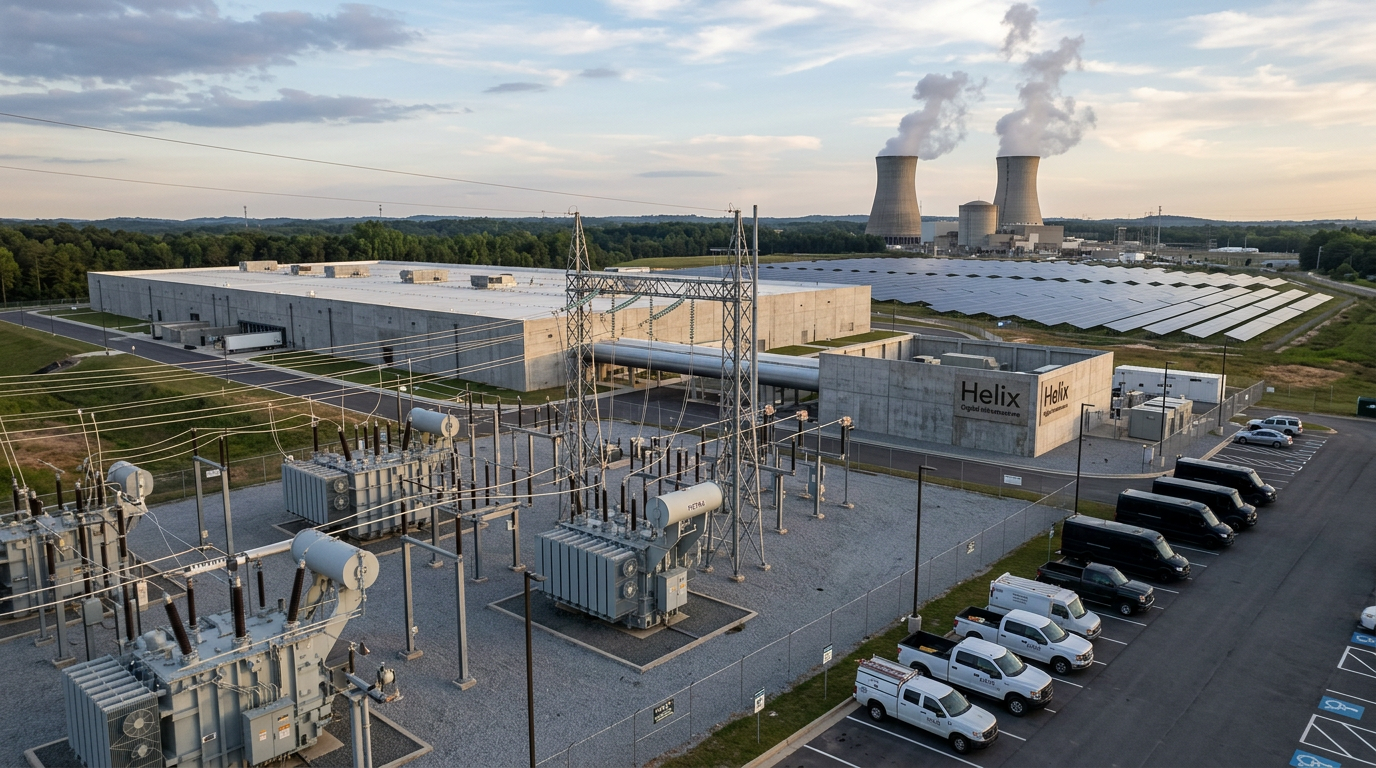
KKR, together with Nvidia, the Kuwait Investment Authority, and Vistra Corp., launched a new company called Helix Digital Infrastructure. A venture designed to deliver integrated infrastructure at the speed and scale required for hyperscalers to meet accelerating AI demand. It launched with more than $10 billion in long-duration capital commitments. Former Amazon Web Services CEO Adam Selipsky is leading it.
Vistra wasn’t just invited to the table. It was named the preferred power provider.
Let that sit for a second. The company now sits at the intersection of the largest infrastructure buildout in modern history. And the stock is trading roughly 27% off its 52-week high of $219.82.
A “Record Number” of Private Jets Spotted in California
On one night this February, 600 private jets flew out of a single California city. The same night Elon Musk spent millions to send a message to 125 million Americans. Most people have no idea the two are connected. But Wall Street veteran Whitney Tilson says they are, and that what happened that night is the most important financial signal he’s seen in years.
What Vistra Actually Is
Vistra is the largest competitive power producer in the United States. It operates a portfolio of natural gas, nuclear, coal, solar, and battery energy storage facilities, serves approximately 5 million retail customers, and currently runs a generation fleet of approximately 44,000 megawatts. With the pending Cogentrix acquisition, that number grows further. It generates revenue from selling wholesale power, retail electricity contracts, and related trading activities.
The company posted operating revenues of $5.64 billion in Q1 2026, up roughly 43% from the same period a year earlier. GAAP net income came in at $1.029 billion for the quarter. Ongoing Operations Adjusted EBITDA for Q1 was $1.494 billion, up roughly 20% year-over-year and nearly 85% above Q1 2024. The East segment, covering PJM and New England, posted $801 million in adjusted EBITDA, up approximately 56% year-over-year.
Management reaffirmed full-year 2026 Ongoing Operations Adjusted EBITDA guidance of $6.8 billion to $7.6 billion and Ongoing Operations Adjusted FCFbG guidance of $3.925 billion to $4.725 billion. The 2027 Adjusted EBITDA midpoint opportunity range sits at $7.4 billion to $7.8 billion. Critically, both ranges exclude any potential benefits from the pending Cogentrix acquisition targeted to close in the second half of 2026 and the long-term power purchase agreements signed with Meta at Vistra’s PJM nuclear sites.
The Nuclear Angle
Vistra has signed approximately 3,800 megawatts of nuclear power purchase agreements with two of the largest technology companies in the world. That includes a PPA with Amazon Web Services for up to 1,200 megawatts from its Comanche Peak nuclear facility, and a 20-year PPA with Meta for more than 2,600 megawatts of energy, capacity, and uprates across its PJM nuclear facilities. These contracts matter for a specific reason: nuclear generation provides baseload power, always-on, 24/7 electricity that AI data centers cannot function without.
The company’s nuclear fleet already operates at high utilization. During Winter Storm Fern in Q1 2026, the nuclear fleet ran at 100% commercial availability. And the pending Cogentrix acquisition adds approximately 5,500 megawatts of natural gas capacity across PJM, ISO-NE, and ERCOT at a net purchase price of approximately $4.7 billion, covering exactly the regions where data center power demand is most acute.
The Helix Development
The Helix venture deserves more attention than it’s getting. As building AI infrastructure becomes increasingly complex, Helix is designed to serve as a single coordination point for hyperscalers’ data center, power, connectivity, and related needs. Nvidia’s role is to support deployment of AI factory-aligned infrastructure with a focus on maximizing tokens per watt and reducing total cost of ownership.
Vistra’s role is simpler but arguably more essential: keep the lights on. It was named Helix’s preferred power partner, a meaningful positioning signal given Helix’s stated mandate and committed capital base.
That’s a different kind of visibility than a typical utility contract provides. Worth thinking about what that means for revenue visibility two or three years out.
One Ticker = Pre-IPO Access to America’s New Startup Giant.
You don’t need millions. You don’t need insider access.
Just follow 3 simple steps and you could own a stake in one of the most disruptive companies in history – before the IPO.
Credit and Capital Returns
There’s a balance sheet dimension worth noting. Fitch upgraded Vistra to investment grade BBB- in March 2026, following S&P’s upgrade in December 2025. That’s the second major credit rating agency to make the move, and it triggered fallaway provisions in senior secured debt agreements, releasing liens on assets and structurally reducing Vistra’s cost of capital heading into its next phase of growth.
The company has repurchased approximately $6.3 billion in shares since November 2021, retiring roughly 169 million shares at an average cost of approximately $37 per share. That share count reduction is significant. In the first four months of 2026, it deployed about $525 million in share repurchases and returned roughly $600 million to shareholders including the dividend. Management has said it has visibility to more than $10 billion in cash generation across 2026 and 2027 combined, with approximately $1.475 billion in repurchase authorization still remaining.
The Risks
Not everything is clean here. Regulatory risk around power pricing in PJM is real and worth tracking. PJM proposals to cap electricity prices have already contributed to a sharp near-term sell-off, erasing roughly $6.6 billion in market value over a six-day stretch in recent weeks. Insider selling has also drawn attention. Gas price volatility is a secondary risk given the fuel mix. And the leverage expected at the close of the Cogentrix deal introduces some near-term balance sheet pressure.
These aren’t reasons to dismiss the stock. They’re part of why it’s trading where it is and why a gap exists between the operating results and the current price.
What the Numbers Imply
Based on the midpoint of 2026 guidance, Vistra is not an expensive stock for a company with contracted nuclear revenues, an investment-grade balance sheet, a preferred power position in a $10 billion AI infrastructure venture, and guidance that doesn’t yet include its next major acquisition. Morgan Stanley carries an Overweight rating with a $212 price target as of May 21, 2026. Seaport Research raised its target to $230 on June 15. The broader analyst consensus clusters around the low $230s, with a median target near $230.50 across 18 analysts and a Strong Buy consensus rating as of mid-June 2026.
Vistra projects annual load growth of 5% to 6% in ERCOT and 2% to 3% in PJM through 2030, driven by data centers, industrial electrification, and hyperscaler demand. Management has been consistent on this point for nearly two years. The Helix launch gave it institutional weight.
Most Traders Get Earnings Wrong – Here’s a Different Approach
Many traders try to predict earnings and get burned.
This strategy waits until after the news is released, then looks for specific momentum signals.
Learn why some investors prefer this approach today.
The stock sits roughly 27% off its 52-week high. The business just posted a record Q1. The Cogentrix close hasn’t happened yet. The Meta PPAs aren’t in the guidance yet. There’s a case worth reviewing before any of that changes the picture.
This editorial is for informational purposes only and does not constitute investment advice. All data referenced is sourced from publicly available company filings, earnings calls, press releases, and analyst reports as of June 2026. Past performance is not indicative of future results. Investors should conduct their own due diligence before making any investment decisions.