July 1, 2026
Burry Just Shorted CAT at the Top
168% in 52 weeks. Now the valuation is the only argument that matters.
First a note from Brownstone Research
Dear Reader,
While everyone was distracted with the recent SpaceX IPO…
Elon Musk quietly filed a patent with the U.S. Patent and Trademark Office to protect what I believe will be his next breakthrough…
Something he called “the greatest tech invention in history.”
Elon is predicting this new AI breakthrough will unleash…
A $1 quadrillion new wealth wave.
That’s more than 30 times bigger than the entire U.S. economy.
And just to give you an idea of how much wealth we’re talking about…
That would be enough to send a check for $2.8 million to every single American.
Click here to see the details because I believe this invention will make a lot of people rich.
We have so much to look forward to,
Jeff Brown
Founder & CEO, Brownstone Research
FEATURED
Burry Just Shorted CAT at the Top
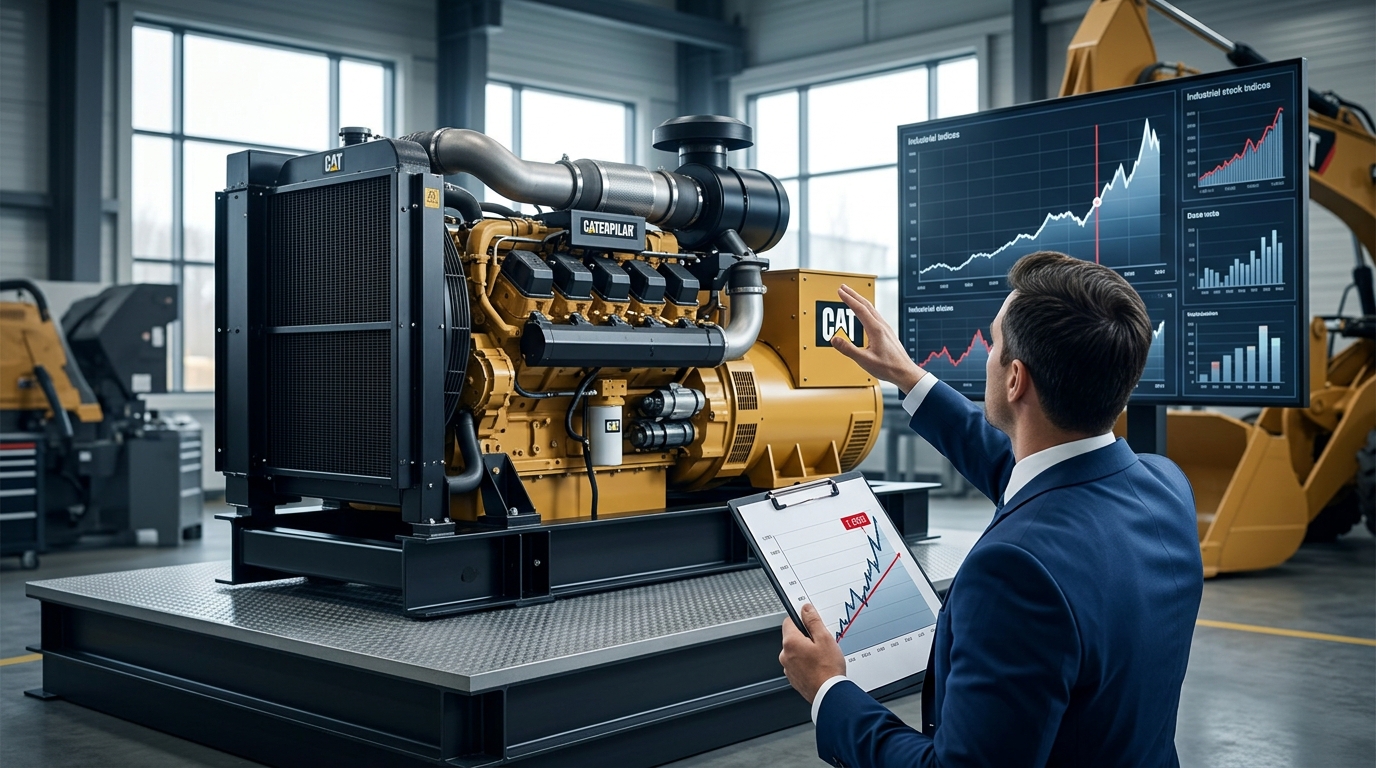
On June 30, Caterpillar hit an all-time intraday high of $1,073.46. That same day, Michael Burry disclosed he was shorting it. First time he’s ever done that on CAT. He entered at $1,060.98 and cited the price-to-sales ratio sitting at a 30-year high. You can agree with him or not. But the timing is hard to ignore.
The stock is up 168% over the past 52 weeks. 86% in the first half of 2026 alone. It’s now one of only a handful of Dow components with a price above $1,000. That run happened for real reasons, and the business behind it is genuinely strong. That’s actually what makes this interesting.
Earnings are confirmed for August 4.
Here’s where I’m at on this. Q1 2026 revenue came in at $17.4 billion, up 22% year-over-year. Adjusted EPS of $5.54 beat consensus by nearly a full dollar. The order backlog hit a record $63 billion, up 79% year-over-year. Power Generation sales jumped 48% in Q1, and management connected that directly to data center demand on the earnings call. They raised the full-year 2026 outlook to low double-digit growth, lifted the quarterly dividend 8% to $1.63 per share, and returned $5.7 billion to shareholders in Q1 alone through buybacks and dividends. Wells Fargo raised its price target to $1,155. Baird is at $1,165. Evercore ISI is at $1,103. By every operational measure, this is a business firing on all cylinders.
A 64% Dividend from Gold?
One little-known fund tied to gold is quietly delivering 64% Yields – paid monthly. And almost no one is talking about it.
Click here to discover the secret gold income fund before the next payout.
And yet the stock trades at roughly 49x trailing earnings and somewhere between 39x and 41x forward, depending on whose model you use. Some measures push the trailing P/E closer to 53x. Peer comparison: Cummins is trading near 24x forward. That gap is the whole argument right now.
The reason CAT trades at a tech-style multiple in 2026 is actually pretty straightforward. The AI data center buildout created a demand surge for industrial power infrastructure that almost nobody in the traditional CAT analyst community had modeled a year ago. Diesel and natural gas reciprocating engines are what power data center backup generation and off-grid compute facilities. Caterpillar makes those. The large reciprocating engine backlog has grown more than 3.5x since January 2024. Lead times for prime reciprocating engines and Solar Turbines now reportedly stretch into 2029, based on recent channel checks from Wells Fargo. Management has set a target of more than 3x the 2024 baseline in Power Generation sales by 2030. That’s a structural demand story, not a one-quarter anomaly.
Slight tangent, but it matters: the cost of ramping capacity to hit that 2030 target hits the income statement before the revenue does. That’s part of why margins faced pressure even in what was, by any headline measure, a blowout quarter. Power and Energy margins came under pressure in Q1. Resource Industries operating margin came in at 10.0%, down 700 basis points year-over-year. The business is growing fast and investing hard, and those two things are currently colliding in the margin line.
Tariffs are layered on top of that. Full-year 2026 tariff costs are guided at $2.2 billion to $2.4 billion. Q1 came in at roughly $600 million, better than the $800 million January estimate, which is actually a green flag. But the full-year number is not small, and it’s sitting on top of a margin structure that’s already absorbing capacity ramp costs.
The Burry Position, More Carefully
Burry disclosed the CAT short June 30 via his paid Substack, the same day he took bearish positions in Nvidia, Applied Materials, Tesla, and the iShares Semiconductor ETF. His framing was broad: AI-linked valuations have reached extremes he hasn’t seen in 30 years. For CAT specifically, the price-to-sales ratio was the flag.
One thing worth keeping straight: this came through a Substack post, not a 13F filing. The exact size and structure of the position won’t be confirmed until Scion’s next regulatory disclosure. So the signal is real. The scale is unknown.
What’s interesting is how the broader Street is positioned against that. The average analyst price target sits near $951, roughly 10% below where CAT was trading at month-end. The outlier targets from Baird and Evercore are pulling the range higher, but the consensus math is already saying the stock has run ahead of fundamentals. Burry and the broad consensus are actually saying something similar. Just with different instruments.
Being early and being wrong look identical in the short run. Burry was years early on the housing trade. He has been wrong on single-name shorts before. That’s not a knock, it’s just context. But when someone flips from historically long to short on a stock at an all-time high, and their reasoning is a 30-year valuation extreme, it doesn’t belong in the noise category.
Consensus is projecting Q2 2026 EPS of roughly $6.17 and revenue near $19.16 billion. For full-year 2026, analysts are modeling around $23.99 in EPS. If that materializes, the forward multiple compresses to something more defensible. The question is whether tariff costs, capacity ramp pressure, and any softening in construction or mining demand keep that EPS path intact. That’s the number August 4 has to protect.
- August 4 earnings confirmed before market open. Q2 EPS consensus near $6.17, revenue near $19.16 billion
- Watch Power and Energy segment margin. Tariff-related pressure showed up in Q1 and the full-year guided impact is $2.2–$2.4 billion
- Q1 tariff costs came in at roughly $600 million, better than the $800 million January estimate
- Dividend ex-date is July 20, a near-term price anchor worth tracking for options positioning
- Resource Industries operating margin was 10.0% in Q1, down 700 basis points year-over-year
- Insider selling has totaled roughly $87.6 million over the past three months per GuruFocus data
- Large reciprocating engine backlog up more than 3.5x since January 2024. Lead times now extend into 2029
250 Years of American Independence. One Dollar to Trade With AI.
Tim Sykes is opening access to his patent-pending AI forecasting tool for $1 this Fourth of July. Watch the video and grab your spot before the offer disappears.
The business is real. The backlog is real. The data center demand driver is real. None of that is in question. What’s in question is whether a stock at 49x trailing earnings, with margin pressure building, tariff costs mounting, and the guy who called the housing crisis on the short side, can hold a valuation that already has most of the good news priced in. August 4 doesn’t just have to be a good quarter. It has to be good enough to justify a multiple that even the bulls are starting to talk around.
That’s a harder bar than it looks from the outside.