July 11, 2026
America’s Battery Supply Chain Has a New Landlord
Featured: America’s Battery Supply Chain Has a New Landlord
First a note from Paradigm Press
Below is an important message from one of our highly valued sponsors. Please read it carefully as they have some special information to share with you.
Dear Reader,
When this man warned of the 2008 crisis two years before it ever happened…
The CIA began circulating his warning among its senior staff.
And his full thesis was so in depth that it appeared in the CIA journal “Studies in Intelligence”.

That information remains classified to this day.
Even still, in 2016 when he went on national television to predict the election of Donald Trump…
Most people tried to dismiss him saying that “Hillary is ahead in every poll”…
But events shaped up just the way he said.
Then in 2019, a full 4 months before the coronavirus hit..
He said that a global pandemic could be the cause of the next financial crisis…and that a crisis of this proportion would happen with “near 100% certainty” within the next few years…
Most people thought he finally lost it.
But we all know what happened next…the world was nearly brought to its knees by this “unforeseen” event.
Now this former advisor to the CIA and the Pentagon is issuing a shocking new warning.
One that has to do with the brewing bubble in AI – and an event set to take place just DAYS from now.
If you have money in the markets, or wealth to protect, then you need to heed his warning.
Because once this crisis hits…it will already be too late.
>>> Click Here to See His New Warning <<<
Regards,
Matt Insley
Publisher, Paradigm Press
FEATURED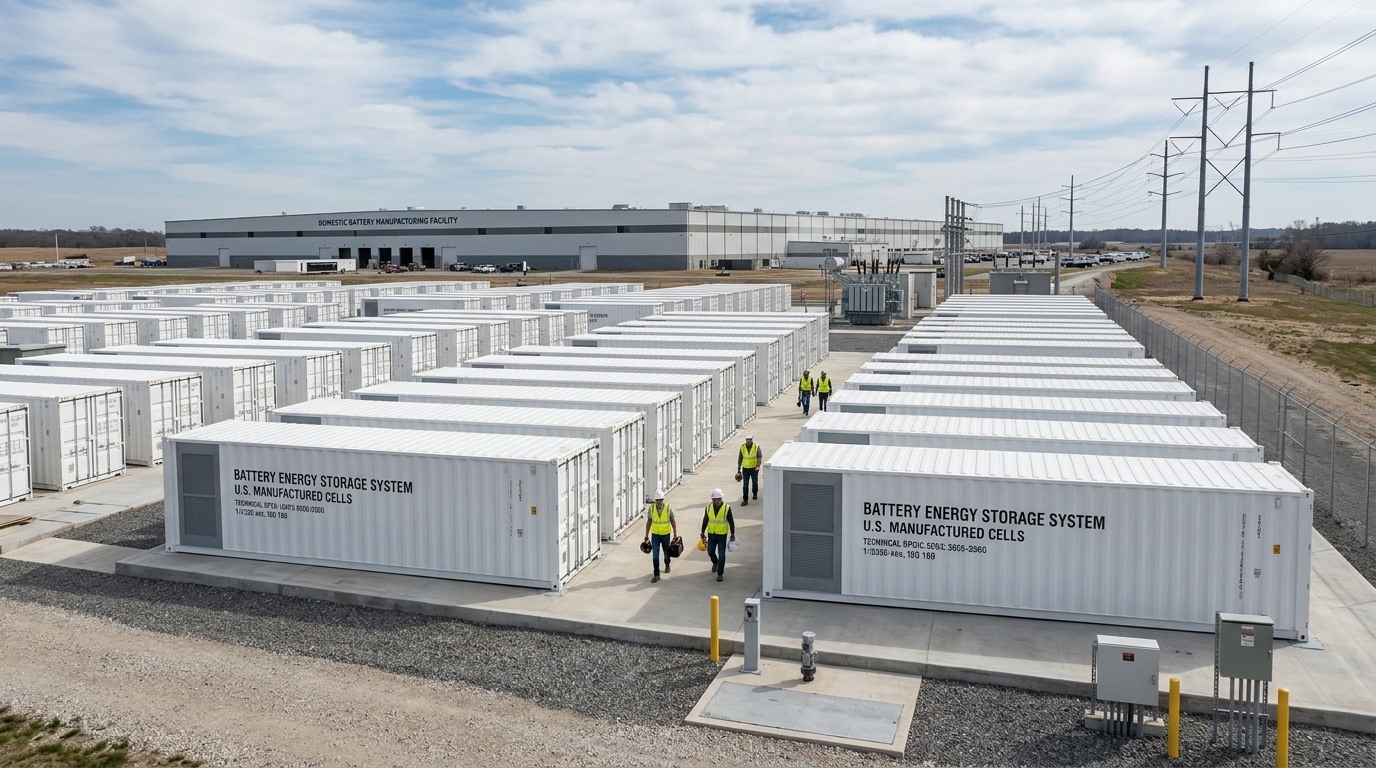
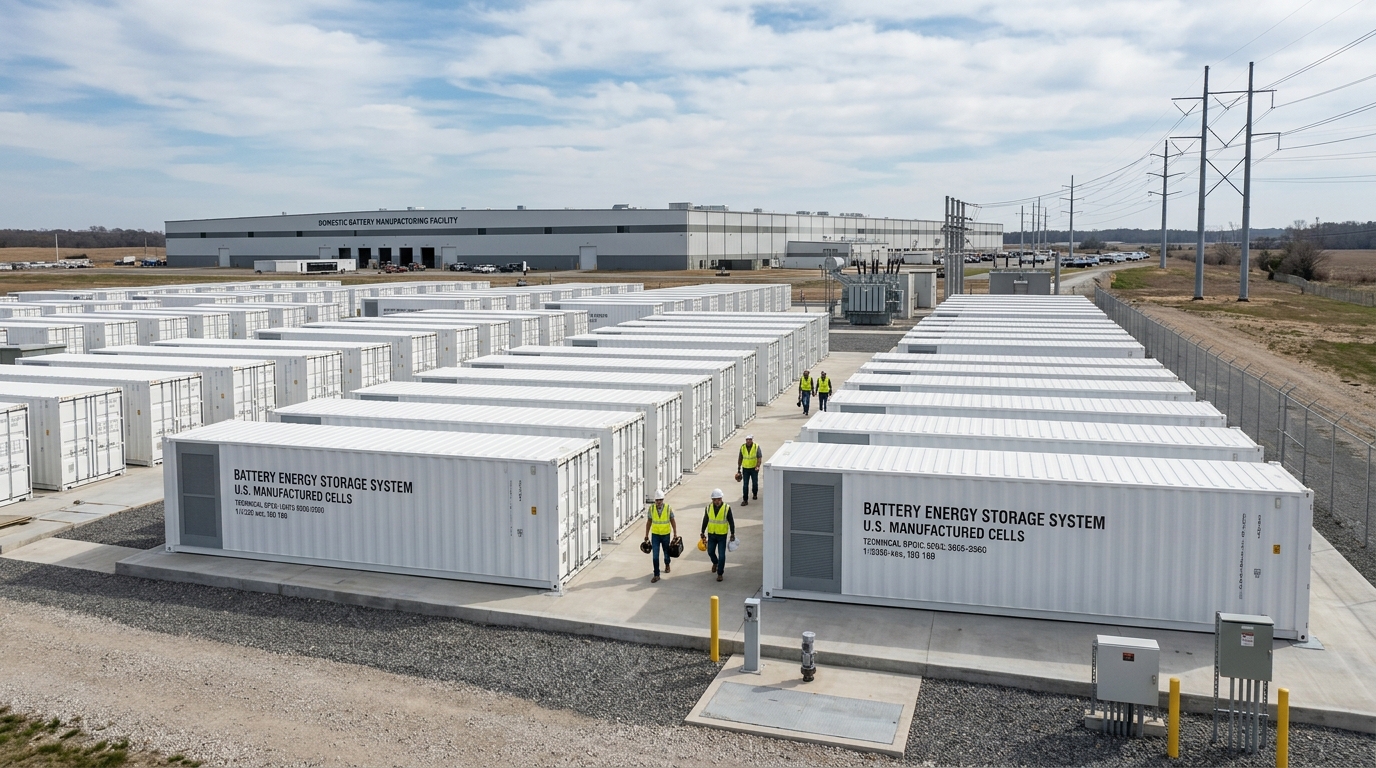
Start with a question that sounds boring on the surface: where does a grid-scale battery storage project get its cells?
Not long ago, the answer was easy. China. The vast majority of U.S. lithium-ion battery imports came from Chinese-linked supply chains. Projects got built, tax credits got claimed, and nobody asked too many questions about the upstream paperwork.
That era ended on January 1, 2026.
What happened next is one of the most structurally significant supply disruptions in the energy sector right now. Almost no one outside the project finance world is talking about it.
The Compliance Wall Nobody Saw Coming
The One Big Beautiful Bill Act, enacted July 4, 2025, introduced new Foreign Entity of Concern (FEOC) restrictions on claiming investment tax credits and Section 45X advanced manufacturing production credits for battery storage. In plain terms: if your battery has meaningful Chinese-linked content, your project loses its federal tax credit. Entirely.
Big Pharma’s $560B White Flag is One Startup’s Ticket
Big Pharma spent decades and $1B trying to solve osteoarthritis. They kept failing because they only targeted one of the many culprits attacking joints. Cytonics figured that out.
They created the first therapy with the potential to address the root cause at the molecular level, already proven across 10,000+ patients. Now they’re pushing toward FDA approval on a version that’s 200% more potent, backed by $32M raised and partnerships with Stanford and Scripps Research.
Invest in Cytonics before this month’s deadline.
This is a paid advertisement for Cytonics Regulation CF offering. Please read the offering circular at https://cytonics.com/
Forward-looking statements are subject to risks and uncertainties. There is no guarantee of performance. Past performance does not predict future results. All investments involve risk, including loss of principal.
The compliance test is called the Material Assistance Cost Ratio, or MACR. For storage projects beginning construction in 2026, the minimum required non-prohibited-foreign-entity share of costs is 55%. That threshold rises by 5 percentage points each year, reaching 75% for projects starting construction in 2030 and beyond. Fall below the threshold and the Section 48E investment tax credit is gone.
This is not a headwind. It is a wall. And most of the industry just ran into it at full speed.
Here is the practical reality: battery cells represent approximately 52% of total BESS equipment cost under IRS safe harbor tables. If a developer sources cells from a Chinese manufacturer, that single sourcing decision can push the project below the 55% compliance threshold on its own, before any other component is even evaluated. In plain terms, a grid-scale storage project beginning construction in 2026 essentially cannot use Chinese cells and still qualify for the ITC. The cell sourcing decision has become the most consequential procurement choice in the market.
The Scale of What Is Being Built
Here is where the math gets interesting.
The U.S. energy storage market installed a record 3.3 GW/8.4 GWh of battery storage systems in Q1 2026 alone, surpassing the previous Q1 record by 54%, according to Wood Mackenzie and the American Clean Power Association. Utility-scale activity drove most of that, with more than 2.3 GW/6.8 GWh installed in the quarter. Solar and storage accounted for 91% of nameplate generating capacity added in Q1 2026 across all new generation categories.
The forward picture is even larger. The U.S. is projected to install 146 GW/499 GWh of new storage capacity between 2026 and 2031, with cumulative installed capacity expected to reach 200 GW/655 GWh by 2031. Utility-scale projects will account for 85% of installations over that stretch. The grid is changing fast. AI data centers are pulling more electricity than entire cities. Renewable generation requires storage to be useful. Utilities are under mandate in more than a dozen states to procure significant capacity.
You’re Being LIED To About The Iran War
Forget EVERYTHING you’ve heard about the Iran war.
Especially the reasons why we’re bombing the country.
That is an enormous amount of batteries that need to be FEOC-compliant. And right now, with FEOC restrictions in force, Wood Mackenzie identifies securing compliant equipment and safe-harbored capacity as a critical development bottleneck expected to constrain the market for the next two to four years.
Record demand. Constrained supply. A regulatory framework that disqualifies most of what is available.
That is not a minor policy footnote. That is a structural pricing event in the making.
The Part Wall Street Is Missing
The obvious trade on grid storage is lithium. LFP cells, South Korean manufacturers retooling EV lines for stationary storage, domestic content credits. All real. All being priced in.
But here is the thing most investors are skipping over. Even Korean-branded cells often have Chinese cathode material upstream. Production capacity and technical expertise for active materials and their precursors remain heavily concentrated in China. The MACR framework, operationalized by IRS Notice 2026-15 issued February 12, 2026, requires manufacturers to certify the share of costs attributable to prohibited foreign entities. That certification process now goes deep into the supply chain, and many market participants have found it extremely difficult to verify their own compliance status with certainty.
Slight tangent, but it matters: the grid storage boom is happening at the exact same moment that data centers are becoming the fastest-growing new electricity load in history. The data center industry’s global electricity consumption is set to surge by more than 300% by the end of this decade. Battery storage is no longer simply backup equipment. It is a primary tool for securing grid connections, managing the extreme power demands of AI workloads, and meeting clean energy commitments. Utilities and hyperscalers both need compliant storage. Both are running out of options.
The Company Nobody Is Watching
Now zoom out from the lithium supply chain entirely.
What if the battery does not use lithium at all?
Eos Energy Enterprises (NASDAQ: EOSE) builds zinc-based long-duration energy storage systems out of its Pennsylvania facilities. Its technology does not touch lithium, cobalt, graphite, or any of the minerals that make FEOC compliance so difficult. About 80% of materials supply is sourced domestically, and the company plans to source nearly 100% from the United States going forward, forgoing the scarce critical minerals that are largely imported and that expose lithium-based systems to supply chain risk.
The FEOC compliance issue that is strangling lithium storage developers does not exist for Eos. Its supply chain was already domestic before any of this regulation arrived. That is not a coincidence. It is a structural moat.
What the Numbers Say Right Now
Eos reported Q1 2026 revenue of $57 million, up 445% year over year, alongside a $645 million backlog and a $24 billion commercial pipeline representing 107 GWh. The company reaffirmed its full-year 2026 revenue guidance of $300 million to $400 million. For context, full-year 2025 revenue was $114.2 million. The ramp is not theoretical.
Unit economics are improving. Labor and overhead costs per production unit came down 47% and 43% year over year, respectively, as the manufacturing operation scaled. The company also posted a surprise Q1 earnings beat, reporting $0.12 per share against an expected loss of roughly $0.22.
On the analyst side, Needham initiated coverage on May 22, 2026 with a Buy rating and an $11 price target. The consensus across 15 analysts tracked by ChartMill sits at approximately $9.52. The company is expected to report Q2 2026 results on July 28, 2026, with consensus revenue estimates near $72.5 million.
The commercial pipeline is converting into real orders. On June 18, 2026, Eos announced the first formal purchase order under its 2 GWh capacity reservation agreement with Frontier Power USA, supporting the Redbird project: a 100 MW/400 MWh battery storage system in ERCOT using Eos Z3 technology. FPUSA and its affiliates are funding 100% of construction equity. Eos has also fulfilled nearly 50% of a separate 1 GWh Bridgelink master supply agreement and is advancing an additional 12 GWh development pipeline across ERCOT, PJM, CAISO, and MISO.
On the manufacturing side, Eos launched commercial production on Battery Line 2 at its Thorn Hill facility in Marshall Township, Pennsylvania on June 16, 2026. Line 1 already exceeded its entire full-year 2025 production output in the first 164 days of 2026. Line 2 is ramping now, with full production targeted for Q4 2026, and the company is targeting 4 GWh of annual capacity by year-end.
Why This Is Not On CNBC Yet
A few reasons. The stock is small-cap and volatile. It spent years as a commercialization-stage company with serious execution risk. Most analysts still slot it into the speculative clean energy bucket and move on.
But the investment case here is not about clean energy ideology. It is about regulatory positioning. The FEOC rules created a structural advantage for any battery manufacturer whose supply chain does not touch China. Eos is one of the only ones operating at meaningful scale in the U.S.
The risks are real and worth naming plainly. The company is still scaling, still burning cash, and still dependent on a relatively small number of large customers in the near term. A planned approximately $150 million rights offering to fund its Frontier Power USA stake introduces dilution risk. Margins are deeply negative, though improving. Policy could shift. Execution could slip. These are not small caveats.
“My system said ‘SELL’ right before this stock tanked. Today, I’m shouting ‘BUY NOW’ before it soars.”
In 2023, Marc Chaikin’s system flashed bearish on an automotive company no one had yet heard of. The stock crashed 35%. Today, his system rates this company “Very Bullish” and Marc calls it a screaming buy thanks to a new “groundbreaking partnership” with Nvidia that hands this company the keys to the self-driving kingdom on a silver platter.
But the structural dynamic underneath Eos is not about a company doing something clever. It is about a federal regulation that permanently changed who gets to sell batteries to the American grid. And Eos built its entire supply chain to be on the right side of that line before the line was drawn.
That is not a short-term trade. That is a structural position. The market is only beginning to figure it out.
For informational and educational purposes only. Not investment advice. Trading involves risk, including loss of principal.