
The AI power story has a quiet landlord. And it reports in four days.
GE Vernova (GEV) releases Q2 2026 results on July 22 before the open. Consensus sits at $3.17 EPS on $10.77 billion in revenue — which would represent an 18.2% top-line increase year over year and roughly a 70% jump in earnings per share versus Q2 2025. Those are not small numbers. And yet the real debate heading into this print has almost nothing to do with revenue.
The demand story is settled. What the market is trying to figure out is whether GE Vernova can actually convert its historically large order book into the margins its valuation demands.
The Backlog That Changed the Company’s Identity
In Q1 2026, GE Vernova reported orders of $18.3 billion, up 71% organically. Total backlog reached $163 billion. The equipment backlog alone grew $16.6 billion year over year, or 75%. Management moved its $200 billion backlog target forward by a full year, to 2027 (from 2028). Gas turbine backlog and slot reservation agreements grew from 83 to 100 gigawatts — and the company expects to reach at least 110 GW by year-end 2026.
One heavy-duty gas turbine can exceed $250 million per unit. Turbine prices have climbed roughly 300% over three years. GE Vernova’s gas order book is sold out through 2029 and is taking orders into 2031, with approximately 20% of it tied directly to data centers. The company’s Electrification segment booked $2.4 billion in equipment orders specifically to support data centers in Q1 — more than all of 2025 combined.
That is not a cyclical industrial story. That is a supply-constrained infrastructure business with pricing power most companies spend decades trying to build.
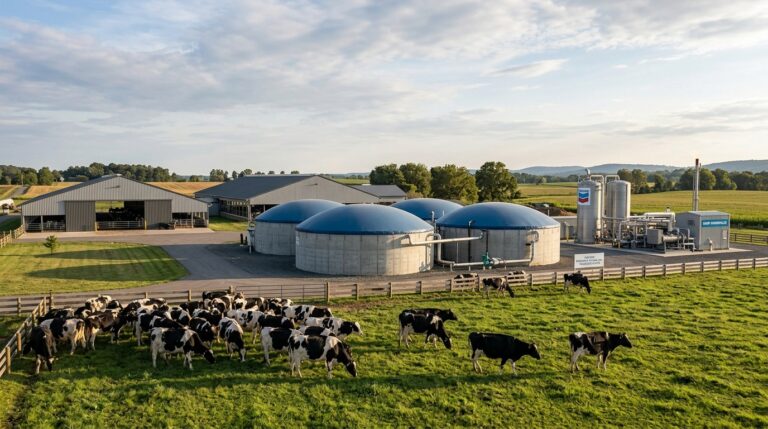
The AI names funding this power demand — Microsoft, Meta, Google, OpenAI — are GE Vernova’s customers. In late June, Chevron and Microsoft confirmed they are advancing a West Texas data center power project that will use GE Vernova turbines (alongside additional capacity from Caterpillar’s Solar Turbines). That type of direct hyperscaler relationship is now becoming standard.
The Number That Actually Justifies the Multiple
GE Vernova trades at roughly 58 times forward earnings near current levels, with the stock up approximately 71% year to date and around $1,058 per share as of the July 17, 2026 close. Full-year 2026 consensus calls for $45.36 billion in revenue and $30.65 in EPS — implying a 73.3% year-over-year expansion in profitability.
That multiple demands a very specific outcome: margin conversion must track or exceed what the backlog implies.
In Q1, adjusted EBITDA margin was 9.6%, up 390 basis points year over year, with free cash flow of $4.8 billion — more than quadrupling year over year. Management raised 2026 free cash flow guidance to a range of $6.5 billion to $7.5 billion. The full-year EBITDA margin guidance points toward 12% to 14%.
Here is the thing worth sitting with. Revenue growth of 10% to 14% per year is close to mathematically locked in from the backlog alone. What justifies paying ~58 times is the profitability that backlog is supposed to unlock as higher-priced, more recently signed contracts start converting into recognized revenue. If Q2 EBITDA margins come in below expectations, the revenue line becomes irrelevant to how the stock trades.
Sector Breakdown and What Surrounds GEV Right Now
The rotation out of semiconductors and into energy, utilities, and industrials has been one of the defining market moves of July 2026. The Philadelphia Semiconductor Index fell more than 20% from its late-June high into confirmed bear market territory. Meanwhile, the S&P 500 equal-weight index has held up far better, signaling capital moving into lower-cap names and real-economy sectors.
GE Vernova sits directly in that rotation path. It is not a pure AI stock — it is an industrial company selling into AI’s biggest unsolved problem. Data centers need power. Power grids need upgrading. Gas turbines are the bridge fuel while nuclear and renewables scale. GEV sits at all three intersections simultaneously.
The Wind segment remains a complication. Wind revenue declined 25% in Q1 (25% organically) due to soft prior-period orders, and the Offshore Wind business continues to carry contract losses. Investors have largely looked past this drag because Power and Electrification growth overwhelms it — but in a quarter where margins matter most, any additional Wind-related charges will amplify the scrutiny.
Siemens Energy and Mitsubishi Heavy Industries are the primary gas turbine competitors, but neither has GEV’s data center exposure, backlog size, or U.S. manufacturing footprint at this stage of the cycle.
Technical and Trading Framework
GEV has traded in a roughly $1,050 to $1,200 range over the past several weeks, consolidating after a sharp move higher from the $700s earlier in 2026. The 50-day moving average has acted as support during recent pullbacks. Volume has been above average on up-days and lighter on pullbacks — a pattern consistent with institutional accumulation rather than distribution.
The key level to watch ahead of earnings is the $1,100 area, which served as near-term support during mid-July volatility. A close below that level on high volume would be a technical red flag regardless of how the fundamentals read. On the upside, a clean break above $1,200 on strong Q2 margins would likely accelerate momentum toward analyst targets in the $1,300 range.
Options flow heading into July 22 has been skewed toward calls at the $1,200 and $1,250 strikes, suggesting institutional positioning leans bullish into the event — though options markets also imply a roughly 7% to 9% move in either direction, so the range is wide.
Three Scenarios for July 22
Bull Case
Q2 adjusted EBITDA margin comes in above 11%, confirming the conversion thesis. Revenue lands at or above $10.9 billion. Management raises full-year guidance again and reiterates the path to $200 billion in total backlog. Gas Power segment orders continue accelerating. The stock retests $1,250 and analysts lift targets toward $1,400.
Base Case
Revenue prints in line near $10.77 billion. EBITDA margins expand modestly but come in slightly below the most optimistic expectations near 10.5% to 11%. Management maintains current guidance ranges. The stock moves 3% to 5% in either direction based on tone of the call, with the Wind segment and capex commentary as the swing factors.
Bear Case
Wind segment charges surprise to the downside. EBITDA margins disappoint, coming in below 10%. Management flags any softening in gas order pace. At a ~58x multiple, there is zero cushion for a negative surprise. A miss on margins could send the stock 10% to 15% lower and force a broader conversation about whether the valuation pricing was ever justified at these levels.
Active Trader Strategy Framework
The highest-conviction positioning framework for GEV into July 22 is not about picking a direction — it is about understanding what the market is paying for and what it is not. Revenue is not the question. Margins are. Any trader who reads a revenue beat and ignores the EBITDA line is looking at the wrong data point.
For those managing existing long positions, defined risk ahead of earnings is a reasonable approach given the implied move range. For new positions, waiting for the post-earnings reaction to stabilize and assess margin trend direction may offer a cleaner entry than chasing into the event.
Key catalysts to monitor beyond July 22: hyperscaler capex guidance from Alphabet and Microsoft (both reporting this week), any commentary on data center power procurement timelines, and the ECB rate decision on July 23 — which affects European energy infrastructure spending, where GEV has meaningful exposure.
The services backlog is the part of this business that most people underweight. Services revenue is recurring, high-margin, and growing. As the installed fleet expands, that line becomes a structural earnings floor regardless of what new equipment orders do in any given quarter.
This is a company in the middle of one of the most powerful demand cycles in the global power industry. The question is not whether the business is real. The question is whether the price was right — and July 22 is the next data point that answers it.