
September 5, 2026
Bonus Content: Oil Hits $95 Before Sunday’s OPEC+ Decision. Here’s What Traders Need to Watch.
My name is Silas Peters, and I’ve spent the majority of my career inside the CBOE.
I’d like you to treat this information with the highest urgency.
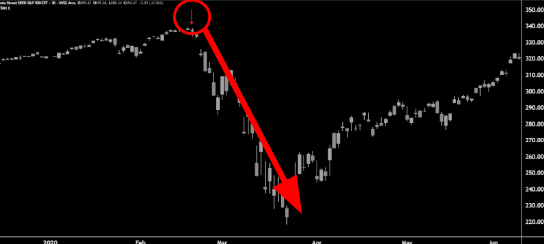
Right now, the same signal that predicted the COVID crash…
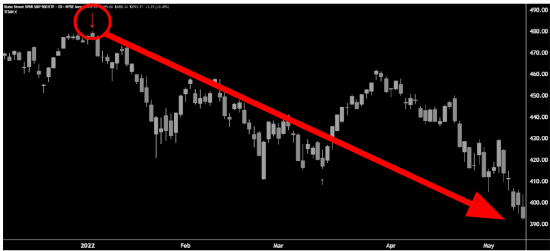
The 2022 bear market…
And last year’s trade war crash….
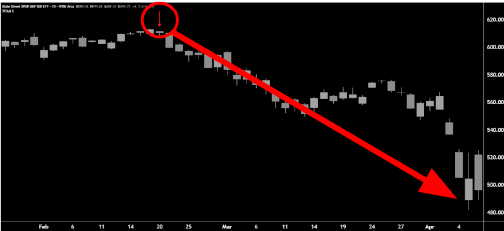
…has just raised a flag on a stock you’d want to see right now.
I can’t make trading guarantees…
But I’m confident, even if you’ve already seen the stock in question…
you’re grossly underestimating the move underway.
Head over here now to get the full details.
All the best,
Silas Peters
Oil Hits $95 Before Sunday’s OPEC+ Decision. Here’s What Traders Need to Watch.

Brent closed Thursday at $95.23 after rising roughly 8% on the week, its strongest weekly performance since the early phase of the US-Iran conflict. US cash markets are dark Monday for Labor Day. When they reopen Tuesday, traders will be pricing whatever Vienna delivered Sunday.
- Brent settled at $95.23 on Thursday, up approximately 8% on the week, with the 5-day gain confirmed at 7.4% per futures data.
- The Strait of Hormuz is moving 4.9 million barrels per day, down 77% from 21.6 million pre-war.
- OPEC+’s seven core members meet September 6 to set October output, the first decision after the 1.65 million bpd rollback concluded with September’s 188,000 bpd addition.
- A Q4 pause is the consensus working assumption among analysts, with Rystad Energy flagging it as the base case.
- XLE gained 7.4% in August, the best month among all S&P 500 sectors, with MPC and VLO both more than doubling year-to-date.
- XOM posted Q2 revenue of $116 billion, up 42% year-over-year, with net income doubling to $14.5 billion.
- The MSC capacity review for 2027 baselines concludes this month, setting up what sources describe as potentially contentious quota negotiations.
Market Context
The macro setup entering Sunday’s meeting is as tight as it has been all year. Hormuz throughput collapsed from 21.6 million to 4.9 million barrels per day between Q4 2025 and Q2 2026, a 77% reduction. Quota decisions that looked meaningful on paper have had marginal real-world impact because the barrels cannot move. Real market impact from the 2026 hikes has been limited. War-related disruptions in the Gulf, Russia, and Kazakhstan have kept actual export volumes constrained.
Damage to refineries in the Middle East and Russia, coupled with limited capacity elsewhere, is expected to keep global fuel prices elevated into next year. US diesel prices reached their highest level since mid-2022, while inventories in Europe remain well below seasonal norms. That combination is the reason Brent gained 45% year-over-year as of Friday’s close.
The Vienna Decision and What It Means
The seven core members, including Saudi Arabia, Russia, Iraq, Kuwait, Kazakhstan, Algeria, and Oman, finalized September’s 188,000 bpd increase at the August 2 meeting, completing the rollback of their 1.65 million bpd voluntary cuts. Sunday’s meeting sets October levels with the rollback cycle finished.
Delegates have signaled no change to October policy, and the group has little room to maneuver at current price levels without risking a demand-side response. Rystad Energy’s Jorge Leon put the logic plainly: “Having completed the restoration campaign, OPEC+ has little incentive to rush into further supply changes.” His base case is a fourth-quarter pause while the group prepares for 2027 quota negotiations.
Running parallel to the October decision is a longer-term fight that will define the group’s structure for years. The 2027 baselines are critical to OPEC+’s quota calculations. The MSC capacity assessment is being carried out between January and September 2026, with OPEC+ planning annual reviews going forward. OPEC+ faces potentially difficult talks, with members including Iraq pushing for higher individual quotas to reflect their higher capacity.
Sector Breakdown: Refiners vs. Producers
Within energy, the split between upstream producers and downstream refiners has been the defining rotation of 2026. US crack spreads jumped to a record $70 per barrel by mid-July, up from $20 at the start of the year, making Marathon Petroleum, Valero, Phillips 66, and PBF Energy major winners. MPC and VLO have both more than doubled in value since January, driven by an unusually sharp surge in global refining margins as disruptions reduced global refining capacity and tightened supplies of gasoline, diesel, and jet fuel.
Valero’s realized refining margin roughly doubled year-over-year, and Marathon Petroleum’s refining and marketing margin jumped from $17.58 to $36.33 per barrel. These are not paper gains. Marathon and Valero delivered combined profits of approximately $8.8 billion in Q2 2026.
For integrated producers, the picture is stronger but more nuanced. XOM’s Q2 total revenues hit $116 billion versus $81.5 billion a year ago, with net income of $14.5 billion, or $3.48 per share, compared to $7.1 billion, or $1.64 per share, a year earlier. Still, upstream earnings of $9.2 billion and refining profit of $4.1 billion came in below expectations, while Exxon warned that a full-quarter Hormuz closure could reduce Middle East production by about 750,000 boepd.
Technical Framework
The Brent November 2026 contract carries a 5-day gain of 7.4%, with the Dec 2026 contract at $91.28 and Jan 2027 at $88.01, reflecting a sharply backwardated curve. Backwardation this steep signals physical tightness rather than speculative froth. For XLE, XOM has surged 38.3% over the past 52 weeks, in line with XLE’s 39.4% gain over the same period. CVX has been trading above both its 50-day and 200-day moving averages since mid-July, indicating an established uptrend.
Scenario Modeling
Bull Case
Vienna confirms a full Q4 pause with no additional barrels. Hormuz transit remains constrained below 6 million bpd. Brent sustains a move toward $100, refiners extend margin records, and XLE targets new 52-week highs above current levels. MPC and VLO crack spreads hold above $50/bbl, supporting another quarter of outsized free cash flow.
Base Case
OPEC+ announces a Q4 pause as pre-signaled, confirming October output flat with September. Brent consolidates the $88 to $97 range through the end of Q3. Refiners remain the stronger sub-sector versus integrated majors, with XOM and CVX holding but not significantly extending their moves.
Bear Case
A geopolitical de-escalation signal, whether from US-Iran talks or Hormuz transit recovery toward 10 million bpd, causes a sharp reversal in both crude and crack spreads. Brent trades back toward $82 to $85. Refiner stocks, which are 41% above key long-term moving averages per technical analysis, become vulnerable to rapid mean reversion.
Active Trader Strategy Framework
The gap between Sunday’s Vienna outcome and Tuesday’s US open is the key risk interval. Traders with existing long energy exposure should map their positions against the $88 support level in Brent, which represented pre-rally consolidation. A clean hold above $90 on Tuesday’s open would confirm that institutional buyers absorbed the weekend news constructively.
Within the sector, the refiner trade carries different risk than the producer trade. Refiners are priced for sustained crack spread elevation. Any credible Hormuz reopening timeline compresses that spread faster than it moves crude. Producers benefit from high crude but are partly hedged against reopening through volume recovery. Size and entry level matter more in refiners right now than in XOM or CVX.
Watch the Brent curve structure Tuesday. If backwardation steepens further, physical buyers are still competing for prompt barrels. If the Dec-Jan spread flattens, it may signal the market is beginning to price in reopened supply routes ahead of the headlines.
Conclusion
Sunday’s meeting is less about October barrels, which will likely hold flat, and more about the signal it sends on 2027. The 2027 baseline fight is where Saudi Arabia, Iraq, and Russia will argue over market share for the next cycle. That fight lands in a market where Hormuz carries a fraction of its pre-war volume, refiners are earning margins three times the decade average, and Brent has moved 45% in a year. Preparation before Tuesday’s open, with defined levels and clear scenario triggers, is what separates positioning from speculation.