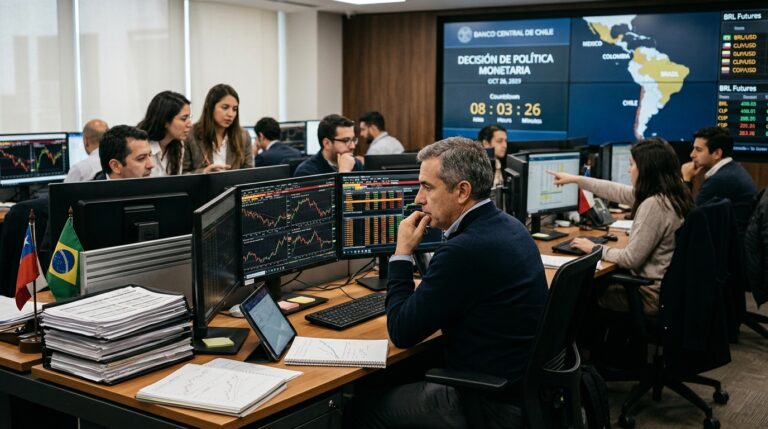
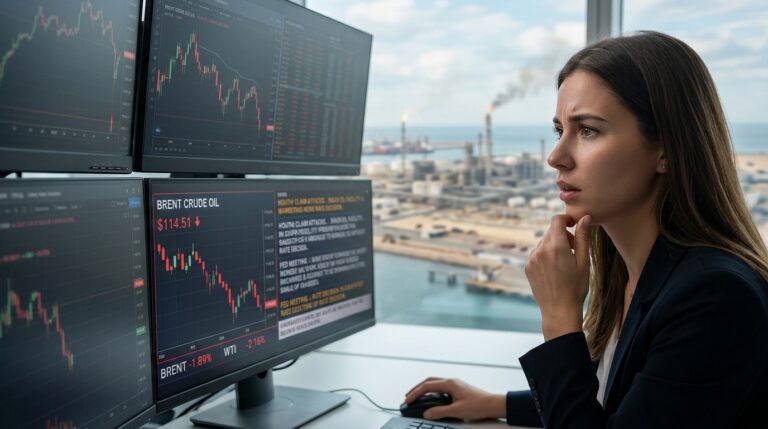
European natural gas climbed to about €80/MWh on Wednesday, reaching its highest level since early 2023, as the Middle East conflict continued to raise fears of deeper supply disruptions. QatarEnergy has extended force majeure on some LNG cargoes to buyers in Europe and Asia into autumn, slowing storage injections and leaving inventories below the seasonal average heading into the heating season. The equity question is no longer whether gas prices are high. It is whether European industry can survive them staying here.
The ECB raised its three key interest rates by 25 basis points on September 10, noting that inflation remains too high and that risks remain elevated. European equity portfolio managers now face two simultaneous headwinds: an energy input cost that has more than doubled since the conflict began, landing on corporate balance sheets just as borrowing costs rise again. That combination is what the investment committee conversation is actually about.
The Storage Problem Is Structural
As of September 5, Europe’s underground gas storage was roughly mid-60% full and about 16 percentage points below the five-year average for that date, an unusually low level for early September. Norwegian maintenance and lower Algerian flows to Italy are constraining pipeline supplies just as Europe approaches the end of its summer injection season, threatening to intensify global competition for gas through winter. The European Commission relaxed this year’s storage requirement, with the binding target set at 80% by 1 November rather than 90%, and market watchers have questioned whether even that reduced threshold will be reached.
The Bull and Bear Cases for European Industry
Bulls point to demand destruction as a self-correcting force. Europe has cut gas consumption by roughly 15% to 20% versus 2021, with industry reducing use and renewables expanding to cover part of the gap. The European Commission has repeatedly argued that the current situation differs significantly from 2021/2022 because the EU is better prepared through increased diversification, higher LNG import capacity, and reduced gas demand.
The bear case is harder to dismiss at €80. Goldman Sachs has flagged that TTF could exceed €100/MWh for December delivery under an extended Strait of Hormuz disruption scenario, which would carry severe knock-on effects for European industrial demand, power prices, and inflation. BASF is the test case. The stock has been trading near its 52-week low, and its outlook language highlights uncertainty around energy and raw material prices, geopolitical developments, and the risk of supply-chain disruption. The company has also been pushing European price increases on selected specialty chemicals in August, attempting to pass higher costs downstream. Whether those hikes stick against weak eurozone demand is the open question.
What Investors Are Missing
The debate has focused almost entirely on household bills and headline inflation. Far less attention has gone to the margin cliff for fertiliser producers and steel mills, both of which consume gas as a direct feedstock rather than simply as fuel. Unlike BASF, which has a degree of product pricing power in specialty lines, commodity fertiliser and flat steel producers have no ability to pass costs through in a weak agricultural and automotive cycle. They are squeezed from both ends simultaneously.
Germany’s storage has been running below the EU average, and RWE CEO Markus Krebber has said the country’s winter outlook will largely hinge on political decisions. That is a meaningful signal from an executive with visibility into the physical market. RWE’s management has also described the system as tight going into winter, with low gas storage and weak hydro reservoir levels that could benefit flexible generation capacity.
Stocks to Watch
Cheniere Energy (LNG): Bechtel handed over the seventh and final train of the Corpus Christi Stage 3 project on August 28, increasing Cheniere’s total LNG production capacity by over 20% to approximately 56 million tonnes per annum. Cheniere is the logical destination for European cargo demand when Gulf LNG is constrained, and every week Hormuz stays restricted tightens the arbitrage in the company’s favor.
Uniper: Uniper reported adjusted net income of €388 million for the first half of 2026, up sharply from the year-earlier figure, as the gas business performed strongly. The company is better positioned than in 2022, though Germany’s government is simultaneously running a privatization process that adds its own uncertainty to the stock.
RWE: RWE lifted its 2026 outlook after a strong first half. It is one of the few European utilities that can profit when market volatility rises.
BASF (BASFY): The highest-risk name on this list. Cheniere and BASF have a long-term LNG sale and purchase agreement covering up to 0.8 million tonnes per annum, but even with that hedge in place, gas in the mid-€70s/MWh range squeezes European industrial margins hard. A move to €100/MWh would test whether the company’s restructuring plan holds together under a second full energy shock.