October 20, 2026
Bonus Content: FedEx Is Buying the Land Next to the Runway
Mining currently earns the highest profit margins of any major sector.
About 31%.
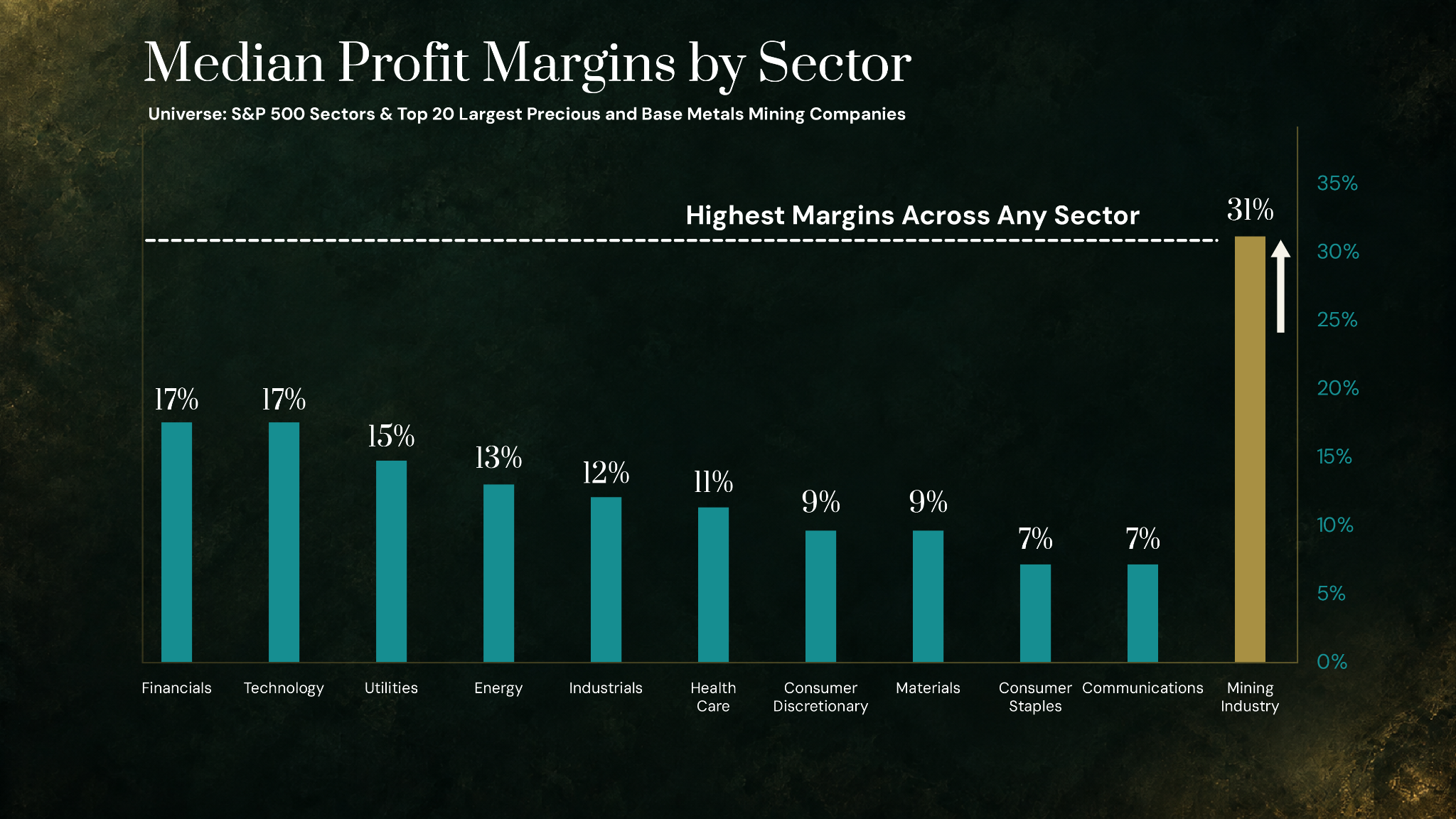
The next best sector earns just 17%. Now, here’s the kicker…
Mining only represents 1% of global equities.
Read those two facts again.
The sector with the highest profitability…
Is also the least owned – going back more than a century. Go here for the full story on the top-performing investment sector – and my top four picks
This kind of anomaly doesn’t last long.
That’s why I put together this special briefing – to tell you about the four best miners you can buy today. Go here for the full write-up.
My name is Garrett Goggin.
I’m one of 200,000 CFA charterholders worldwide. I’m also a Certified Market Technician, and I’ve spent more than two decades specializing in gold and mining.
Porter Stansberry calls me “THE most knowledgeable gold investor in the world.”
Right now, I’m looking at one of the strangest mispricings I’ve seen in my career.
Mining companies are churning out record free cash flow…
And almost no one cares.
Investors are still chasing AI tech stocks and won’t touch the most profitable sector in all of finance.
This kind of thing only happens a few times a century…
I call it the “Golden Anomaly.” Go here to read all about it before it’s gone.
Because if I’m right, this opportunity will disappear as investors rotate into gold miners to protect their wealth when the AI trade finally breaks.
These four miners offer the greatest upside.
Regards,
Garrett Goggin, CFA, CMT
Lead Analyst and Founder, Golden Portfolio
FedEx Is Buying the Land Next to the Runway
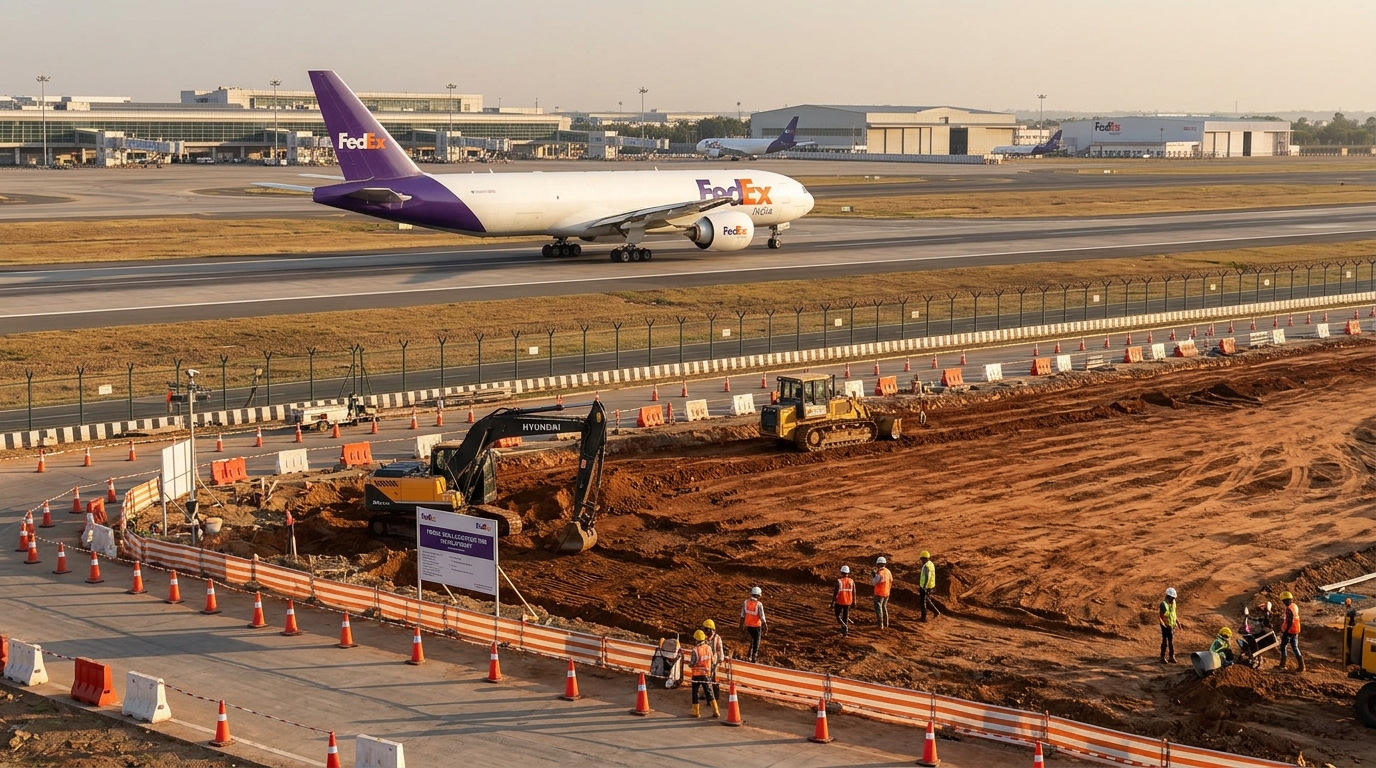
The logistics industry talks about speed. FedEx is buying the dirt that makes speed possible.
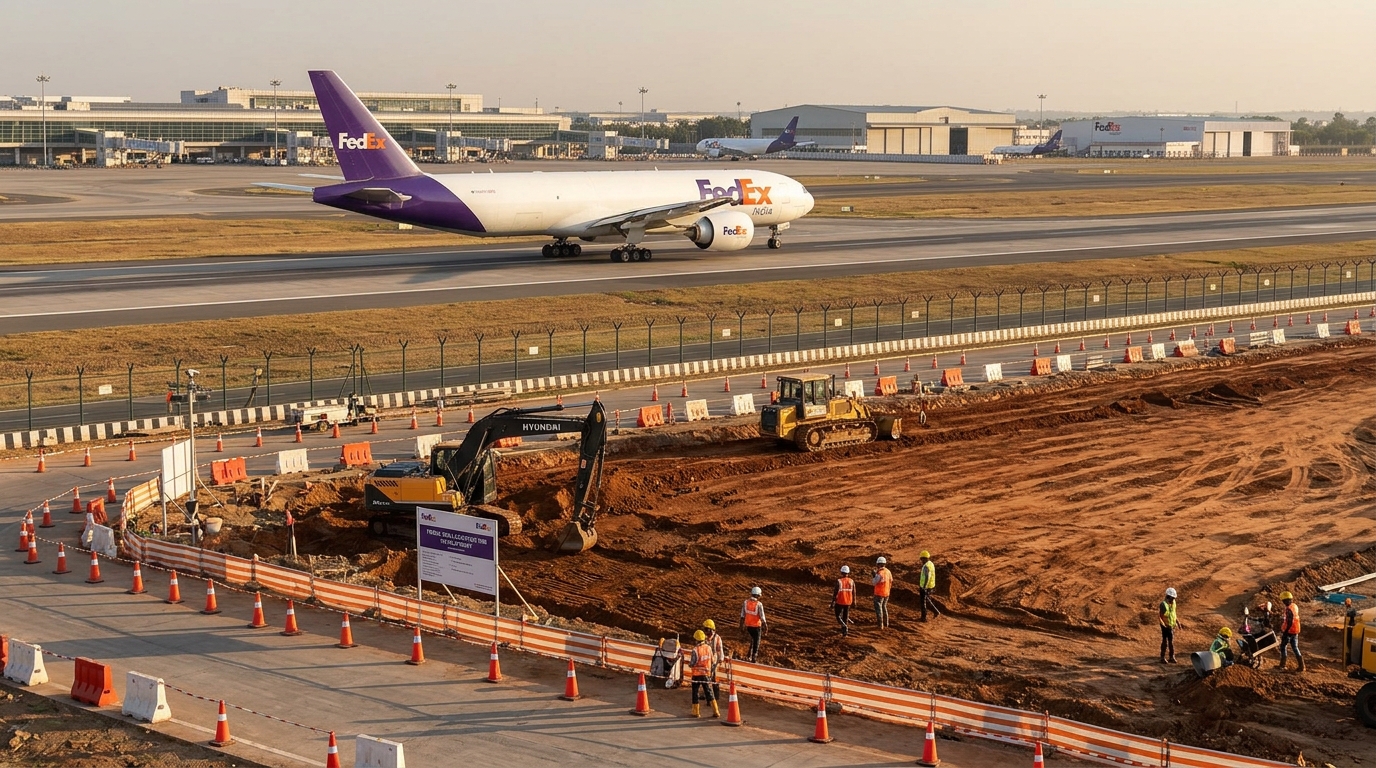
In 2026 alone, FedEx committed a combined $400 million to two airport-embedded cargo facilities in India: a roughly $250 million hub at Navi Mumbai International Airport, where FedEx broke ground on February 18, 2026 on a fully automated 300,000-square-foot facility, followed by a $150 million hub at GMR Cargo City inside Delhi’s Indira Gandhi International Airport, a 230,000-square-foot facility designed to bring international gateway and pickup-and-delivery operations under one roof. The angle most commentary missed: neither of these is just an infrastructure build. They are real estate land grabs at airports where competing operators cannot simply write a check and move in next door.
Why the Land Matters More Than the Building
Industrial properties within a five-mile radius of major airports command rents 18.8% higher than comparable properties elsewhere, with the steepest premiums in Los Angeles, New York, Miami, Chicago, and Philadelphia. That premium exists because transportation comprises 45% to 70% of overall supply chain costs versus just 3% to 6% for occupancy, making proximity to air cargo hubs highly cost-effective despite elevated rents. FedEx is not paying the premium. It is locking in the land before the premium compresses further, and in doing so it is structurally preventing UPS, DHL, and regional challengers from occupying the same tarmac-adjacent footprint.
The same airport-proximity premium is being bid up by a parallel force. A domestic manufacturing capex cycle is adding industrial demand for logistics infrastructure at exactly the nodes FedEx is locking in.
The Delhi hub alone is expected to lift FedEx’s package-processing capacity in the city from 600 per hour to 5,000 per hour on average, an eightfold throughput increase from a fixed parcel of airport land. That operational leverage is the point. FedEx has said it delivered 40% outbound revenue growth in India in fiscal 2025 against a backdrop where India aims to more than double national air cargo handling capacity by 2030.
The Network 2.0 Link
The international land grab is running in parallel with FedEx’s domestic network overhaul. Through June 2026, FedEx implemented approximately 490 Network 2.0 optimized stations across the U.S. and Canada, and remained on track to achieve nearly $1 billion in Network 2.0 savings by year-end, with the full $2 billion target by end of 2027. The domestic efficiency gain and the international real estate acquisition share the same logic: compress the physical distance between aircraft and final delivery, then lock that position in permanently.
Scenario Modeling
Bull Case: India’s air freight volumes scale toward the 10 million metric ton 2030 target on schedule. FedEx’s three-gateway network (Delhi, Navi Mumbai, Bengaluru) operates at capacity before rivals can secure comparable airport-adjacent positions. FedEx’s long-term framework, introduced at its February 2026 investor day, holds: revenue trends toward ~$98 billion with ~$8 billion in operating income by fiscal 2029.
Base Case: India execution is on schedule but takes 18 to 24 months to reach stated capacity targets. FedEx Express segment sustains mid-single-digit yield improvement. Network 2.0 station closures reduce domestic costs without material service disruption.
Bear Case: Indian regulatory delays or construction overruns push hub completions beyond 2028. Competing operators secure adjacent land parcels at newly announced greenfield airports. Higher leverage limits financial flexibility if macro conditions deteriorate simultaneously.
What Traders Watch
The positioning question is not whether FedEx’s India hubs get built. It is whether the real estate moat they create shows up in yield-per-package metrics before the market prices it in. Monitor Express segment operating margin quarterly. Any sustained move toward the 8% range signals the airport-adjacent land strategy is compressing last-mile costs faster than consensus models. That is the level worth mapping against FDX’s current multiple before the next earnings release.