
October 29, 2026
Bonus Content: Amazon Reports Tonight. What It Must Prove After Alphabet’s 10% Wipeout.
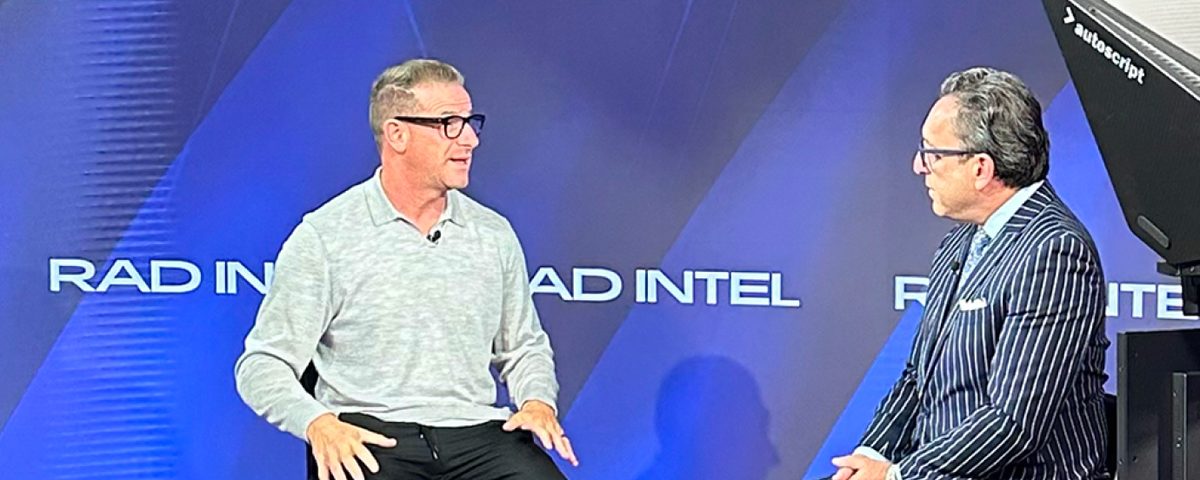
Multiple institutional funds back RAD Intel.
30,000+ investors back it, among them early investors, including operators from Meta, YouTube, and Amazon. Selected by the Adobe Design Fund.
Every brand needs intelligence. RAD Intel’s AI turns what brands already know into decisions they can act on, before the money goes out.
A who’s-who of Fortune 1000 clients across gaming, entertainment, fashion and healthcare already uses it.
Current allocations remain limited.
RAD Intel’s Regulation CF round is now open to all investors.
P.S. Limited allocations remain in the current investment round. The offering page lays out the details, risks included. Learn more to invest →
Regulation CF · now open to investors
This is a paid advertisement for RAD Intel made pursuant to Regulation CF offering and involves risk, including the possible loss of principal. Brand references reflect factual platform use, not endorsement. Investor references reflect factual individual or institutional participation and do not imply endorsement or sponsorship by the referenced companies. Please read the offering statement and related risks at invest.RADIntel.ai.
Amazon Reports Tonight. What It Must Prove After Alphabet’s 10% Wipeout.

Last night’s session handed the market a clear verdict on unanchored AI spending. Alphabet missed on both revenue and earnings, and Reuters reported negative free cash flow of $9.07 billion. Shares slumped more than 10% after hours. That is the context Amazon walks into tonight.
The numbers at stake are not small. Consensus EPS sits at $1.96 on revenue of roughly $202 billion, against $1.95 and $180.17 billion a year ago. That implies revenue growth of about 12% but EPS growth of only 0.5%. The earnings line, in other words, is not the argument. AWS is.
The AWS Hurdle
AWS grew 37% to $42.2 billion in Q2, its fastest pace in 18 quarters, at a 39.4% margin. Analysts expect AWS growth of around 35% for Q3, a step down from Q2, which is the number most likely to decide the stock’s reaction. A slowdown would partly reflect a larger base rather than weaker demand. Demand indicators remain firm: AWS long-term contract commitments not yet recognized were approximately $496 billion as of June 30, 2026, up from roughly $200 billion a year earlier. The bear case is not that demand has collapsed. It is that the cost of meeting demand is outrunning the revenue it generates.
The Cash Flow Gap That Matters
Net capex reached $53.1 billion last quarter, the 2026 plan rose to about $220 billion from $200 billion, and trailing free cash flow turned negative at minus $7.6 billion. As front-loaded investments outpace revenue realization, free cash flow has come under significant pressure. The market gave Amazon a pass in Q2: shares jumped 15.3% the next day. Tonight, after watching Alphabet get sold more than 10% on an almost identical free-cash-flow profile, that patience is harder to assume.
Microsoft faced the same scrutiny one session earlier. Azure’s 40% growth still left the market focused on whether $190 billion in annual capex could ever produce stable free cash flow.
Amazon enters the report at about 16.6x trailing cash flow, cheaper than Alphabet and Microsoft at around 21x, even though its earnings are growing faster. That relative valuation provides a cushion. It does not eliminate the risk.
Technical Framework
AMZN closed October 28 at $254.60, opening at $253.00 with an intraday high of $255.36. A move above $253 to $257 would recover the 50-day and 100-day moving-average zone. A break below $246.32 support, followed by the 200-day average near $243.31, would weaken the structure materially. The 14-day RSI sits at 38.5, suggesting the stock is stretched to the downside heading into the catalyst. Options markets imply a move of about 7% to 8% in either direction.
Scenario Modeling
Bull Case: AWS growth prints at or above 37%, operating income lands above $26 billion, and management holds capex guidance without raising it further. That combination, paired with any hint that free cash flow inflects positive in Q4, reopens the $265 to $270 range. The $496 billion backlog becomes the counter-argument to every capex concern.
Base Case: AWS grows 33% to 35%, revenue hits the $202 billion top of guidance, and capex commentary is neutral. The stock absorbs the Alphabet contagion and trades in a tight range around current levels, with direction determined by Q4 guidance rather than Q3 actuals. The analyst consensus price target sits near the low-to-mid $330s, suggesting the Street sees significant upside on a clean report.
Bear Case: AWS growth decelerates below 33%, operating income misses the midpoint of the $22.5 to $26.5 billion range, and capex guidance for 2027 is raised without a clear backlog justification. Soaring AI capital expenditures eroding free cash flow is precisely the read that sent Alphabet toward $290 overnight. A weak AWS result or higher capex could send AMZN toward $240 to $245.
Active Trader Framework
The asymmetry here is real but conditional. Going into tonight, the dominant question is not whether Amazon beats on revenue. It is whether AWS margins hold near 39% and whether the gap between operating cash flow and $220 billion of annual capex is shrinking or widening. Focus on AWS margins, Q4 guidance, 2027 capex plans, and evidence that capital investment is translating into higher utilization and sustainable cash flow.
Position sizing deserves respect ahead of a roughly 7% to 8% implied move. The Alphabet reaction confirmed that even strong cloud growth, 103% in Google Cloud’s case, cannot offset a cash flow miss when the market is already skeptical. AMZN’s cheaper valuation is a degree of protection. It is not a guarantee. The levels to watch are $257 on the upside and $246 on the downside. Everything between is noise until the call ends.