April 29, 2026
Elon’s New Company 14X Bigger Than SpaceX
Featured Read: META Is Reporting Today.
Editor’s Note: Former tech executive Jeff Brown was one of the first to predict SpaceX’s IPO, long before it became the biggest investment story of 2026. He’s been a believer in Musk’s companies from the start – even when most were skeptical. When many were proclaiming the death of Tesla, Jeff doubled down. And it’s up 1,800% since. Now he says Musk is up to something very exciting – a brand-new company that could be worth over $25 trillion. And it’s not SpaceX. Click here for the details or read more below.
Dear Reader,
Forget about SpaceX…
Elon Musk is up to something much bigger…
A virtually brand-new company…
Built from the ground up.
And it could be worth over $25 trillion.
That’s 14 times bigger than SpaceX.
Some of the top minds in tech…
Like Ark Invest’s Cathie Wood…
Or futurist Peter Diamandis.
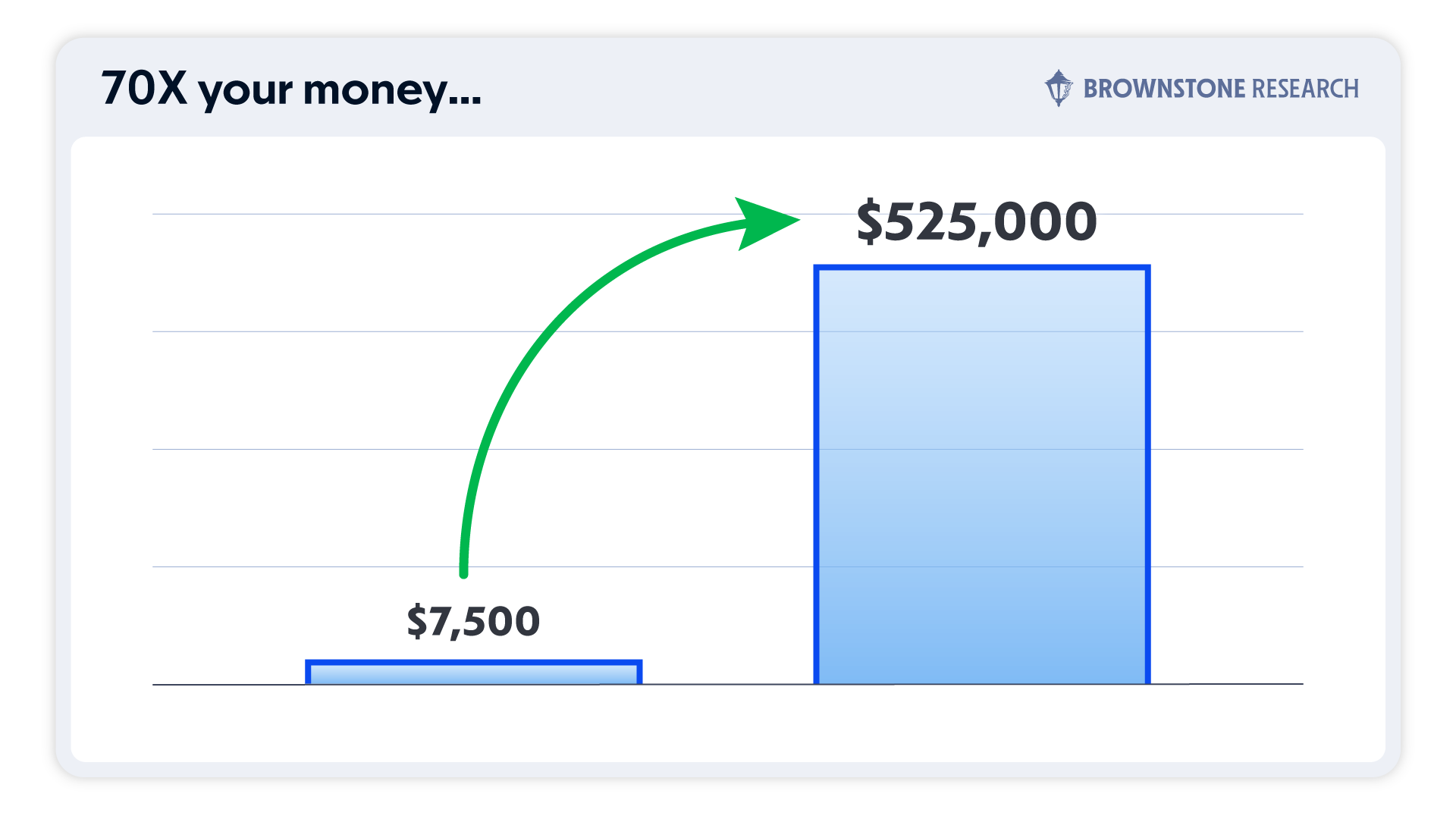
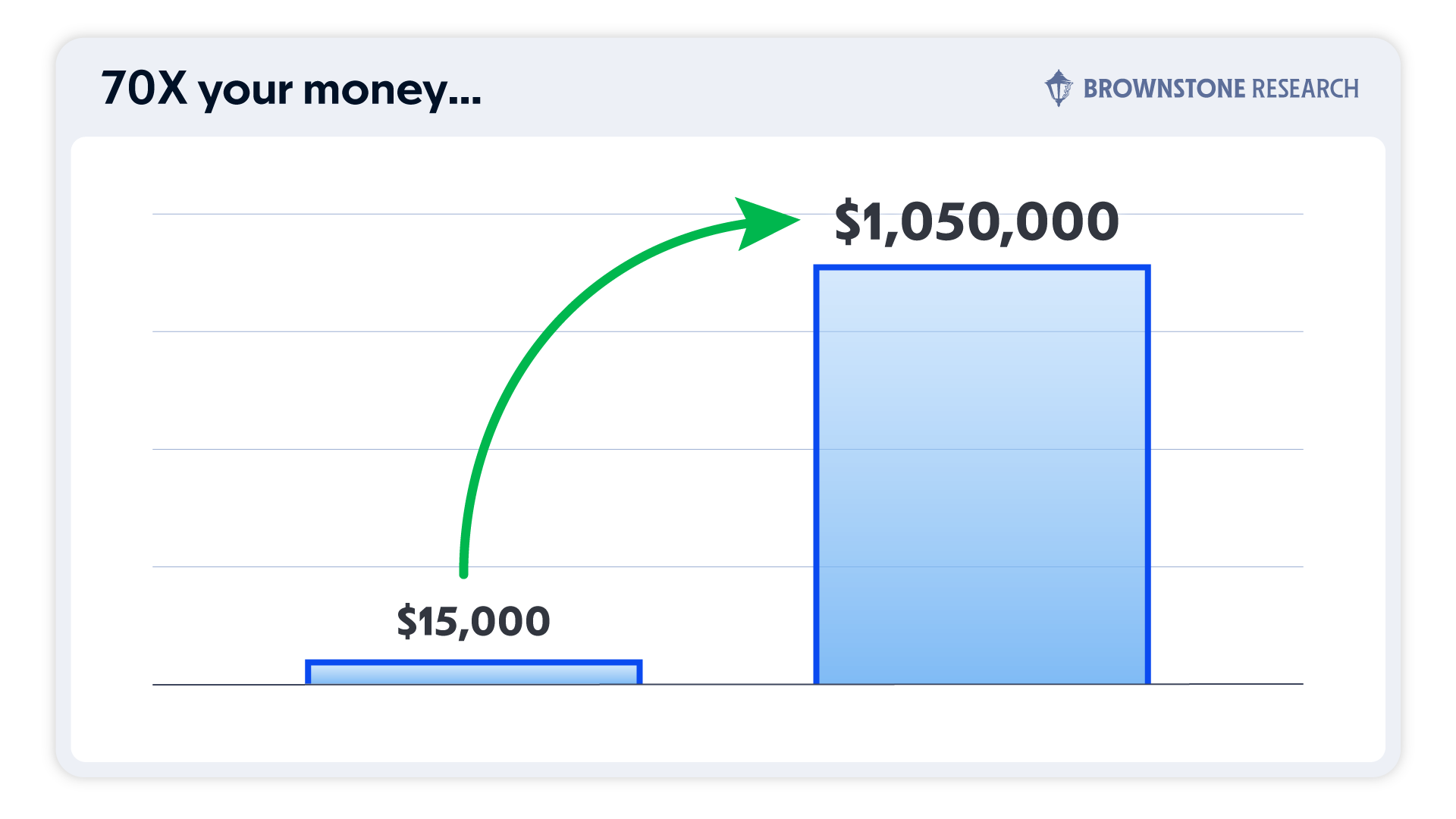
Believe this company could 70x investor’s money.
And Elon Musk agrees.
|
That would turn $7,500 into nearly half a million.
|
And $15,000 invested would make you a millionaire.
Look, IPOs are a bad deal for the public.
The only way to really profit is to get in ahead of time.
But those slots are usually reserved for insiders and bigwigs. Regular investors rarely get invited.
Once a company like SpaceX goes public, shares actually tend to drop in the first six months.
But not Elon’s secret $25 trillion IPO…
Everyone can claim a stake right this moment, as we speak.
With as little as $500…
Click here to find out how to invest in Elon’s secret $25 trillion IPO.
Regards,
Jeff Brown
Founder & CEO, Brownstone Research
FEATURED READ
META Is Reporting Today. It’s not the EPS. It never is.
Meta Platforms (NASDAQ: META) reports Q1 2026 after the close today (Wednesday, April 29, 2026). And the easiest way to misread this is to treat it like an EPS coin flip.
The market doesn’t need Meta to “beat.” It needs Meta to justify. Not the product story, not the AI demos, not the big vision. The math. The spending. The ad engine.
Because here’s the weird part: the stock has already been acting like the quarter went fine. Shares have surged over the last month, and yet trading feels jumpy – like one line in the release can undo two weeks of steady buying.
Start with the macro, not the headline
Q1 earnings season has had a consistent tell: beats are common, “good” is common, and yet the market keeps punishing anything that smells like duration risk. Translation: if a company is pulling forward profit (or pulling forward spend), investors want a clean explanation for what next quarter looks like.
For Meta, that duration risk shows up in one place: capex. Everything else is downstream.
Slight tangent, but it matters: when a mega-cap tells you it’s going to spend like a utility while investors value it like a software company, you get these odd, violent post-earnings moves. Not because the business is “broken.” Because investors and the discount rate stop agreeing for a night.
The data that actually moves the stock
Yes, the street will quote consensus revenue and EPS. It’ll be the first number on every push alert. But Meta is one of those names where a “beat” is often anticipated before the PDF even hits.
What I care about more is whether the release answers three questions without hand-waving:
- Is the ad machine accelerating for the right reasons? (pricing power, not just more inventory)
- Are margins stable in a quarter where AI costs keep creeping?
- Does 2026 capex stay inside the rails investors think they were promised?
To anchor it: in Q4 2025, Meta reported Family daily active people of 3.58 billion (up 7% year over year), ad impressions up 18%, and average price per ad up 6%. That mix matters because it tells you whether demand is pulling the system forward or whether Meta is just pushing more ad load through the pipe.
In other words: impressions without pricing can be a short-term win and a long-term problem. Pricing without impressions can be a different kind of problem. You want both moving in a way that doesn’t scream “we’re squeezing the lemon.”
Markets don’t need Meta to be brilliant tonight. They only need the ad math to stay boring while the AI spend stays explainable.
The Multi-Billion Dollar Scam Nobody’s Talking About
Fraud is being exposed everywhere right now. Billions gone.
But they’re missing the big one…
A legal scam that affects 95% of ALL Americans.
Oxford Club’s own Marc Lichtenfeld hit the streets of South Florida to expose it in broad daylight.
Watch along as he captures real people’s reactions LIVE on camera.
The capex line is still the overhang
Meta has told investors to expect $115B–$135B in 2026 capex. That’s the number. It’s big enough that it’s not just a finance detail – it’s a valuation input.
So the key isn’t whether management repeats the range. The key is whether the language around it shifts. Little phrasing changes matter here: “upper end,” “pulling forward,” “capacity constraints,” “opportunistic,” “long-lead items.” If you’ve watched enough of these, you know how quickly a range becomes a floor.
If capex creeps while revenue expectations don’t, investors start running a different model in real time. It stops underwriting “AI leverage” and starts underwriting “AI amortization.” That’s a colder framing, and the multiple usually follows it down.
Sector read-through: this is still an ad market story
Meta isn’t just a Meta quarter. It’s a digital ads quarter with a very loud microphone.
If pricing is firm and impression growth stays healthy, it’s supportive for the broader ad stack: the demand side (platforms), the supply side (publisher ecosystems), and the “picks and shovels” names that sit around measurement, commerce enablement, and infrastructure.
If the print shows decelerating ad pricing or soft guide language, you usually see investors get more selective fast. Not “sell all ads.” Just a quick rotation from anything with exposure to ad budgets into cleaner, more predictable revenue streams.
Options market lens: how traders are positioning
I’m going to keep this practical. Around earnings, options aren’t about being “right.” They’re about being right enough relative to the market’s implied move, and doing it with defined risk.
What I watch into the close:
- Implied move vs. recent realized move (if the implied move is cheap relative to how META has been moving, you often see late-day vol buying)
- Put/Call behavior (are traders paying up for puts, or are they overwriting calls into strength?)
- Skew (does downside insurance get expensive – meaning fear is concentrated – or is it oddly calm?)
- IV crush risk (post-print, volatility usually collapses; directional longs can get it right and still lose if structure is wrong)
One framing that’s helped this season: earnings is often two trades stacked together. First is the event reaction. Second is the “walk-back” where the market rereads guidance and capex language the next morning. That second move is where a lot of options P&L is made or lost.
Company-level scoreboard (what needs to be true)
Here’s the simple mental model for tonight. Not a prediction. A scoreboard.
- Ads: pricing + impressions stays constructive. If one leg weakens, the market will decide whether it was “mix” or “demand.”
- Margins: operating margin stability is a credibility signal. Compression is not fatal, but it requires a clean explanation and a credible path.
- Capex: keep the 2026 range stable, or if it shifts, make the revenue opportunity feel tangible and near-term enough to underwrite.
- Reality Labs losses: investors will glance, shrug, and then still use it as a sentiment lever if the rest disappoints.
The part people skip: Meta can report a “good” quarter and still sell off if the next quarter’s expectations rise faster than confidence. That’s the beat-vs-guide dynamic, but with a capex twist.
$1 Billion Money Manager: “Trump’s About to RUIN Elon’s SpaceX IPO”
Donald Trump never forgets an insult. And according to this Mar-a-Lago regular, he believes Trump’s about to take his revenge on Elon Musk.
How? By releasing a radical new AI model more than 1,000X more powerful than Elon’s Grok… just in time to leapfrog Elon’s SpaceX IPO.
What’s Trump up to? And how could it send shares of one AI stock (not SpaceX) soaring?
Defined-risk framework (bull, bear, neutral)
If you’re approaching this like a trader, not a fan, the cleanest way is to decide what you believe before the release – then pick a structure that survives being slightly wrong.
- Bull template: For traders expecting a constructive ad print and stable capex language, a defined-risk bullish vertical (call spread) aligned to the market’s implied move can reduce IV crush exposure versus outright calls.
- Bear template: For traders expecting capex to drift upward or ad pricing to soften, a defined-risk bearish vertical (put spread) can express downside without paying for the far tail that often collapses after earnings.
- Neutral template: For traders expecting “fine numbers, messy reaction,” consider a defined-risk, range-focused structure (iron condor or broken-wing style) only if premiums are rich enough to compensate for gap risk. If premiums are thin, don’t force it.
There’s no trophy for complexity. If the setup doesn’t pay you for the risk, pass. Missing one earnings trade is not a tax. It’s often the edge.
Risk notes (the stuff that sneaks up on people)
- Gap risk: META can clear estimates and still gap down if capex language shifts.
- Second-day move: The call tone and Q&A often matter more than the press release for how the stock trades on April 30.
- Positioning: A month-long rally changes the reaction function. In a rip, “good” is sometimes just a chance to take profits.
- Multiple risk: The stock can be “cheap” on one story and “expensive” on the one the market chooses that night.
What I’m watching after the close
I’m not looking for a perfect quarter. I’m looking for a quarter where the ad engine stays clean, the spending story stays bounded, and the guidance doesn’t quietly move the goalposts.
If we get that, the rally can keep breathing. If we don’t, it’s usually not a “Meta is broken” selloff. It’s a reset in what investors think the next year of profits should look like, given the scale of AI spending.
And yes, I’ll still read the EPS number. I just don’t let it tell me what happened.
Tactical checklist (5 minutes, no drama)
- Check ad impressions and price per ad – which one drove growth?
- Scan for capex range language – any drift toward the high end?
- Look at operating margin – stable, compressing, or “explained away”?
- Watch the after-hours reaction, then recheck at the open – does the move stick?
- Compare the move to the implied move – was the options market overpaying or underpaying for risk?
Worth a look tonight: not the first headline… the second read, once the capex phrasing settles in.