May 29, 2026
The “Trillionaire” Speculation
Blue Origin slips, SpaceX private-market appetite grows
The “Trillionaire” Speculation
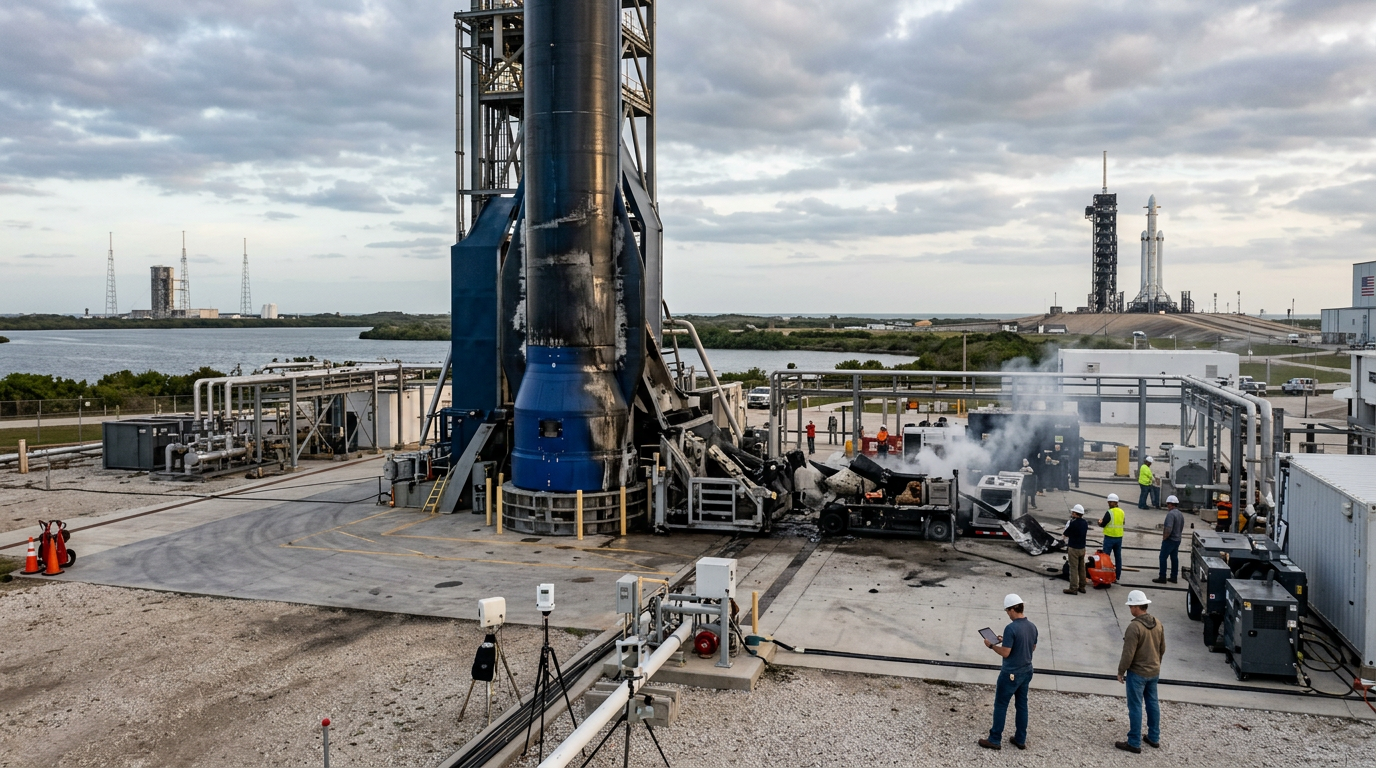
The space complex just got a reminder that hardware risk is still real. On May 28, 2026, Blue Origin’s New Glenn experienced a localized testing failure during a hot-fire event in Florida, and early reporting described a dramatic loss of the vehicle during the test window. However you frame it – anomaly, failure, setback – the immediate takeaway for traders is the same: timelines in this industry are fragile, and confidence can gap on a single headline.
In public markets, the first reaction tends to be blunt. Anything that smells like “generic space” gets hit first, especially smaller, higher-beta names that trade more on expectations than on near-term cash flow. That’s exactly the type of day where you see investors compress the whole category into one bucket and punish the edges.
Your Last TV Cost $300… While an ER Visit Costs $3,000… AI Is About to FLIP That
For 50 years, technology got cheaper while everything that actually matters – your doctor, your house, your kid’s tuition – went up 4,000%. Nobody could fix it. Until NOW.
A 41-year stock market legend says AI is about to do to healthcare, housing, and education what it already did to your TV.
“Prices won’t just drop. They will COLLAPSE. And investors who understand why could make a fortune.”
But the interesting part is what didn’t happen. The private-market conversation around SpaceX didn’t cool off. If anything, it kept building. The bid for “the platform” has looked steadier than the bid for “the theme,” and that distinction is getting sharper as the gap widens between execution-heavy programs and businesses that can monetize today.
What’s driving it is less about rockets-as-rockets and more about corporate pipelines. Institutions aren’t modeling SpaceX as a single product company – they’re underwriting a stacked set of long-duration cash flows and options: launch services, Starlink unit economics, the long tail of government contracts, and the very real possibility that Starship becomes an infrastructure layer rather than a one-off vehicle. It’s messy, it’s uncertain, and that’s precisely why the upside cases get so large.
That’s where the “trillionaire” speculation comes from. Not a promise of the next valuation mark, and not a clean straight line to an IPO, but the idea that large pools of capital are increasingly comfortable underwriting an end-state that lives north of $1 trillion. In the last few quarters, there have been multiple public references from institutional holders and secondary-market price indications that imply very large headline values for SpaceX depending on share class, liquidity terms, and transaction size. The numbers vary widely – and traders should treat them as signals of demand, not as audited truth – but the direction of interest has been hard to ignore.
Meanwhile, the instruments people use to express the view are evolving. When the underlying is private and scarce, speculation doesn’t disappear – it just routes differently. Secondary transfers, structured exposure, and “OTC-style” derivative wrappers become the pressure valves. Volume can show up quietly, in size, and with very little public visibility. It’s also why it can feel like the market is trading the absence of information: you don’t need a formal valuation filing to get positioning; you just need enough buyers who want exposure before the next liquidity window opens.
Elon Musk’s Crazy Prediction: 1,000X Your Money
Elon Musk is predicting this investment could jump 1,000x higher from here.
That turns $100 into $100,000…
$500 into half a million dollars…
And a tiny stake of $1,000 into $1 million.
Slight tangent, but it matters: this is the same behavioral pattern you see whenever a private company becomes a macro object. Scarcity turns into status. Status turns into urgency. Urgency turns into price-insensitive demand in the corners of the market that can actually access the paper.
So yes, a Blue Origin setback can dampen sentiment for smaller space equities in the near term. But SpaceX is being treated differently. The speculation is intensifying ahead of formal filings not because risk is gone, but because capital is trying to get a seat early – and it’s willing to use less transparent channels to do it.