May 31, 2026
The weirdest thing happens almost every Monday at 9:30am.
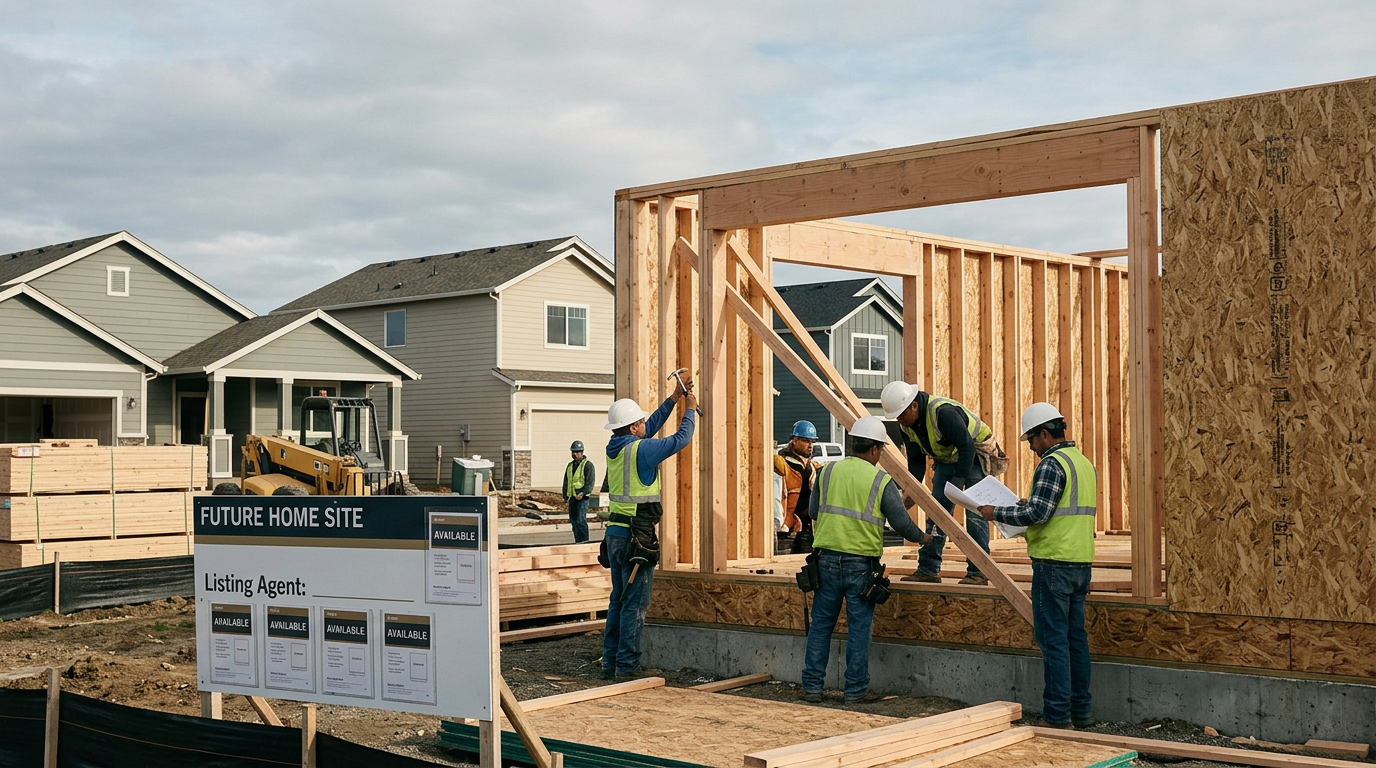
Featured: Homebuilders This Week: CPI, LEN, FOMC
The weirdest thing happens almost every Monday at 9:30am.
Like clockwork.
While most people are grabbing their second cup of coffee…
Complaining about the weekend being over…
Something bizarre starts happening in the stock market.
Tiny companies with names you’ve never heard of…
Have started moving in ways that defy logic.
186% in 4 hours.
536% in 48 hours.
Sometimes multiple stocks… same day.
Past performance doesn’t indicate future results. And all trading carries risk, of course…
But Tim Bohen’s been tracking this pattern for years…
And recently discovered there are exactly 4 criteria that forecast when it could happen.
When these 4 boxes get checked on a Monday morning?
That’s when things get interesting.
Tim’s team built a scanner that spots this pattern automatically.
Because catching it manually? Nearly impossible.
But when you know what to look for…
Monday mornings become a lot more exciting than your average coffee break.
Want to see how this works?
Watch this short presentation that explains the Monday 9:30am anomaly.
FEATURED
Homebuilders This Week: CPI, LEN, FOMC
This is one of those windows where the calendar matters more than the debate. For homebuilders, the next 17 days stack three catalysts that can change positioning fast: May CPI on Wednesday, June 10, Lennar earnings on Thursday, June 11, and the FOMC decision on June 16–17.
And the sector is not moving as one anymore. D.R. Horton is acting like a steady operator with improving orders. Lennar is acting like a problem the market is still trying to price correctly. NVR is acting like the high-quality reference point, but with real compression showing up in the numbers.
What matters right now (not in theory)
Mortgage rates are still restrictive. Freddie Mac’s Primary Mortgage Market Survey shows the 30-year fixed rate at 6.53% for the week ending May 28, 2026. That is up slightly from 6.51% the prior week. Year over year, it is lower than 6.89% around this time last year, but the absolute level is still doing damage to affordability.
The Fed is on hold, but the committee is not aligned. The Federal Reserve maintained the fed funds target range at 3.50% to 3.75% at the April 28–29 meeting, on an 8–4 vote. That level of dissent is rare. The takeaway for traders is not “cuts soon.” The takeaway is that the reaction function is less predictable into data, which can increase volatility around CPI and the June meeting.
Supply is still the long-cycle support, but it is not a timing tool. Realtor.com’s 2026 Housing Supply Gap report estimates the U.S. deficit at 4.03 million homes in 2025, up from 3.8 million in 2024. That anchors the multi-year backdrop. It does not prevent 8% to 12% moves around earnings.
Slight tangent, but it matters: the supply gap can coexist with margin compression. A tight housing market does not automatically mean higher builder margins if incentives rise, lot costs stay high, and delivery cadence slows. That is exactly why the stocks are separating.
Your Last TV Cost $300… While an ER Visit Costs $3,000… AI Is About to FLIP That
For 50 years, technology got cheaper while everything that actually matters – your doctor, your house, your kid’s tuition – went up 4,000%. Nobody could fix it. Until NOW.
A 41-year stock market legend says AI is about to do to healthcare, housing, and education what it already did to your TV.
“Prices won’t just drop. They will COLLAPSE. And investors who understand why could make a fortune.”
The split: DHI vs LEN vs NVR
D.R. Horton (DHI): order momentum is the cleanest data point
DHI’s Q2 fiscal 2026 results (reported April 21, 2026) were the best fundamental “signal” in the group. Revenue was $7.6 billion, net income was $647.9 million, and diluted EPS was $2.24. More importantly, net sales orders rose 11% year over year to 24,992 homes with order value up 10% to $9.2 billion. The cancellation rate was 16%, flat year over year.
Liquidity ended the quarter at $6.0 billion, and the company repurchased 6 million shares for $904 million in the quarter. Full-year fiscal 2026 guidance is $33.5–$34.5 billion in revenue and 86,000–87,500 closings. Home sales gross margin was around 20%, which is a reminder that incentives are still part of the landscape even for the better operators.
Why DHI is relevant this week: if CPI is benign and rates drift lower, DHI is the name with recent order data that can justify upside interest. If CPI is hot and rates jump, DHI is also the name with enough operational momentum to potentially hold up better than peers.
Lennar (LEN): the stress test is June 11
LEN is trading near $89–$90 after a sharp decline from its $144.24 52-week high. Analyst targets have been moving down, not up, and the stock is now sitting in a zone where a lot of “bad news” has already been absorbed, but not necessarily all of it.
Street expectations for fiscal 2026 have weakened. Current projections point to fiscal 2026 EPS down meaningfully versus prior estimates (roughly 19% lower to about $6.50), with gross margin estimates around 16.1%. The point is not the exact penny number. The point is that LEN is the one where margin commentary can override everything else, including macro headlines, for at least 24 to 48 hours.
Why LEN is relevant this week: because its June 11 report lands right after CPI. If CPI surprises to the upside and LEN margins disappoint, you can get a fast, correlated unwind in the group. If CPI is calm and LEN shows stabilization, you can get the opposite, a quick relief move that forces people to reassess how bearish they really are.
NVR (NVR): quality benchmark, but the compression is visible
NVR is still the reference point for “asset-light discipline,” but the most recent numbers were not comforting. In Q1 2026, revenue fell 22% year over year to $1.88 billion and net income declined 34% to $198.4 million. Homebuilding gross margin declined to 19.6% from 21.9% a year earlier. That is not catastrophic, but it is not the direction you want heading into a choppy macro tape.
NVR also completed repurchases under its $750 million authorization during the quarter ended March 31, 2026. That matters because it tells you capital return is still a priority even as the operating numbers soften.
Why NVR is relevant this week: it is the “if even this is weakening, what does that say?” cross-check. When the best house on the block starts showing margin pressure, the rest of the neighborhood rarely gets a free pass.
Three things traders should track between now and June 17
- June 10 CPI: not just the headline, but whether shelter and services are cooling enough to reduce “higher for longer” anxiety. If CPI is hotter, the sector can trade like a rate proxy again for a few sessions.
- June 11 LEN earnings: incentives, gross margin trend, and cancellation rate direction. This is the one company report that can spill over into the entire group quickly.
- June 16–17 FOMC: any shift in language around balance of risks and inflation persistence. The April meeting showed an unusually divided committee, which can make the market more sensitive to phrasing changes.
Trading framework: levels and risk, not forecasts
I would keep this simple. The sector has a long-term supply support story, but the short-term driver is whether rates and margins stabilize in the same two-week window. You do not need to be a housing economist to trade that. You need a plan for volatility.
- DHI: $140–$143 is the first support zone mentioned previously, with $160–$165 as the first resistance band tied to common analyst targets. Watch how it behaves on down-index days. That is often the “real” tell for relative strength.
- LEN: $83–$85 remains the nearby support area with $95–$100 as the first major recovery zone. Into June 11, assume the stock can move 8% to 12% quickly if the margin commentary surprises.
- NVR: the market has treated the low $6,000s as an important area. If that fails on macro pressure, sentiment can deteriorate quickly across the group because NVR is typically the steady reference point.
One more thing: if you are trading these names around June 10 to June 17, keep an eye on correlations. In quiet weeks, homebuilders can decouple and trade company-specific fundamentals. In loud weeks, they can snap back to trading as one basket. This is shaping up to be a loud week.
Author of Get Rich with Dividends Is Giving Away His Ultimate Dividend Package FOR FREE!
Click Here to Get Marc Lichtenfeld’s Ultimate Dividend Package, Including Details on His #1 Dividend Stock… the Safest 9% Dividend in the World… the Top Three “Extreme Dividend” Stocks… and Much, Much More.
Three scenarios (with concrete triggers)
Bull case: June 10 CPI is benign enough that mortgage rates drift below the mid-6% zone over the following sessions, LEN earnings on June 11 shows margin stabilization rather than further compression, and the June 16–17 FOMC does not re-introduce tightening risk. In that mix, DHI has a path back toward the $160s, LEN can reclaim the $95–$100 zone quickly, and NVR can work back toward $7,000.
Base case: CPI is mixed, LEN prints close to expectations but does not improve the margin outlook, and the Fed stays on hold with careful language. The group chops around, and stock selection matters more than the sector view. DHI holds the best, LEN stays volatile inside $83–$95, and NVR stays heavy near the low $6,000s.
Bear case: CPI re-accelerates, mortgage rates climb, and LEN commentary confirms that incentives are still rising in key markets. If that happens into a cautious Fed meeting, the “basket effect” can show up and drag even the higher quality names. Under that path, LEN can revisit its $81 area, DHI can drift back toward the mid-$130s, and NVR can see pressure toward the high $5,000s.
If you have been waiting for a clean “all clear” on housing, you are probably going to keep waiting. What you do have, right now, is a tight catalyst cluster and a sector where the companies are not behaving the same. That is usually where opportunity shows up, but it also means you cannot be lazy about risk.
Worth a look: map your plan around June 10, June 11, and June 17, then decide which single metric would make you change your mind fastest. For DHI it is orders. For LEN it is margins. For NVR it is the slope of the compression, not the brand name.