
July 17, 2026
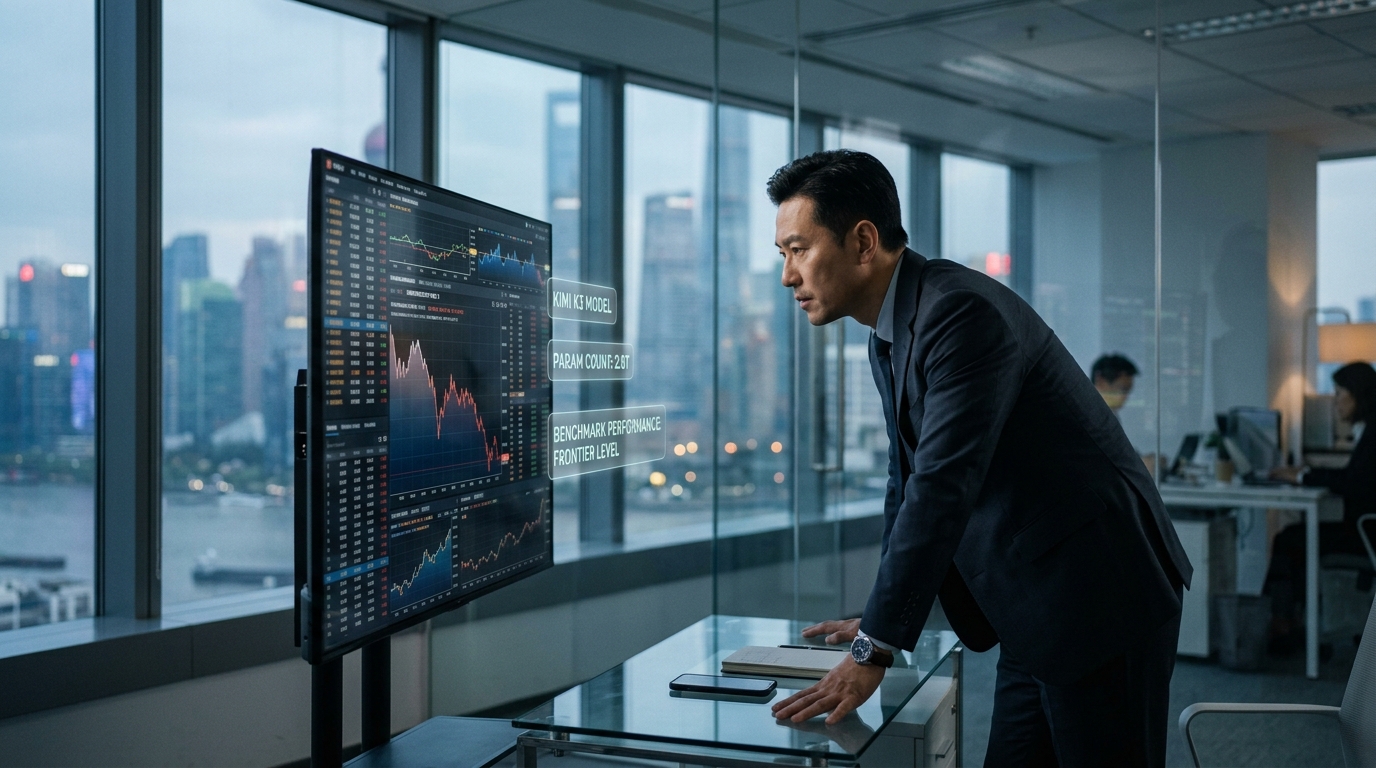
China Just Dropped Kimi K3. The Chip Selloff Is Not Over.
A 2.8 trillion parameter model just triggered the second DeepSeek moment in 18 months.
Dear Reader,
Only 3% of U.S. companies have adopted AI.
Three percent.
Everything you’ve seen so far – Nvidia’s run, the trillion-dollar market caps, all of it – happened with 3% adoption.
Ninety-seven percent of the opportunity is still ahead.
But here’s what most investors get wrong: the stocks that won during the first 3% are NOT the ones that will win during the next 97%.
It happened with the internet. Cisco dominated the buildout. Then crashed 86% over the next year and a half while Amazon – a company that USED the infrastructure Cisco built – rose 257,000% since its 1997 IPO.
I just recorded a presentation showing you exactly which AI stocks are positioned to capture the 97% that’s still coming.

My name is Alexander Green. I’ve been the chief investment strategist of The Oxford Club for over two decades. I recommended Apple under $1, Amazon under $2, and Nvidia in 2004.
I’ve never seen an opportunity this large this early.
Click here to watch the full presentation.
Good investing,
Alexander Green
Chief Investment Strategist, The Oxford Club
P.S. The internet went from 3% enterprise adoption to mass adoption and created $15 trillion in new wealth. AI is following the same path – but faster. Don’t miss it. Details here.
It happened again.
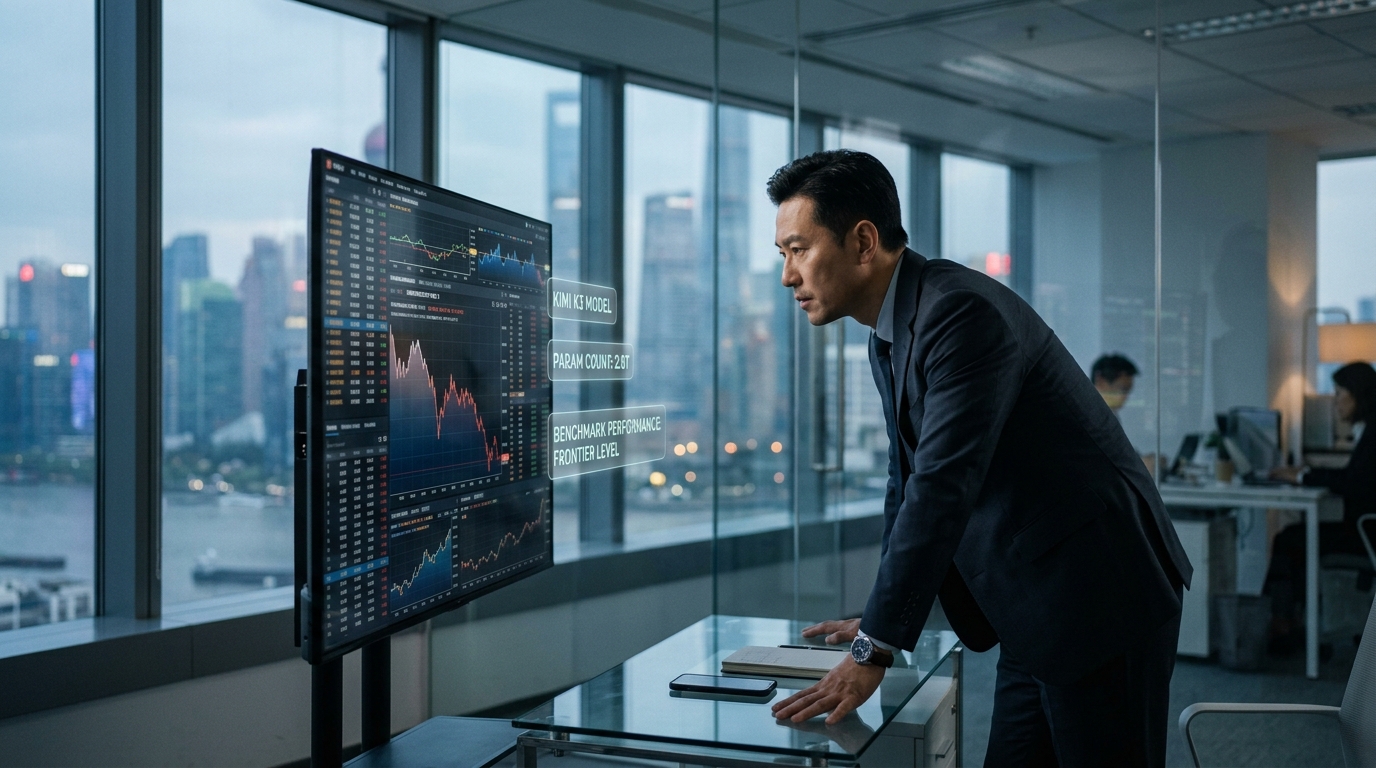
A Chinese AI startup released a model that benchmarks at frontier level, the semiconductor index sold off sharply from its recent high in a matter of days, and Wall Street is having the same argument it had in January 2025 all over again. Except this time the model is bigger, the market is more crowded, and the full open-weight release does not drop until July 27.
That date matters more than today’s stock prices.
What Kimi K3 Actually Is
Moonshot AI, a Beijing-based startup founded in early 2023, unveiled Kimi K3 on July 16. The headline specs appear to be real: 2.8 trillion total parameters, a 1 million token context window, Mixture-of-Experts architecture, and a planned open-weights release. It is being described as the largest open-weight AI model once the weights are publicly released.
On benchmark tests, the model reportedly matched or outperformed several leading U.S. models. Some early reporting and third-party trackers also indicate strong showings on coding and general chat leaderboards, but the specific “blind testing by Arena” claims in this draft (including the named U.S. model versions and exact rank/tie assertions) could not be verified in credible primary sources at the time of review, so they have been removed pending independent confirmation.
The prior Kimi model in this series, K2, was described by Moonshot as “trillion-parameter.” K3’s 2.8 trillion total parameters is a large step up. This is not incremental progress.
Moonshot raised about $2 billion in May 2026 at a valuation of roughly $20 billion, according to TechCrunch’s reporting on a post by Huafeng Capital. Its backers have been reported to include Alibaba and Tencent. Claims in this draft about an active Hong Kong IPO preparation could not be verified in credible sources, so they have been removed.
The Market Reaction in Context
The PHLX Semiconductor Index has fallen sharply from its late-June/early-July highs heading into Friday’s session. The immediate comparison being drawn everywhere is to DeepSeek’s January 2025 moment, when a Chinese lab released a model that appeared to match U.S. frontier performance at a fraction of the cost, and Nvidia dropped sharply in a single session.
That comparison is fair in structure but worth examining more carefully. The DeepSeek event hit a market that had not yet wrestled with Chinese AI competition at the frontier level. This time, the market has had roughly 18 months to think about the implications. Day-to-day moves are still happening, but the framing is different now.
A specific BofA quote in this draft about “intensifying price competition across the model layer” and “data-governance scrutiny” could not be verified in an attributable, citable source at the time of review, so it has been removed.
That last part is not a small caveat. U.S. lawmakers have been debating how to curb adoption of Chinese AI models by American companies. The data-sovereignty argument may slow enterprise adoption of Kimi K3 even if the benchmarks hold up. That is a meaningful asymmetry in the bear case.
July 27 Is the Date That Resolves This
Here is what most of the market conversation is missing. The model’s full open weights are scheduled for public release on July 27, according to Moonshot-linked materials and coverage. Open weights mean developers can download the model, run it themselves, fine-tune it, and deploy it without paying API fees.
When that happens, independent evaluations will either confirm the benchmark claims or they will not. If they confirm them, the pressure on U.S. AI companies to justify their cost structures intensifies sharply. If the model underperforms its official benchmarks under real-world conditions, the semiconductor selloff will likely partially reverse as the market decides this was an overreaction.
This is not a resolved question. It is a two-week window of uncertainty. And that uncertainty is what is driving the current repositioning.
The pricing structure is also unusual for a Chinese model. Third-party pricing trackers and Moonshot-linked materials list K3 at $3 per million input tokens (cache-miss) and $15 per million output tokens, with a lower cached-input price. Whether that is “the most expensive Chinese model to date” is not verifiable from credible sources, so that characterization has been removed. But the broader point holds: it is not positioned as rock-bottom pricing.
Sector Breakdown: Where the Pain Is Landing
The selloff is not uniform. Semiconductor equipment is getting hit hard — Lam Research, Applied Materials, and ASML have all moved sharply this week as traders questioned whether hyperscaler capex commitments hold if cheaper model alternatives reduce the urgency of building out more GPU clusters.
The hyperscaler capex argument is the central question. S&P Global Ratings estimates the five large cloud providers it rates (Alphabet, Amazon, Meta, Microsoft, and Oracle) will spend about $750 billion on capex in 2026. Forecasts differ by scope and methodology, but the direction is clear: the budget number is enormous. If Kimi K3’s open-weight release in 10 days confirms that frontier-level AI is achievable with materially less demand for new GPU buildout than current spending implies, the math on that capex cycle gets re-examined.
But here is the other side. Alphabet reports July 22. Meta reports July 29. Claims in this draft about Microsoft reporting on July 29 could not be verified from a primary investor-relations source at the time of review, so Microsoft has been removed from the dated list. If even one of these companies signals any softening in its AI infrastructure spend, the chip selloff deepens. If they reiterate their capex commitments without hesitation, the move reverses. That is the actual trade, not the Kimi K3 announcement itself.
Three Scenarios
Bull Case for Semis: July 27 open-weight release shows Kimi K3 underperforms its benchmarks in real-world testing. Alphabet and Meta reaffirm capex guidance on earnings calls. The current chip selloff gets classified as a positioning flush, not a structural shift. The SOX recaptures much of what it lost over the past few weeks into August.
Base Case: Kimi K3 benchmarks largely hold up on July 27, but data governance concerns limit enterprise adoption in the U.S. Hyperscalers maintain capex guidance but acknowledge efficiency improvements at the model layer. The chip sector trades sideways through August earnings, with individual names diverging based on exposure to memory versus GPU compute versus software infrastructure.
Bear Case: Kimi K3 is verified by independent evaluators as a genuine frontier model. DeepSeek releases an updated model shortly after, as anticipated. Multiple hyperscalers signal any form of capex pause or revision on Q2 calls. The SOX extends its decline and the broader AI infrastructure trade faces a multi-month digestion period before finding a floor.
Active Trader Framework
The volatility here is creating opportunities on both sides, but the setup requires patience. Trading into a binary event — the July 27 weight release — without position sizing for a 15% swing in either direction is not risk management. It is speculation.
What matters more than picking a direction this week is identifying what you want to own if the bull case plays out and what provides cover if the bear case does. Application-layer software names that embed AI and benefit from lower model costs are a cleaner position than GPU-centric semiconductor names while this specific uncertainty is unresolved.
Key levels to monitor: The SOX has already broken below its 50-day and 100-day moving averages. The 200-day becomes the next line of technical significance. A move below that level in the semiconductor index would signal the selloff has moved from a positioning event to something requiring a fundamental reassessment of the sector’s earnings trajectory.
Slight tangent, but it matters: the timing of this release, just before the 2026 World Artificial Intelligence Conference in Shanghai, is not accidental. President Xi did attend the opening ceremony on July 17, 2026 and delivered a keynote address outlining China’s positions on AI development and governance. This is a geopolitical signal as much as a technology announcement. Washington is watching. That dynamic adds a dimension to this trade that pure technical analysis does not capture.
The pattern is familiar. The uncertainty is real. July 27 is when the conversation moves from reaction to resolution.