September 9, 2026
Bonus Content: Nvidia Holds $105B in Risk. A Credit Rating Could Change That.
Hey,
I’m going to do something that may seem a little out of the “norm” these days…
I’m going to give you my #1 trade setup. For free.
It’s the same one I used to find winners like:
- 113% on GOOGL in under 2 hours.
- 240% on META in a single session.
I call it the “Opening Bell Breakout.”
It’s one simple setup I look for every morning. When it shows up…
I simply take the trade. And by 10 AM, I’m done.
I’ve put all the details on how it works in a simple, no-fluff guide.
No credit card required. No strings attached.
>> Get Your FREE “Opening Bell Breakouts” Trade Guide Here
This guide shows you the exact 15-minute window I trade, and how to spot the same setups the big funds are watching.
It’s yours for free.
Thomas Wood
P.S. This isn’t a 100-page novel. It’s a short, actionable guide you can read in about 10 minutes and put into action by tomorrow morning. Get it here.
Nvidia Holds $105B in Risk. A Credit Rating Could Change That.
Bullet Summary
- Goldman Sachs and Morgan Stanley held talks with S&P, Moody’s, and Fitch to secure investment-grade ratings for OpenAI and Anthropic around their IPOs, per the Financial Times (September 8, 2026).
- OpenAI posted a $20.92 billion operating loss on $13.07 billion in revenue in 2025; reporting has said Anthropic is targeting breakeven in 2028 and OpenAI in 2030.
- The banks want access to the $11.7 trillion corporate bond market post-listing to cut AI infrastructure borrowing costs.
- Nvidia disclosed a $105 billion guarantee tied to OpenAI-related leases at SB Energy’s PORTS Technology Campus in Pike County, Ohio, with termination provisions that include OpenAI achieving a satisfactory credit rating.
- SpaceX received BBB/Baa1/BBB+ ratings on June 18, 2026, yet its bonds traded around a 1.62-percentage-point spread over Treasuries in early July, wider than the average BB spread of 1.55 points.
- Broadcom, alongside Apollo and Blackstone, launched a $35 billion AI infrastructure financing platform tied to Anthropic’s compute expansion.
- Rating analysts continue to treat both OpenAI and Anthropic as speculative-grade risks, citing limited disclosure and uncertain cash generation.
Market Context Analysis
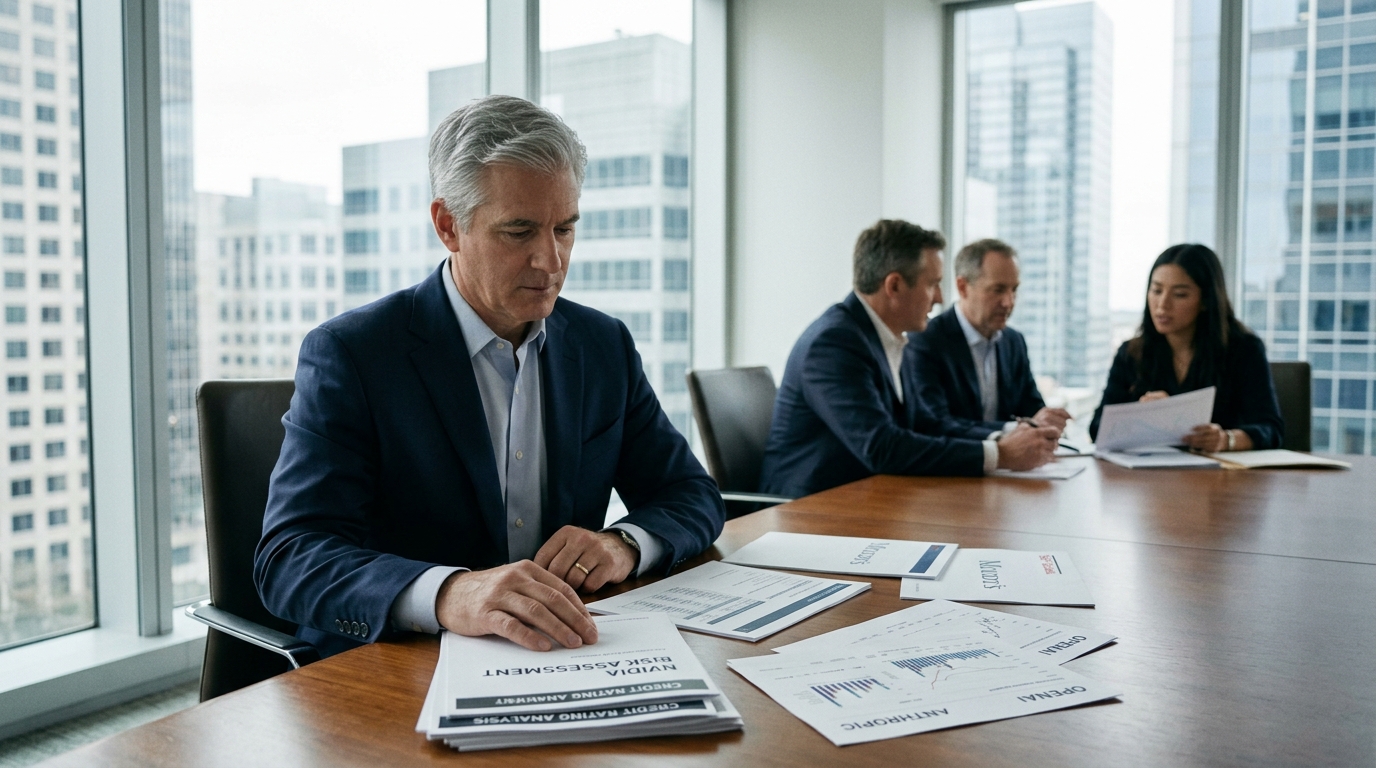
The credit rating campaign Goldman Sachs and Morgan Stanley launched on September 8 is as much a corporate finance engineering exercise as a bond market play. Both banks have been in formal discussions with S&P, Moody’s, and Fitch on behalf of OpenAI and Anthropic, arguing that an IPO would transform each company’s liquidity profile sufficiently to justify immediate investment-grade treatment. Rating analysts are unmoved. They continue to describe both labs as speculative-grade and loss-making, citing thin public financial disclosure and no clear path to positive free cash flow.
The banks’ case rests on post-IPO balance sheet improvement rather than any present-day fundamentals. Their target is the $11.7 trillion corporate bond market, where an investment-grade label unlocks pension fund and insurer capital at materially lower rates. One senior credit analyst quoted by the Financial Times put it plainly: “Wall Street is trying to minimise their overall debt impact by arguing that these two companies will soon be flush with liquidity.” That is a forward-earnings argument, not a credit argument.
The SpaceX Warning Sign
The playbook Goldman and Morgan Stanley are running has a recent reference point, and it cuts both ways. All three major agencies assigned SpaceX investment-grade ratings on June 18, 2026: S&P at BBB (stable), Moody’s at Baa1 (stable), and Fitch at BBB+ (stable). The ratings arrived days after SpaceX’s IPO closed on June 15, 2026, which raised approximately $85.7 billion in gross proceeds. Within weeks, bond markets delivered a verdict of their own: SpaceX debt was trading at about a 1.62-point spread over Treasuries in early July, wider than the average BB spread of 1.55 points and nearly double the 0.92 points typical for BBB-rated corporates.
SpaceX had Starlink, a recurring-revenue satellite business with 12 million subscribers as of June 30, 2026, anchoring its rating case. Credit commentary at the time still pointed to pressure from heavy investment and projected negative free cash flow in the medium term even with that tailwind. OpenAI has revenue growing at pace but a cost base growing faster, with no equivalent cash-generating subsidiary. The agencies are being asked to rate a future earnings story. Markets, when given a chance, price the present.
Nvidia’s Exposure and the Termination Clause
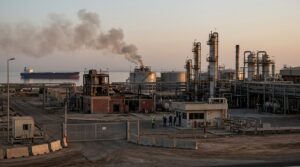
The stakes for Nvidia are concrete. In August 2026, Nvidia disclosed that it had entered into agreements with SB Energy Corp. (and affiliates) to support development of the PORTS Technology Campus in Pike County, Ohio, including an aggregate payment obligation capped at $105 billion tied to OpenAI’s lease arrangements at the site. The initial commitment relates to roughly 4.25 gigawatts of IT load. If OpenAI stops paying rent or becomes insolvent, Nvidia’s economics function as a backstop to the structure, subject to the contractual terms and caps described in the filing.
The filing contains one sentence traders should not skip: the guarantee terminates upon specified events that include OpenAI achieving a satisfactory credit rating. An investment-grade designation around an IPO would, in a single step, open bond markets to OpenAI, compress its borrowing costs, and potentially remove Nvidia from a $105 billion contingent obligation. Whether that outcome materializes depends entirely on whether Moody’s and S&P accept the banks’ post-IPO liquidity argument.
The Broadcom Parallel
Anthropic carries a structurally similar set of counterparty dependencies. Apollo and Blackstone, in partnership with Broadcom, announced a $35 billion AI infrastructure financing platform on June 9, 2026, tied to Anthropic’s compute capacity expansion. An investment-grade rating at Anthropic’s IPO would shift more of that exposure from private balance sheets onto public bond investors.
Scenario Modeling
Bull Case: Agencies accept the post-IPO liquidity argument, grant investment-grade ratings to both labs at listing. OpenAI accesses bond markets at sub-5% rates, Nvidia’s $105 billion guarantee terminates, Broadcom’s contingent exposure rolls off. NVDA and AVGO both see balance-sheet relief; Goldman (GS) and Morgan Stanley (MS) lock in the full IPO-to-bond-issuance fee chain.
Base Case: Agencies hold at speculative grade through at least the first year post-IPO, citing insufficient public disclosure. Both labs access bond markets at high-yield rates. Nvidia’s guarantee remains intact until it terminates under its contractual triggers. Broadcom’s structure continues to support Anthropic’s compute expansion. Bank fee economics weaken on the bond side.
Bear Case: Agencies decline outright. OpenAI and Anthropic are forced to rely on private credit at materially higher spreads. Infrastructure buildout slows. Nvidia’s $105 billion contingent obligation sits on the books deeper into the project timeline, raising questions about circular financing risk. Credit spreads on any debt the labs do issue price well into junk territory, echoing the SpaceX dynamic but without the Starlink backstop.
Active Trader Strategy Framework
NVDA is the most direct read-through in either direction. A rating outcome should be monitored as a binary catalyst for the Ohio guarantee line. AVGO warrants parallel attention given its linkage to the Anthropic compute financing platform. GS and MS have dual incentives as both IPO underwriters and credit rating lobbyists; a firm agency refusal would compress their bond issuance fee opportunity materially. Volatility in all four names should be expected around any agency decision or IPO filing update. Position sizing should reflect that the timing of agency decisions remains genuinely uncertain and that the SpaceX precedent shows even a favorable label does not guarantee favorable bond pricing.
Preparation is the discipline here. The data is in the filings. The risk is in the clause the market has not yet priced.