
October 4, 2026
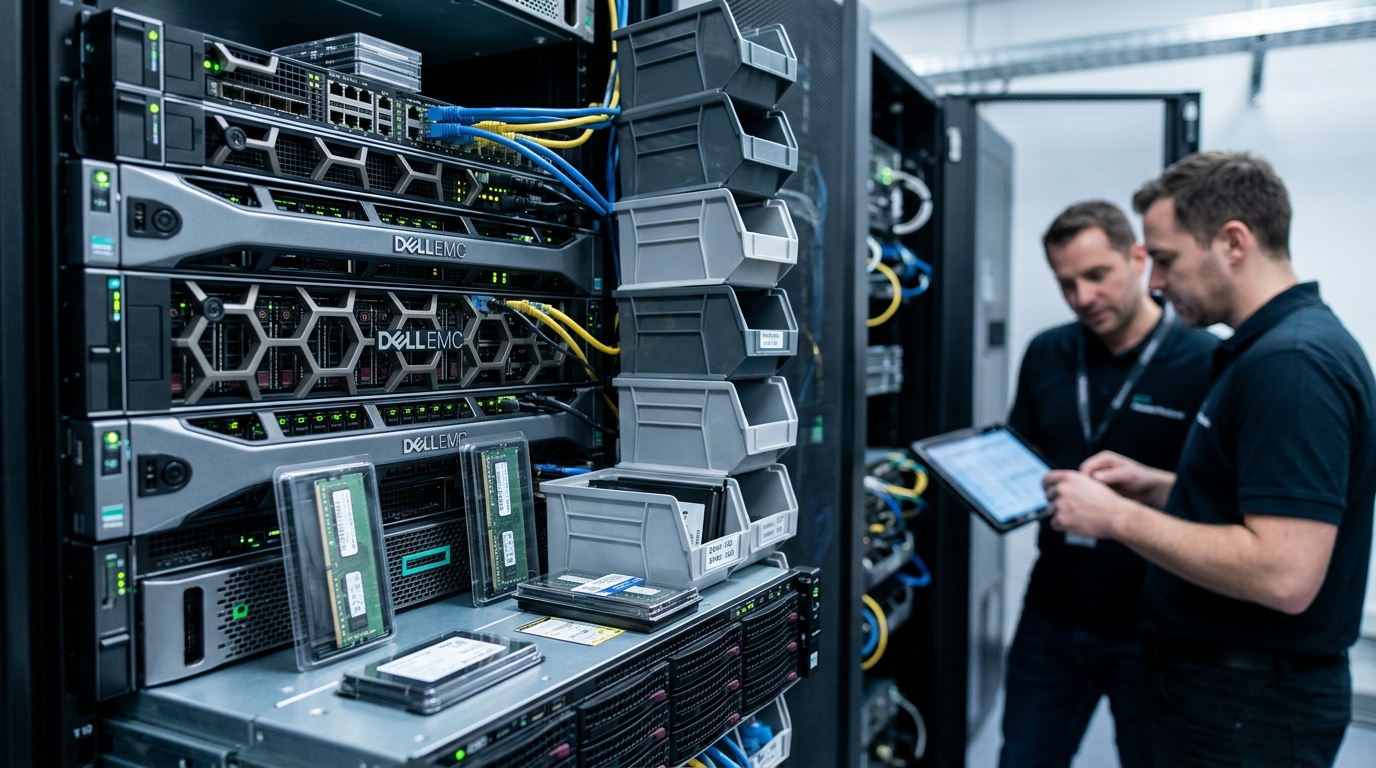
Bonus Content: Memory Prices Are Up 20%. Dell and HP Are Paying for It.
Dear Reader,
For a while now, nuclear power has looked like something the world left far behind.
Plants were shutting down, projects were being shelved, and investors had largely moved on.
The IEA itself reported that nuclear power’s share of global electricity generation fell from 17.5% at its peak in 1996 to about 9% in 2024.
But now, that story is reversing fast.
Google has signed nuclear-power-related deals in both the U.S. and Europe.
In fact, one shuttered nuclear plant in Iowa is now being brought back to life with Google agreeing to buy its output for 25 years.
What’s powering this dramatic reversal?
Weiss Ratings analysts believe the answer traces back to rising demand for a new resource called Computium.
Producing more of it requires staggering amounts of power. And that’s set to create opportunities far beyond the companies that produce Computium itself.
Chris Graebe, who leads Weiss Ratings’ venture research, hunts for young companies with the potential to grow into much larger businesses.
He sees the Computium field as a rich target for these kinds of small firms with big potential.
In this new presentation, he tells us everything you need to know about Computium …
And why this opportunity could hit critical mass on Oct. 12.
So don’t delay.
Discover how you could cash in as the Computium boom brings nuclear power back from the dead.
Sincerely,
Eliza Lasky
Weiss Advocate
Memory Prices Are Up 20%. Dell and HP Are Paying for It.
The fourth quarter of 2026 is shaping up as the clearest test yet of who holds pricing power in the PC supply chain, and the answer is not Dell, HP, or Lenovo.
TrendForce’s September 30 forecast projects conventional DRAM contract prices to rise 10–15% quarter over quarter in 4Q26, while overall NAND flash contract prices are expected to climb 15–20%. DRAM manufacturers are continuing to allocate advanced-process capacity to high-performance server applications, keeping the market in an overall undersupply condition. The open market for conventional memory is thin: long-term agreements and large forward commitments from major cloud providers can absorb supply at the supplier level before it reaches broader allocation.
Where the Margin Goes
The arithmetic of a 10–15% DRAM increase is brutal for PC assemblers. HP revealed during its Q1 2026 earnings call that memory now accounts for 35% of the cost of materials needed to build a PC, up from 15–18% the prior quarter. A 15% sequential rise on a 35% cost bucket moves roughly 5 percentage points of gross margin, assuming no pass-through. HP cannot fully pass through. Personal Systems operating margin was 4.6% in fiscal Q3 2026, down from 5.8% in fiscal Q4 2025, as higher commodity costs more than offset pricing actions and cost reductions. Management expects the Personal Systems margin to fall again in the fiscal fourth quarter before improving in fiscal 2027.
Dell’s consumer segment is no better positioned. CSG revenue was up 3% to $12.5 billion in Q3 FY2026, with consumer revenue declining 7% to $1.9 billion, and CSG operating income at about 6% of revenue. On the same call, management explicitly cautioned on the industry-wide impact of rising memory and storage input costs, stating the cost basis is going up across all products.
PC brands are already reducing SSD capacities in mainstream models to lower bill-of-materials costs as higher memory costs weigh on notebook sales. Following an estimated shipment decline of around 10% in 2026, notebook shipments are projected to contract slightly again in 2027 due to persistently high component costs. That is not a margin recovery story.
The Supply Side Financials
The flip side of HP’s margin compression is Micron’s margin expansion. Micron reported fiscal Q4 2026 revenue of $54.23 billion, up sharply year over year, with a record GAAP gross margin in the high-80% range and a Q1 FY2027 revenue forecast of $61.5 billion. Full-year FY2026 revenue came to $133.19 billion against $37.38 billion in FY2025. SK Hynix, meanwhile, rose 3.2% in the Korea market on October 1, 2026, as optimism over tight AI-memory supply supported the rally. SK Hynix concluded long-term agreements with around 10 customers, with terms of about five years and customer deposits built in, after posting Q2 operating income of KRW 60.5 trillion at a 76% margin.
SanDisk is levered to the same NAND price move. Fiscal Q4 2026 revenue was $8.97 billion, up 51% sequentially, with approximately two-thirds of that sequential gain coming from higher pricing rather than volume. Full-year 2026 revenue reached $20.25 billion, up 175% year over year.
Technical Framework
MU is trading above its 50-day moving average of $165.71 and has established a series of higher-volume accumulation weeks since the September 30 earnings release. The key level to monitor on any pullback is the prior breakout zone near $185-190. SKHY’s ADR closed at $195.13, also above its 50-day. A hold above $185 keeps the intermediate uptrend intact. For HPQ, the 4.6% Personal Systems operating margin is a line in the sand: further compression to sub-4% would likely accelerate institutional selling.
Scenario Modeling
Bull Case
DRAM contract prices rise toward the top of the 15% forecast and NAND trades near 20%. MU extends its FY2027 Q1 guidance beat. SKHY trades toward analyst consensus of $253. PC OEMs pass more cost into device prices, limiting EPS erosion. MU above $230, SKHY above $220.
Base Case
DRAM rises 10–12% and NAND 15–17%, in line with TrendForce mid-range estimates. Memory supplier margins hold near current levels. HPQ Personal Systems margin stabilizes at 4–5% through Q4 and begins recovery in early 2027, as management guided. Capital rotates from PC OEMs toward MU and SNDK. DELL CSG remains under pressure while ISG AI-server revenue offsets.
Bear Case
Consumer demand weakens faster than anticipated, notebook sell-through stalls, and module makers reduce purchases below contract minimums. NAND flash wafer prices have reached historical highs that retail channels are increasingly unable to absorb, prompting module makers to buy more cautiously. If OEM demand destruction accelerates, contract price increases moderate below forecast, and MU pulls back toward $185.
Active Trader Framework
The rotation logic here is simple to articulate and harder to size: every dollar of gross margin that leaves HP’s Personal Systems segment lands somewhere on Micron’s income statement. The Q4 TrendForce forecast is the mechanism; the October earnings cycle is the catalyst window. Position sizing in MU and SKHY should account for the premium already embedded in both stocks after a year of historic margin expansion. Monitor HPQ’s fiscal Q4 report closely: further Personal Systems margin deterioration below 4% would validate the rotation and likely accelerate institutional flows into the supply side.
Preparation here means knowing the specific margin levels that confirm or break each scenario before the data arrives, not after.