October 8, 2026
Bonus Content: Tankers Are Earning $1.33M a Day. Here Is What the Numbers Say About the Stocks.
Ian Cooper here,
Alert!
If you still haven’t saved your copy of “The 10X Options Profit Strategy”…
… do it right now before the download link expires.
We’ll be moving this book behind a paywall in the near future so grab it now while you still can.
You’ll thank me.
FREE: The 10X Options Profit Strategy
To your success,
Ian Cooper
Tradewins
Reminder: Grab your copy of “The 10X Options Profit Strategy” before we move it behind a paywall.

Tankers Are Earning $1.33M a Day. Here Is What the Numbers Say About the Stocks.
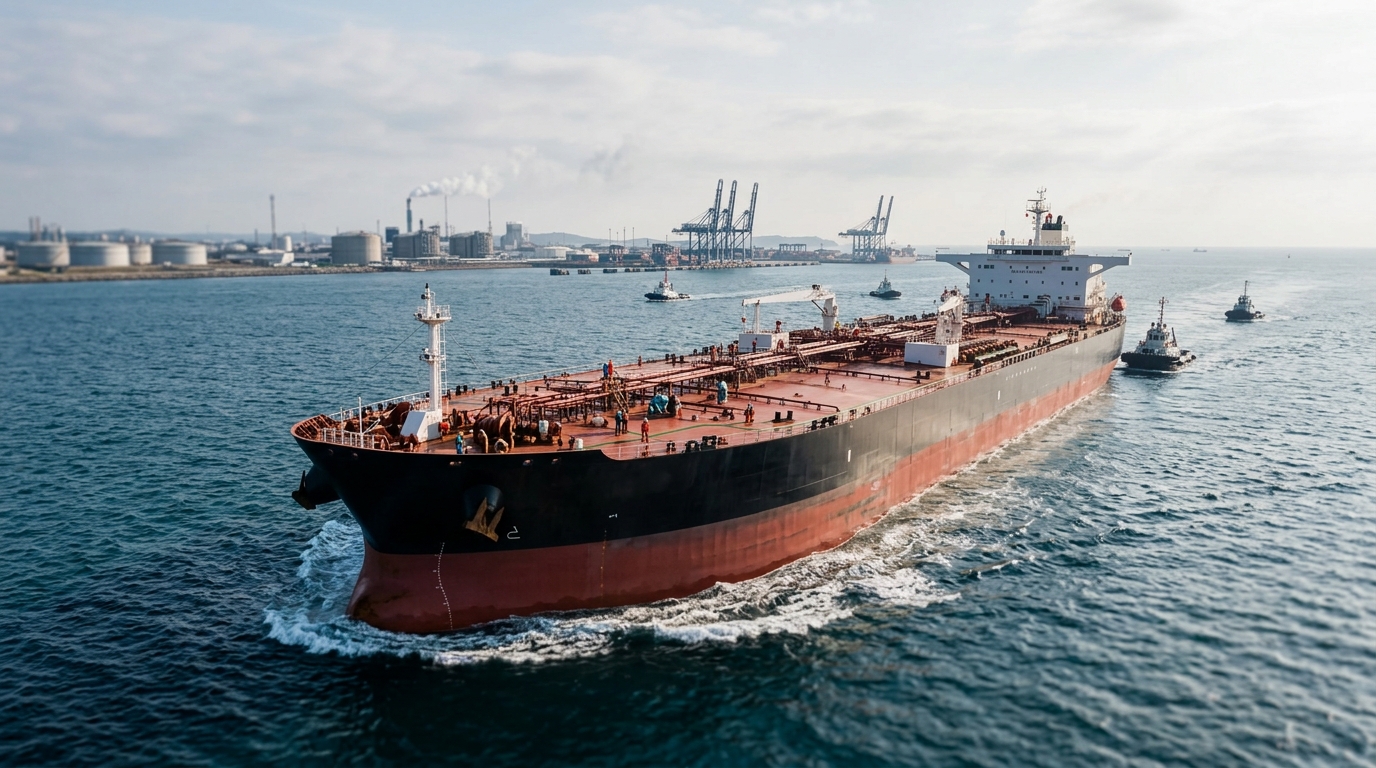
The benchmark for moving Saudi crude to China hit $1.33 million per day on October 7, a new record and more than 21 times where rates sat a year ago. That figure matters for active traders because it is not an abstraction: it lands directly in the income statements of listed tanker owners whose Q3 earnings season opens next month.
How We Got Here
Hormuz traffic has collapsed from more than 100 vessels a day to just five, the product of sustained conflict between the U.S.-Israel coalition and Iran that began on February 28, 2026. Saudi Arabia’s rerouting efforts have leaned harder on ship-to-ship transfers outside Hormuz, and multiple market reports describe Gulf of Oman STS capacity as operating near its limits. Kpler analyst Panagiotis Krontiras estimates the resulting demand surge requires between 36 and 40 additional VLCCs just to clear the volume Saudi Aramco has sold for Gulf of Oman delivery.
The October 7 rate surpassed the previous record of $1.27 million set September 21. The cascade effect has spilled into suezmaxes, with suezmax demand in turn dragging up aframaxes.
Aramco’s response to all of this is telling. Saudi Aramco set the November official selling price for Arab Light crude to Asia at $5 per barrel below the average of Oman and Dubai crude prices, reducing the differential by $3 per barrel from October, the widest discount since June 2020. The cut was a major surprise: traders and refiners surveyed by Bloomberg had expected the Saudi producer to raise the price by as much as $5 a barrel. Riyadh is effectively writing a freight subsidy into its pricing sheet to keep Asian refiners buying.
The Earnings Math
The listed owners have already reported extraordinary numbers. DHT Holdings, the VLCC pure-play, delivered its strongest quarter in corporate history in Q2 2026. Average combined TCE earnings reached $126,700 per day, with spot-market VLCCs averaging $162,600 per day. Net profit for the quarter was $198.3 million, and first-half 2026 net profit exceeded DHT’s previous full-year record of $266.3 million set in 2020.
Frontline (FRO) runs a larger, more diversified fleet. The company reported a record Q2 2026 net profit of $659.2 million, or $2.96 per share, on revenue of $943.3 million. Management estimated full-year cash generation potential at $1.5 billion based on prevailing rates, with a 30% spot-market increase capable of lifting that figure to $2.1 billion. FRO trades at roughly 7.7x trailing earnings with a trailing dividend yield above 10%.
International Seaways (INSW) posted record Q2 net income of $295 million, or $5.91 per share, and declared a record $5.05-per-share quarterly dividend consistent with its policy of returning at least 85% of adjusted net income. Teekay Tankers (TNK), which runs suezmaxes rather than VLCCs, reported record adjusted net income of $194 million in Q2, with suezmax spot rates averaging about $109,000 per day.
Technical Framework
A basket of listed shipping stocks has climbed roughly 68% year-to-date, more than five times the S&P 500’s gain. Crude-tanker stocks have led, up about 120% year-to-date. That run means the technicals are stretched. Most names in the group are trading well above their 50-day moving averages, with relative-strength readings that have historically preceded consolidation rather than continuation. Volume on recent up-days has been declining, a pattern worth monitoring before adding exposure.
Scenario Modeling
Bull Case
Hormuz remains functionally closed through Q1 2027. The 2 million bpd uplift in Saudi alternative flows generates demand for 15 additional VLCCs for shuttle runs alone, keeping rates above $1 million per day through winter loading programs. Q3 earnings (FRO reports November 30, INSW November 10, TNK November 4) land well above consensus and re-rate the group higher. DHT at $23 and FRO near $54 both have room toward prior 52-week highs.
Base Case
Rates hold above $800,000 per day through November on continued Saudi STS rerouting, then soften as more tonnage repositions. Q3 earnings beat low-bar estimates but guidance proves cautious. The stocks consolidate in a 10–15% range around current levels as the market weighs geopolitical resolution risk against an orderbook that, at roughly 27% of the crude tanker fleet, will eventually add supply.
Bear Case
As one analyst noted, “a meaningful chunk of this premium is just fear pricing, and it’ll deflate fast the moment Hormuz looks normal again.” A credible diplomatic pathway or naval escort arrangement that reopens the strait could drop TD3C from $1.33 million to below $200,000 per day within weeks, as stranded tonnage floods back into the market. FRO below $35 and DHT below $18 are the levels to watch on the downside.
Active Trader Strategy Framework
The position sizing question here is whether you are trading the rate or the stock. For those trading the rate directly, TD3C derivatives and freight-forward agreements offer more precision. For equity traders, the key variables are Q3 earnings dates (clustered in early November), Hormuz headline flow, and the Aramco OSP releases on the first Monday of each month.
Risk management must account for event asymmetry: geopolitical resolution can move these stocks 20–30% in a session, while further rate escalation produces smaller incremental gains given how much is already reflected. Traders with existing long exposure should define stop levels against the 50-day moving average on each name and size positions to withstand gap risk.
The earnings are real. The question every disciplined trader must answer before adding here is how much of $1.33 million per day they are being asked to pay for twice.