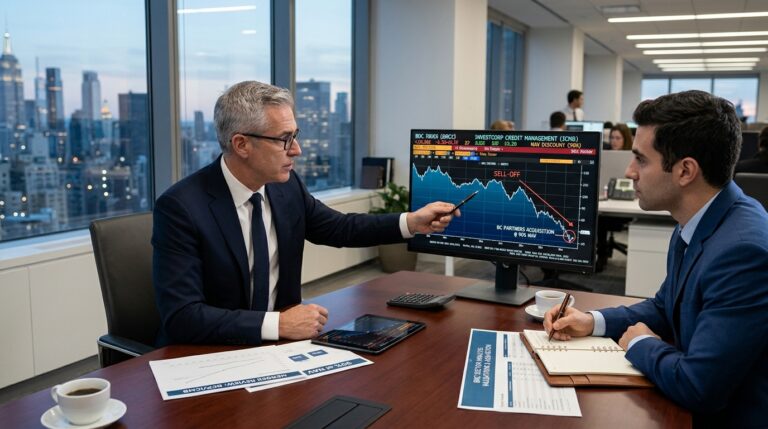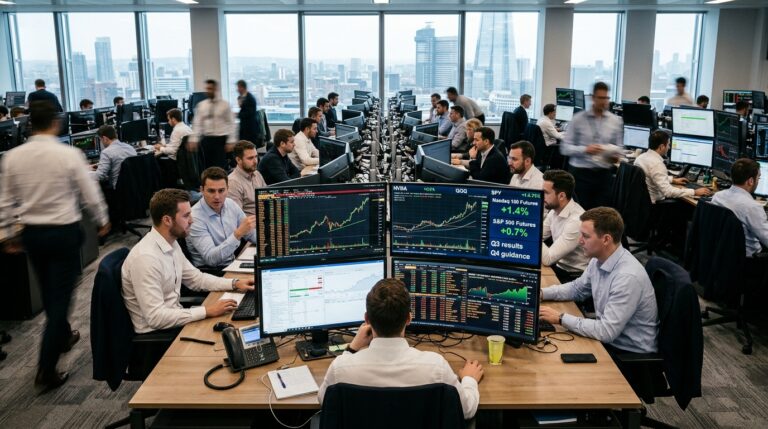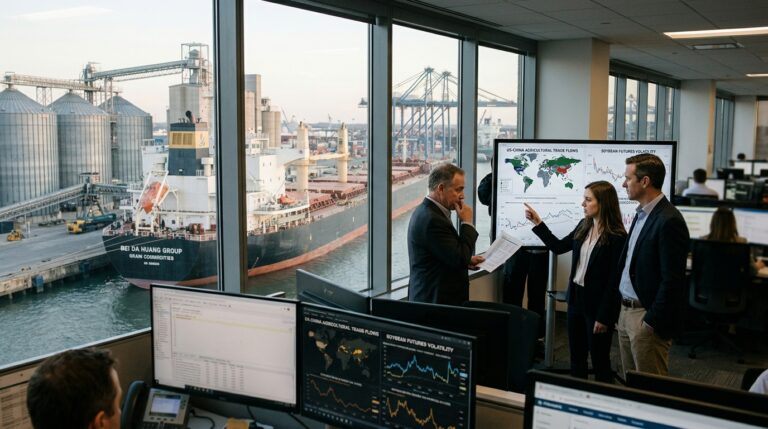
When nearly every professional investor agrees on a risk, the risk rarely arrives the way they expect. An AI bubble is now the biggest tail risk cited by fund managers surveyed by Bank of America, at 34%, followed by a hyperscaler credit event at 31%. Together those two fears account for 65% of all responses, up from 34% in October. That is a dramatic shift in a single month, and it deserves more than a headline read.
The underlying concern is real. Corporate borrowing tied to the AI build-out has been rising fast, and regulators have been flagging the way AI infrastructure finance is linking the largest tech firms to smaller, riskier counterparties. When asked about the most likely source of a systemic credit event, 38% of surveyed managers named AI hyperscaler bonds. Private credit rose to 30%, while government debt dropped to 15% from 28%. Concern has shifted from government borrowing toward corporate and private lending.
The stress is most visible at the riskier end of the AI debt spectrum. CoreWeave’s 9.75% bond due in 2031 has been trading at distressed levels, and its credit default swap spreads have signaled high perceived default risk. That is distressed territory. But CoreWeave is a neocloud, not a hyperscaler. The distinction matters enormously for portfolio construction.
Oracle pays meaningfully more to borrow than its peers. Its very long-dated bonds have recently yielded materially more than comparable long-dated Apple and Microsoft bonds. Oracle has also been borrowing aggressively: it burned through about $24 billion in cash in its last fiscal year and owed about $125 billion as of August, nearly twice its shareholders’ equity. ORCL is where credit risk among the named hyperscalers is most concentrated.
Meta, Microsoft, Alphabet, and Google are a different story. Morgan Stanley sees a more attractive entry point in high-quality hyperscaler bonds as investors remain wary of the debt funding the AI build-out. With hyperscalers trading not far from year-to-date wides and at levels consistent with A and BBB ratings, risk-reward is as good as it has been all year, according to Morgan Stanley strategist Fernanda Lima.
Fund managers just made their biggest monthly exit from technology stocks in nearly two decades. Bank of America’s November survey shows net overweight positioning in tech fell to 12%, down from 37% a month earlier. This was a rotation inside portfolios that still hold little cash, not a retreat from risk. Managers moved into bonds, consumer stocks, and healthcare. That rotation is itself a signal worth reading carefully.
For long-term investors, the right response is not to match the institutional crowd. The crowd is paid to manage quarterly tracking error. You are building wealth over years.
The practical adjustment is about distinguishing where the credit risk actually lives. CoreWeave carries leveraged neocloud exposure. Oracle carries balance-sheet pressure from aggressive borrowing. META, MSFT, and GOOGL carry investment-grade debt with free cash flow capable of servicing it. Goldman Sachs has argued that AI investment is contributing a large share of 2026 S&P 500 earnings growth, a backdrop that argues against wholesale abandonment of the theme.
Managers have not lost confidence in the economy so much as in the payoff from AI spending. That is a timing question, not a structural one. Investors who exit entirely because institutions are nervous about capex cycles risk sitting out the period when AI revenue catches up to AI investment.
Trim exposure to pure infrastructure plays funded by high-yield debt. Keep or add quality hyperscalers trading near credit spread wides. The fear is real, but it is already priced into the most vulnerable names. The crowded exit belongs to others.