
May 5, 2026
CVS Health Reports Tomorrow
From $58 to $82 in under a year. The stock has moved. Wednesday morning is when we find out if the earnings confirm the thesis — or reopen the debate.
First a note from Behind the Markets
Dear Fellow Investor,
Mark this date: May 29th, 2026.
While the media is distracted by the latest headlines out of Iran, a 90-year-old federal law is quietly closing a trap on Wall Street’s biggest bullion banks.
For 55 years, they’ve sold “paper gold” they didn’t actually have.
But on May 29th, the legal “First Notice” deadline hits.
It’s the moment of truth where paper promises must turn into physical bars – bars that the London and Shanghai vaults simply do not have.
When the “Paper Leash” snaps, gold won’t just move… it will teleport.
I’ve identified one “Shadow Miner” sitting on a “King’s Vault” of physical metal that could surge 1,000% as the paper market defaults.
See the 90-year-old law and the ticker symbol here >>>
“The Buck Stops Here,”
Dylan Jovine, CEO & Founder
Behind the Markets
P.S. This isn’t just an exchange rule – it’s federal law. 7 U.S.C. § 13(a)(2) carries a penalty of up to 10 years in prison for price manipulation. On May 29th, the bankers have to choose: deliver the physical gold they promised, or admit the vaults are empty. Click here to see the “Shadow Miner” ticker that wins either way. >>
Featured Article
CVS Health Reports Tomorrow
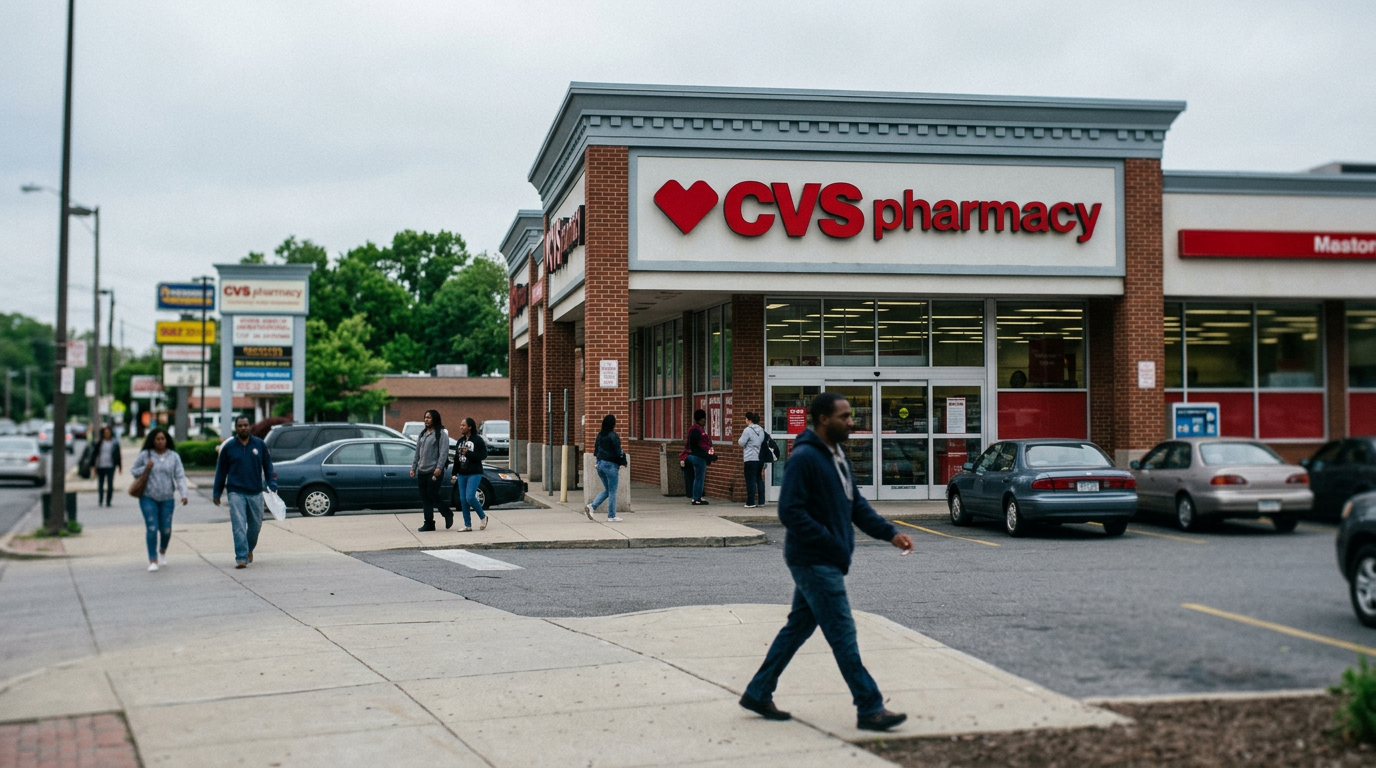
Tomorrow morning, before the open, CVS Health (CVS) drops Q1 2026 earnings. And unlike a lot of earnings setups right now, this one actually has a defined narrative in play — not just a beat-or-miss situation, but a real inflection test on whether management’s multi-quarter recovery story holds its trajectory under live conditions.
The stock has already done something. Twelve months ago CVS touched a 52-week low of $58.35. As of Tuesday’s close it was trading near $82 — a roughly 40% move off the trough, market cap now back above $105 billion. That’s not a deep-value play anymore. It’s a recovery-in-progress with a specific earnings catalyst sitting right in front of it.
The Numbers That Matter Going In
- Current price: ~$82 | 52-week range: $58.35–$85.15
- Market cap: ~$105.1 billion | Shares outstanding: 1.28 billion
- 2025 full-year revenue: $402.1 billion (record high, up 7.8% YoY)
- 2025 adjusted EPS: $6.75 (exceeded initial guidance by ~15%)
- 2026 adjusted EPS guidance (reaffirmed): $7.00–$7.20
- 2026 operating cash flow guidance: at least $9.0 billion
- Q1 2026 consensus EPS estimate: ~$2.21–$2.23
- Q1 2026 consensus revenue estimate: ~$94.37–$95.28 billion
- Forward P/E (NTM): ~11.4x | TTM P/E: ~59x (distorted by goodwill charges)
- Dividend yield: 3.24% | Quarterly dividend: $0.665/share
- Consensus analyst price target: ~$94.95–$96.58 | Strong Buy-rated by 20 of 24 analysts
- Beta: 0.60
Your Complimentary Dividend Package
Today, you can claim the Ultimate Dividend Package… For FREE. (No credit card required!)
Inside, Marc Lichtenfeld – bestselling author of Get Rich with Dividends and world-renowned income expert – is giving away his top dividend picks for 2026.
You’ll get details on…
• Marc’s No. 1 dividend stock for 2026
• The safest 9% dividend in the world
• The top three “Extreme Dividend” stocks
• And much, much more!
Macro Context — Why This Name Is Moving Again
The healthcare sector spent most of 2024 and early 2025 absorbing a specific kind of pain: post-pandemic utilization normalization that hit Medicare Advantage margins harder and faster than the industry modeled. CVS was at the center of that — Aetna’s medical benefit ratio ran as high as 92.5% in full-year 2024, well above the 85–87% range considered healthy for a profitable MA operation. The stock got cut nearly in half from its 2022 peak of $95.53.
What changed the trajectory? Three things arrived in sequence. First, management executed a deliberate pullback from unprofitable Medicare Advantage counties — choosing margin over membership, which cost 504,000 members by year-end 2025 but meaningfully improved the underlying book. Second, CostVantage — CVS Pharmacy’s transition to cost-based reimbursement — completed its rollout across commercial, Medicare, and Medicaid businesses, removing a multiyear structural drag on pharmacy margins. Third, and most recently: CMS finalized 2027 Medicare Advantage payment rates on April 7 at a net average increase of approximately 2.48%, translating to more than $13 billion in additional industry funding — far above the 0.09% originally proposed in January that had briefly rattled the sector again.
That CMS announcement triggered a 9%+ after-hours surge in CVS stock. The stock has held most of those gains. Now Wednesday’s Q1 print either confirms the fundamental turn or raises questions about whether the recovery pace is being priced too optimistically at 11x forward earnings.
Segment Breakdown — Where the Story Lives and Where the Risk Hides
CVS is three distinct businesses operating under one ticker. Traders who treat it as a single entity tend to miss the segment-level divergence that actually drives the quarterly volatility.
Health Care Benefits (Aetna) — The Swing Factor. This segment is the primary reason CVS was in the penalty box for two years, and it’s the primary reason the stock has recovered. Full-year 2025 Aetna revenues came in at $143.4 billion, up from $130.7 billion in 2024. More importantly, the medical benefit ratio improved from 92.5% in full-year 2024 to 91.2% in full-year 2025 — still above target, but directionally correct. Adjusted operating income improvement for the segment exceeded $2.6 billion year-over-year in 2025. In Q3 2025 alone, the MBR dropped to 92.8% versus 95.2% in the prior-year quarter — meaningful sequential compression. Management’s target range is 3–5% MA margins, and they’ve publicly committed to hitting it. For Q1 2026, the setup includes Aetna’s exit from individual exchange products (effective January 2026) and continued pressure from elevated medical cost trends, particularly in Medicare. Over 81% of Aetna’s Medicare Advantage members are in plans rated 4 stars or higher for 2026 — a quality-rating profile that matters for bonus payment eligibility under CMS.
Health Services (Caremark) — Quiet Strength. CVS Caremark processed approximately $190.4 billion in full-year 2025 revenues, up from $173.6 billion in 2024 — a 9.7% increase. The PBM closed out the 2025 selling season with contract wins totaling nearly $6 billion and retention above 98%. The TrueCost transparent pricing model is also emerging as a structural advantage as incoming PBM legislation pushes the industry toward pass-through pricing — a shift that aligns with what Caremark has already built. The segment is a durable cash generator that gets underappreciated because it doesn’t generate the volatility that Aetna does.
Pharmacy and Consumer Wellness — The Foundation. CVS Pharmacy filled 5.4% more prescriptions on a 30-day equivalent basis in 2025 versus 2024. The CostVantage transition is complete. Script share sits near 29%. The Rite Aid prescription file acquisition added approximately 9 million new patients to the store network. Q1 2026 revenues in this segment are expected to grow approximately 9.8% year-over-year, partly driven by that volume inflow. The retail front-of-store weakness that plagued the stock in 2023–2024 has been deprioritized — CVS is leaning into pharmacy-only formats, with plans for nearly 20 smaller footprint locations and over 40 new pharmacies opening in 2026.
The Financial Picture in Detail
A few things worth sitting with before the print hits Wednesday morning.
- 2025 full-year revenues: $402.1 billion — a record, up 7.8% from $372.8 billion in 2024
- 2025 adjusted EPS: $6.75 — exceeded initial $5.75–$6.00 guidance range by roughly 15%
- 2025 operating cash flow: $10.6 billion — exceeded management’s own updated expectations
- Caremark 2025 revenues: $190.4 billion, up from $173.6 billion
- Aetna 2025 revenues: $143.4 billion, up from $130.7 billion
- Aetna full-year 2025 MBR: 91.2%, improved from 92.5% in 2024
- Aetna AOI improvement 2025: over $2.6 billion year-over-year
- CVS Pharmacy script share: ~29% nationally
- 2026 adjusted EPS guidance: $7.00–$7.20 (implying ~4%–7% growth from 2025)
- Management’s 3-year target: mid-teens adjusted EPS CAGR through 2028
- Analyst consensus 12-month price target: ~$94.95–$96.58 — representing approximately 15–18% upside from current levels
- High-end analyst target: $100+ (Piper Sandler at $99, Wolfe Research at $100, Cantor Fitzgerald at $95)
One important note on the TTM P/E of ~59x: that’s not the operating picture. It’s distorted by a $5.7 billion goodwill impairment charge on the Oak Street Health / Health Care Delivery unit taken in Q3 2025, which crushed GAAP EPS to $1.39 for the full year. The forward P/E of roughly 11.4x on the adjusted earnings basis is the number that actually reflects the operating earnings trajectory. Peers UnitedHealth Group and Humana have historically traded at 15–20x forward earnings. CVS partially bridging that gap — even to 13x or 14x on $7.10 midpoint EPS guidance — would imply a stock price in the $92–$99 range.
Technical Framework — Levels Worth Watching
CVS has moved from a structurally broken chart to one that’s approaching genuine technical decision territory. The 52-week low of $58.35 printed on May 15, 2025. The 52-week high sits at $85.15, established on October 29, 2025 — which coincides with the Q3 earnings release date. That high has not been reclaimed. The stock closed Tuesday near $82, roughly 3.7% below that resistance level.
- Near-term resistance: $82.52–$83.87 zone (current consolidation ceiling)
- Secondary resistance: $85.15 (52-week high / Q3 earnings gap level)
- Primary support: $70.08–$70.48 zone (multi-timeframe trend line confluence)
- 200-day SMA: approximately $72–$73 range (prior resistance, now floor)
- RSI: approximately 62 — neutral to mildly elevated; not overbought, not confirming breakout momentum
- Volume profile: Average daily volume ~7–8 million shares; elevated on CMS catalyst day (April 7), since normalized
- VWAP context: Post-CMS announcement, stock has traded in a narrowing range — compression often precedes a directional move. Wednesday’s earnings are the catalyst.
The pattern here is fairly clean. Below $70 the thesis is under structural pressure. Above $85.15 you get a confirmed new high and momentum traders pile in. The $80–$83 zone is the chop area — the range where the stock has been consolidating the CMS-driven move. An earnings beat with raised guidance breaks through the top. A miss or cautious commentary on medical costs reopens the $70–$75 support test.
May 29: The Gold Market’s Breaking Point
The Iran war isn’t just geopolitical – it’s financial. Within hours, oil surged, defense stocks jumped, and gold ripped past $5,000. Now a May 29 legal deadline could expose the fragile “paper gold” system banks have relied on for decades. When that breaks, gold could surge – but one tiny company sitting on more gold than France, Italy, and China combined could move even faster.
Scenario Modeling — Three Paths from Here
Slight tangent before the scenarios: the peer read-through matters here. Centene delivered 7.1% revenue growth in Q1 and beat estimates by 6.2%; shares jumped 24%. Elevance Health reported revenues up 1.5%, topping estimates by 2.4%; shares moved up 5.5% post-report. Health insurance providers in aggregate saw share prices up 5.7% on average over the past month. That’s the sector backdrop CVS is walking into — expectations have moved higher, which cuts both ways.
Bull Case — Aetna Confirms the Turn
Conditions required: Q1 EPS beats the $2.21–$2.23 consensus. Aetna’s medical benefit ratio comes in below 88% for Q1 (the Q1 2025 comparable was 87.3%). Management either raises or tightens the full-year $7.00–$7.20 adjusted EPS range toward the high end. Commentary on 2027 Medicare Advantage margin trajectory is constructive given the finalized 2.48% rate increase.
- Price target: $90–$100 near-term | $100+ within 12 months at 13–14x $7.10 adjusted EPS
- Catalyst: Formal guidance raise, or commentary on above-consensus 2027 Aetna margin visibility
- Volume signal to watch: High-volume close above $85.15 on Wednesday would be the confirming breakout
Base Case — In-Line Beat, Status Quo Maintained
Most probable outcome: CVS beats modestly on EPS — the company has beaten consensus in each of the last four quarters, with an average surprise of 20.6%. Revenue comes in near or slightly below the $94.37 billion estimate, reflecting the deliberate pullback in Aetna membership. Management reaffirms the $7.00–$7.20 guidance range without raising. Medical cost commentary is cautious but not alarming. Stock grinds higher toward $85–$88 over the following weeks, but doesn’t run hard in the session.
- Price range post-earnings: $83–$88 | Consolidation continues, then slow drift toward analyst consensus
- Key signal: Whether guidance is reaffirmed vs. a subtle softening of language around Aetna’s 2026 margin recovery pace
Bear Case — Medical Costs Resurface
Downside risk: Elevated utilization trends — flu, GLP-1 specialty drug costs, or Medicare Part D seasonality under the Inflation Reduction Act — push Aetna’s Q1 MBR above 89–90%. EPS misses. Management guides cautiously, citing the same cost pressures that have plagued the sector for two years. The narrative around Aetna target margins getting pushed to 2027 or 2028 instead of late 2026 re-emerges. The stock gives back the post-CMS announcement gains. There’s also a residual wildcard: the $5.7 billion Oak Street Health goodwill impairment from Q3 2025 signals ongoing uncertainty in the Health Care Delivery segment, and any new charges or clinic closure announcements could compound negative sentiment.
- Price target on breakdown: Test of $70–$75 support zone | Potential retest of 200-day SMA near $72–$73
- Stop consideration for current longs: A decisive close below $78 would signal the post-CMS move is being fully unwound
- Fundamental threshold: Full-year guidance cut below $7.00 adjusted EPS would materially alter the thesis
Active Trader Strategy Framework
What’s interesting is the implied move. Options volatility heading into Wednesday’s print has been elevated — unusual call volume was flagged in late April, and CVS call activity was described as directionally bullish in March. The implied earnings move will be visible in pre-market options pricing Wednesday morning. Worth checking before the number hits. CVS has shown it can gap 9–10% on macro catalysts (CMS day), so the options market is likely pricing a wider-than-normal move range for a 0.6 beta stock.
- Pre-earnings positioning: The stock is near the top of its near-term range at $82–$83. Chasing long into a print that’s already priced at 11x forward and near the 52-week high carries asymmetric risk unless the beat is clean and guidance goes higher.
- Post-earnings long entry: A beat with guidance raise and a hold above $83 in the first 30 minutes after Wednesday’s open represents a stronger long setup than going in blind. Wait for confirmation.
- Risk management: For existing long positions, a close below $78 — roughly 5% from Tuesday’s close — suggests the market is not accepting the recovery narrative at current valuations. That’s a defined level to respect.
- Volatility positioning: Beta is 0.60, which means CVS is not a high-beta momentum vehicle. It’s a re-rating story. Position sizing should reflect that — larger positions are appropriate only if the time horizon extends beyond single-session moves.
- Key catalyst watch beyond Wednesday: Any management commentary on Q2 trends in Aetna utilization will be closely parsed. The 2027 Medicare Advantage final rate confirmation (2.48% increase from CMS) has already been absorbed — what the market wants now is evidence that Aetna can actually capture that benefit in margins, not just in membership pricing.
- Peer context for benchmarking: UnitedHealth Group trades near $370 at roughly 15–16x forward. Humana trades near $236 with an even more compressed margin picture. CVS at 11x forward, with an improving MBR and a $9B+ cash flow engine, does not look expensive relative to where it was or where peers trade — the question is execution.
Here’s where I’m at on this one. CVS is not the same setup it was twelve months ago. The deep value moment — sub-$60, trading below book, 4%+ yield — has passed. What remains is a recovery-in-progress trading at a meaningful discount to large-cap managed care peers, with a defined earnings catalyst hitting Wednesday morning and a multi-year EPS growth target (mid-teens CAGR through 2028) that requires flawless Aetna execution to validate. The stock has done the easy part of the move. The harder part — sustaining the re-rating through consistent quarterly execution — starts at Wednesday’s open.
The part that doesn’t get discussed enough: CVS generated $10.6 billion in operating cash flow in 2025 and distributed over $3 billion in dividends. Even in a difficult year with goodwill impairments and margin pressure, the cash generation was real. That’s the floor under the thesis. And it’s the reason the analyst community — 20 of 24 tracked analysts with a Strong Buy or equivalent — hasn’t walked away from this name even during the rough patches.
Preparation over prediction. The levels are defined. The catalyst hits tomorrow. Watch the Aetna MBR commentary closely — it’s the single most important number in the print.
For informational and educational purposes only. Not investment advice. Trading involves risk, including loss of principal.