June 2, 2026
Meta’s 5% Selloff and the Rotation Trade Behind It
Meta’s 5% Selloff and the Rotation Trade Behind It
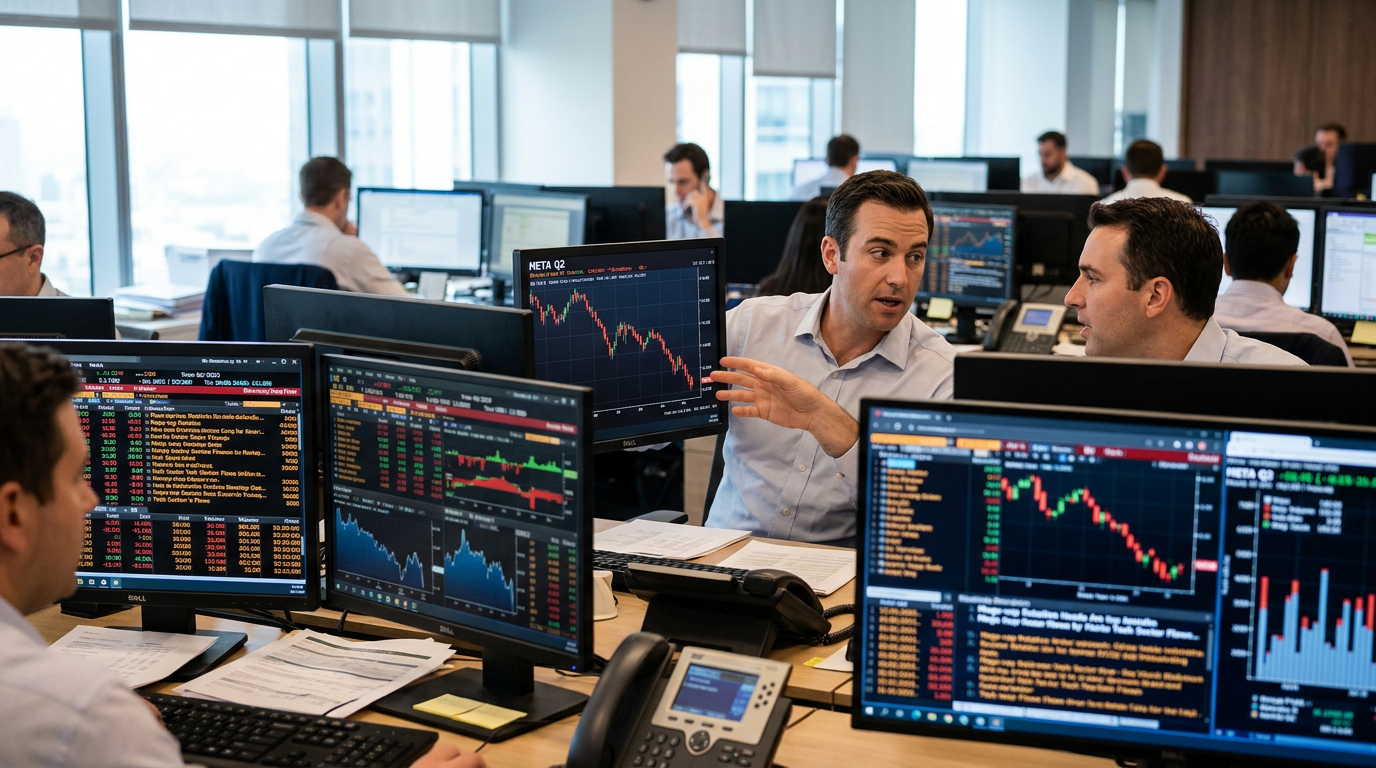
Meta Platforms fell 5.07% on June 1, 2026, not because anything changed inside the business. It fell because of what changed outside it. Institutional capital rotated aggressively into physical infrastructure and hardware names following Nvidia’s Computex announcements, and Meta was the funding source. That distinction matters more than the percentage move.
Separating Noise From Signal
Meta’s fundamental profile remains structurally intact. The company posted $200.97 billion in full-year 2025 revenue, a 22% year-over-year increase, crossing $200 billion for the first time in its history. In Q1 2026 alone, revenue came in at $56.31 billion, up 33% year-over-year — the fastest quarterly growth rate since 2021. Operating margin held at 41% for the quarter, consistent with the full-year 2025 figure. Family daily active people across its apps reached 3.56 billion in March 2026, up 4% year-over-year, with average revenue per person climbing to $15.66 from $12.36 a year earlier, a 27% improvement that reflects sharply better monetization rather than user base expansion.
None of those numbers deteriorated on June 1. What deteriorated was the relative attractiveness of holding ad-tech exposure when hardware infrastructure names were surging to multi-decade or all-time highs in a single session.
SpaceX ‘Dark Energy’ Replaces Foreign Oil
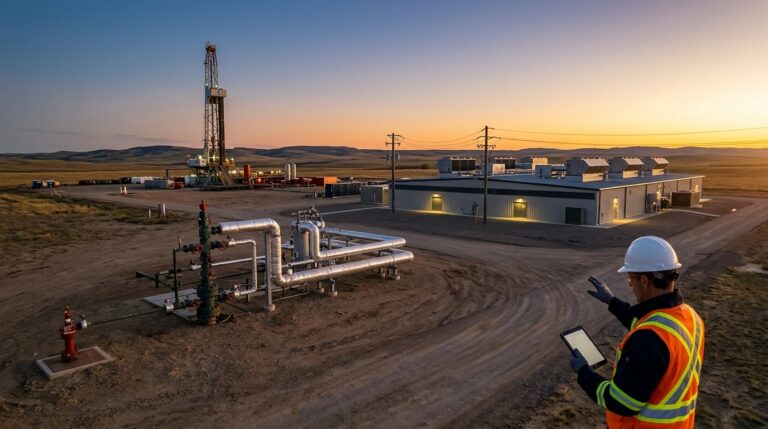
For years, we’ve been told SpaceX is a rocket company. But according to new satellite images from 300 miles above the Earth’s surface, there is something very strange going on at SpaceX right now that has nothing to do with space. It could soon replace our need for foreign oil forever and ignite a $10 trillion boom for the stocks involved.
What Actually Happened on June 1
The catalyst was Nvidia CEO Jensen Huang’s keynote at Computex 2026, where he unveiled the N1X processor — a chip developed in partnership with Microsoft designed to bring AI natively into the PC architecture. The downstream beneficiaries moved violently. Dell Technologies surged more than 10%, extending a week of historic AI server demand results that had already sent the stock up 33% the prior Friday. Hewlett Packard Enterprise gained more than 8%, hitting all-time highs ahead of its own earnings release. IBM surged roughly 12%, lifted by a combination of Barclays initiating coverage with an overweight rating and a resurfaced video of President Trump praising IBM’s CEO. Micron also hit all-time highs on the same session. Meanwhile, Dell’s fiscal Q1 2027 results — reported the week prior — had already disclosed $16.1 billion in AI server revenue, a 757% year-over-year increase, with a $51.3 billion order backlog signaling that demand is not a one-quarter phenomenon.
The session was not a broad tech rally. It was a surgical rotation into physical AI infrastructure, and the liquidity to fund it came from somewhere. That somewhere was largely the mega-cap software and ad-tech complex.
The Institutional Rotation Mechanic
Large fund managers operating under sector weight mandates do not sell Meta because they dislike Meta. They sell Meta because position sizing discipline requires them to fund new exposures without exceeding technology sector concentration limits. When hardware infrastructure names surge 8% to 12% in a single session, the mechanical rebalancing trade often sources liquidity from the most liquid mega-cap names available.
Meta, with an average daily trading volume of approximately 14.7 million shares, is among the easiest positions to trim without moving the market against yourself. This is not bearish signal generation. It is portfolio plumbing. Understanding the difference is the entire analytical exercise.
Author of Get Rich with Dividends Is Giving Away His Ultimate Dividend Package FOR FREE!
Click Here to Get Marc Lichtenfeld’s Ultimate Dividend Package, Including Details on His #1 Dividend Stock… the Safest 9% Dividend in the World… the Top Three “Extreme Dividend” Stocks… and Much, Much More.
What the Forward Picture Actually Looks Like
Meta’s ad revenue engine is entering what management has described as an AI-optimization phase, where Advantage+ automated ad tools are now responsible for a growing share of total ad spend allocation across its platform. Data from 2026 industry benchmarks suggests Advantage+ campaigns are generating approximately 22% higher return on ad spend for participating advertisers compared to manually managed campaigns — a figure that holds across multiple independent analyses of the product. Ad impressions across the Family of Apps grew 19% year-over-year in Q1 2026, while the average price per ad rose 12%. Both metrics moving simultaneously is not a coincidence; it reflects the unit economics of a better-performing ad product commanding higher prices at scale.
Slight tangent, but it matters: over 4 million advertisers now use Meta’s generative AI features, including Advantage+. That adoption curve has not plateaued. The monetization upside from that installed base is not yet fully embedded in sell-side models.
Analyst consensus currently models approximately $253 billion in full-year 2026 revenue for Meta, with a forward two-year revenue CAGR projected near 22.5%. The consensus price target sits around $827 to $828, implying roughly 30% upside from current levels, with 92% of covering analysts maintaining Buy or Strong Buy ratings. The company guided Q2 2026 revenue at $58 to $61 billion, with a 2% foreign currency tailwind embedded in that range. Full-year 2026 expense guidance was held at $162 to $169 billion. Capital expenditure guidance was raised to $125 to $145 billion, reflecting both higher component pricing and expanded data center capacity requirements for future AI infrastructure.
AI is expanding.
Data centers are multiplying.
Electricity demand is climbing.
Nuclear power is quietly moving back into focus.
And nuclear power runs on uranium.
Here’s the issue…
Western supply hasn’t kept pace.
Governments are rebuilding reserves.
Big Tech is locking in long-term nuclear contracts.
Utilities are signing multi-year fuel agreements.
One recent NYSE IPO uranium company is positioned inside that shift.
A 5% rotation-driven move lower in a name with 41% operating margins, 33% revenue growth, and accelerating AI monetization is, by most analytical frameworks, a compression of entry premium. The market’s short-term capital allocation logic and the company’s long-term earnings trajectory are simply operating on different clocks. That gap tends to close — the question is always timing and whether the catalyst that closes it arrives before the one that widens it.
For informational and educational purposes only. Not investment advice. Trading involves risk, including loss of principal.