September 7, 2026
Bonus Content: China’s $119bn Trade Surplus Is About One Thing: AI Chips
Dear Reader,
Every now and then, I come across a company that seems to be getting stronger while Wall Street looks the other way.
That’s exactly what happened recently.
This company just reported the highest earnings in its history.
Management raised the dividend to a record level.
And executives are now targeting even greater profitability in the years ahead.
What’s remarkable is that most investors have never seriously considered owning the stock.
Meanwhile, it continues collecting billions of dollars from some of the biggest names in technology.
I believe the market may be underestimating what’s happening here.
Click here to see why I’m paying close attention.
To your wealth,
Alexander Green
Chief Investing Strategist, The Oxford Club
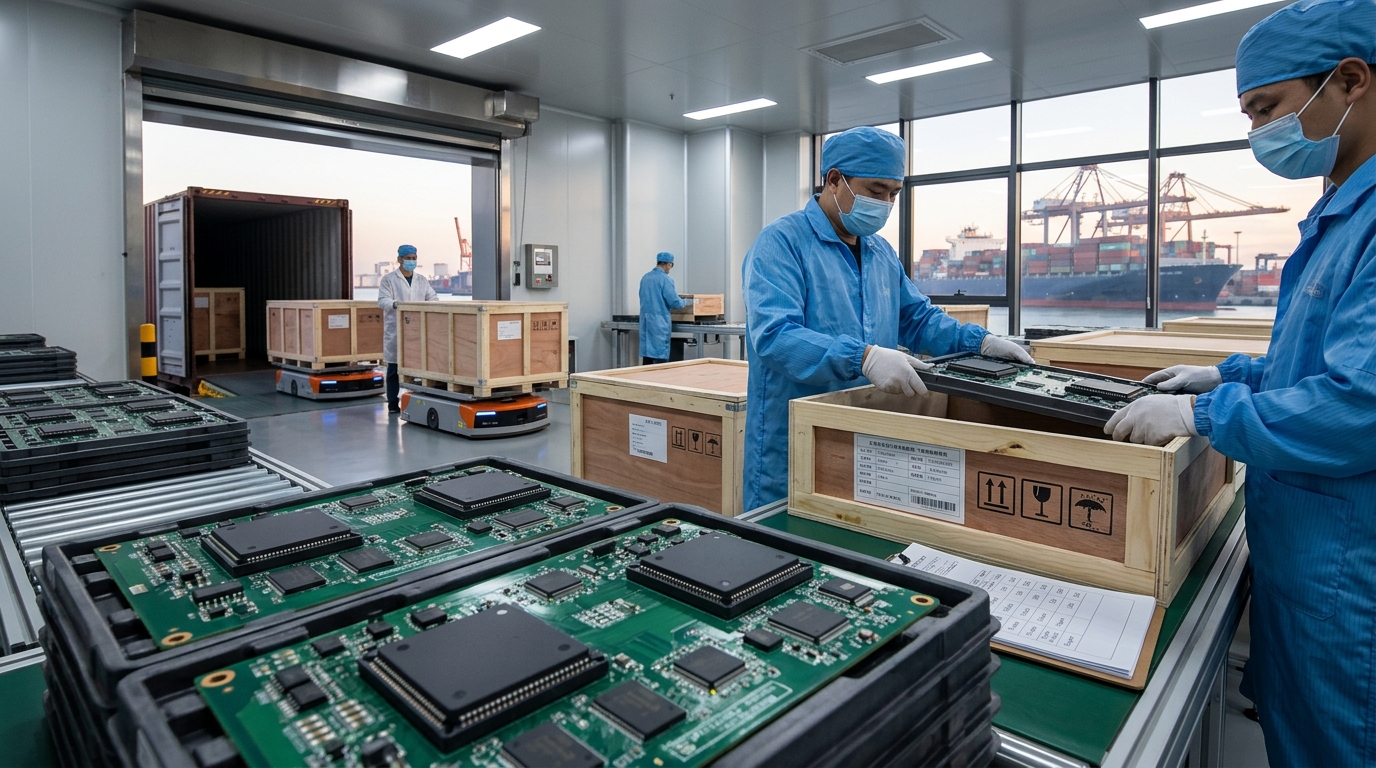
China’s $119bn Trade Surplus Is About One Thing: AI Chips
Tuesday’s China customs release arrives with the consensus already priced for acceleration. A Reuters poll of economists sees August exports rising about 25% year-on-year in dollar terms, up from 23.9% in July, with imports growing about 30% and the trade surplus widening to roughly $119 billion from $112.5 billion the prior month. The number that matters most is not the headline surplus. It is what product category is driving it.
The AI-Goods Signal Already Printed in Seoul
South Korea’s full August export data, released September 1, is the cleanest advance read available. Total outbound shipments surged 68.7% year-on-year to $98.25 billion, with semiconductor exports skyrocketing 209% to an all-time high of $46.65 billion. That milestone followed three consecutive months above $40 billion. The milestone was attributed, in South Korea’s trade ministry release, to expanded AI infrastructure capex by hyperscalers including Google and Amazon.
From January through August, South Korean chip exports rose sharply, and now represent an unusually large share of the country’s export base. The cumulative export total through early September is on pace to challenge prior full-year records well before year-end. That is a structural shift, not a quarterly anomaly.
China’s own IC export data runs in the same direction. The General Administration of Customs reported IC exports of $216.02 billion in the first seven months of 2026, up 99.5% year-on-year. July integrated-circuit export value was reported at about $38.74 billion. Notably, export value accelerated faster than export quantity, signaling that price and product mix are doing more of the work than pure unit volume.
What the Numbers Mean for Key Names
Nvidia reported Q2 fiscal 2027 revenue of $96.2 billion, up 106% year-on-year, with data center revenue of $89.0 billion representing about 92% of total sales. The company guided Q3 revenue at $108.0 billion, and management said it expects approximately 70% revenue growth in fiscal 2028. Critically, Nvidia said its outlook assumes no data center compute revenue from China. A strong Tuesday print that confirms sustained AI-hardware export demand reinforces the global capex cycle underpinning that guide, even with China walled off from Nvidia’s own model.
Applied Materials (AMAT) is the equipment layer beneath this demand curve. As Chinese semiconductor fabrication capacity expands to supply the AI-goods pipeline, tool demand follows. Super Micro Computer (SMCI) posted fiscal 2026 net sales of about $39.1 billion, up roughly 78% year-on-year, with non-GAAP net income of about $2.5 billion. Analysts carry a 12-month consensus target of $42.38 and a Hold rating; the stock has been range-bound between roughly $35 and $40, watching for a catalyst to resolve the range. A strong China trade print could provide one.
For China-exposed ETFs: FXI, as the oldest and most liquid China large-cap vehicle, is the standard options-market expression of a directional China view. MCHI offers broader exposure across A-shares, H-shares, and ADRs. KWEB concentrates in platform names including Alibaba (BABA) and would benefit most from any re-rating of Chinese internet alongside the trade-driven macro lift. All three have been under pressure year-to-date, meaning the upside from a consensus-beating print has room to move.
Technical Framework
Nvidia has been consolidating near its 50-day moving average around $215. A China trade beat that extends the global AI capex story could provide the catalyst for a re-test of prior highs. SMCI’s range between $35 and $40 is well-defined; volume expansion on a break of $40 would confirm a directional move rather than noise. For China ETFs, FXI’s deep options market makes it the vehicle for defined-risk expressions ahead of the data.
Scenario Modeling
Bull Case
Exports print above 27%, imports accelerate past 32%, and the surplus exceeds $125 billion. IC and computer sub-categories show continued triple-digit growth. FXI, MCHI, and KWEB gap higher at the open; Nvidia and AMAT see sympathy buying. The Q3 capex cycle narrative stays intact, and SMCI breaks its $40 ceiling on volume.
Base Case
Exports land near consensus at 24-25%, the surplus comes in around $115-120 billion, and chip sub-categories confirm but do not materially accelerate. Markets absorb the data without a major directional move. China ETFs trade modestly higher; semiconductor names hold recent ranges. The global AI capex thesis is reinforced, not re-rated.
Bear Case
Exports miss at 20% or below, imports slow to sub-25%, and the surplus disappoints at under $110 billion. IC export growth decelerates sharply versus July’s pace. Asian semis sell off, FXI and MCHI give back recent gains, and Nvidia’s $215 support is tested. The miss would raise questions about whether peak AI-hardware demand is behind us for this cycle.
Active Trader Strategy Framework
Tuesday’s data releases in the early Asia session, before U.S. markets open. Traders should define their risk before Tuesday’s open rather than chasing the move. For those with China ETF exposure, FXI’s options liquidity makes pre-data hedges straightforward. On the semiconductor side, Nvidia’s $215 level is the floor to monitor; a sustained break below it on a trade miss would warrant reassessment of near-term positioning. Volatility into the release is asymmetric: a beat amplifies a trend already in motion, while a miss challenges a consensus that has been well-anchored for months.
The AI infrastructure cycle has proven more durable than most forecasts assumed entering 2026. Tuesday’s data is one more scheduled confirmation or complication. Preparation here means knowing the levels, understanding the scenario tree, and sizing positions to survive the miss without abandoning the trend on noise.