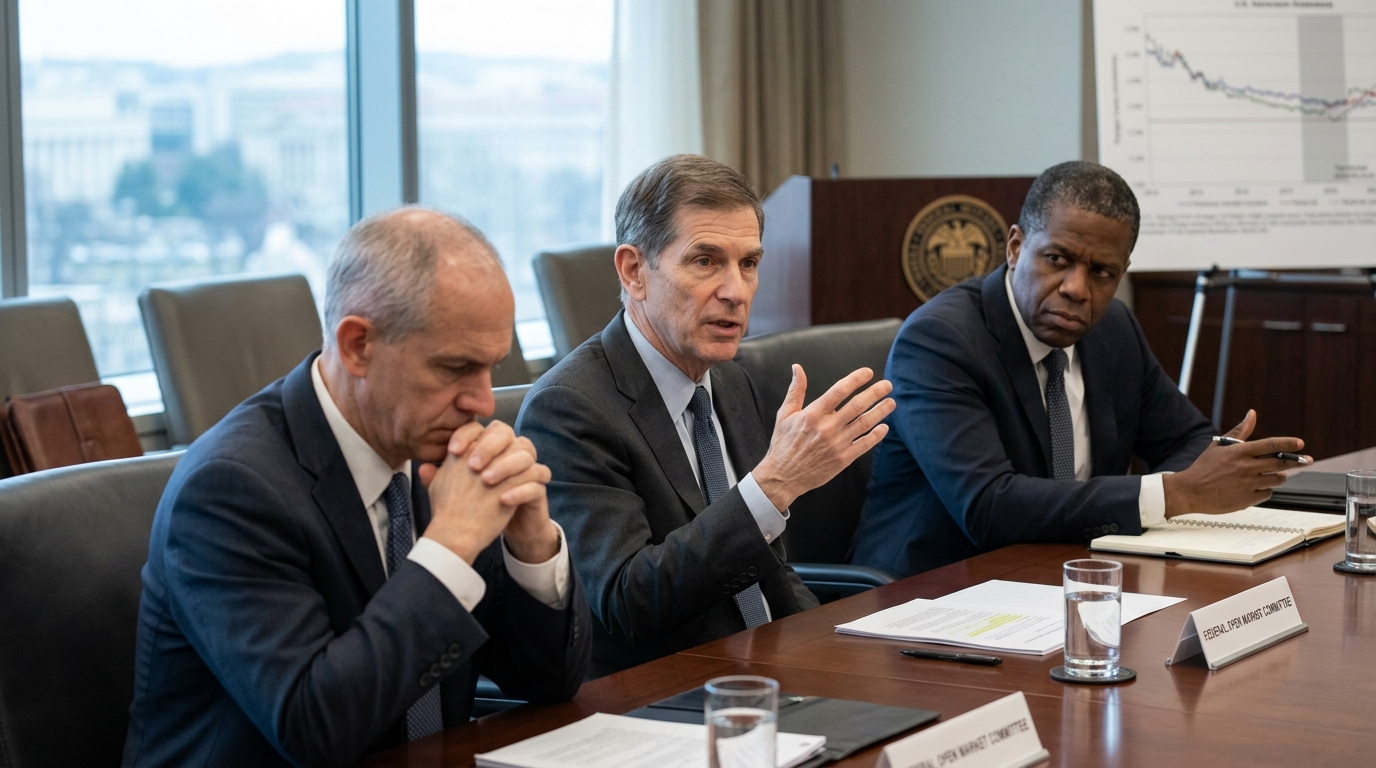
Three Federal Reserve governors have now spoken inside of a week, and they are not saying the same thing. That fact alone should concentrate every rate-sensitive portfolio manager’s attention before September 11.
The sequence matters. Fed Chair Kevin Warsh told the Jackson Hole symposium on August 28 that if underlying inflation is not moving to 2% “clearly and at sufficient speed,” the Fed still has “work to do.” Markets read that as a near-commitment. The CME FedWatch probability of a 25-basis-point hike reset to nearly 60%, up from about 35% the day before. Then Governor Michael Barr stepped in. Speaking on September 1, Barr said he would be prepared to support a rate hike if inflation doesn’t ease, citing concern about “broader price pressures taking hold” with inflation stuck above 2% for over five years. Market odds of a hike climbed to about 66%, up from just above 30% before Warsh’s Jackson Hole speech.
This morning, Governor Christopher Waller moved in the opposite direction. Waller said his next decision will be heavily influenced by August inflation data due next week, adding that it may not take much to nudge him toward supporting a hike at the upcoming meeting. But the lean was clearly toward patience: “If there is continued progress toward our 2% goal, then I am willing to support holding the policy rate at its current level,” he said in prepared remarks. Bond markets responded immediately. Treasuries rallied after Waller signaled he’d be inclined to leave rates unchanged as long as inflation continues to slow, with yields trimming a few basis points across maturities. U.S. stocks climbed as traders pared back rate-hike expectations, with the Nasdaq up about 1.2%.
What the Data Actually Says
The complication for Waller’s hold case is that the real economy is not cooperating with a simple dovish read. Economic activity in the services sector continued to expand in August, with the ISM Services PMI registering 55.4%, the 26th consecutive month in expansion territory. That reading came in 1.3 percentage points above July’s 54.1%, beating consensus expectations. Services account for the dominant share of U.S. employment and consumer spending. A PMI above 55 does not look like an economy being restrained by current policy.
The labor picture is more ambiguous and arguably more useful for the hold camp. Private employers added just 38,000 jobs in August according to ADP, below economists’ estimates of 48,000 and down from a revised 46,000 in July. It was the slowest pace of private job creation since January. Most goods-producing and knowledge-economy sectors lost ground, with manufacturing shedding 17,000 positions and professional and business services falling by 16,000. That kind of compositional weakness, concentrated in higher-wage sectors, carries more signal than the headline alone.
Waller also flagged a technical factor the market has largely ignored. He noted a pending Commerce Department methodology change for estimating financial-services fees that he expects could lower 12-month PCE inflation by a few tenths of a percentage point, and argued that nonmarket services prices, which are imputed rather than directly observed, accounted for roughly half of July’s core PCE increase, making underlying inflation look worse than it actually is. That is a meaningful analytical claim from a sitting governor, not a rhetorical gesture.
The Vote as It Stands
The Fed’s benchmark rate has sat in the 3.50%–3.75% range since December 2025, and three FOMC members dissented in favor of a hike at the July 28–29 meeting. Warsh supplies the hawkish framework from the chair’s seat. Barr has signaled conditional support for a hike if August inflation disappoints. Waller is the first governor to publicly push back, and his pushback is explicitly conditional on September 11.
August CPI is scheduled for September 11, one week before the FOMC announcement, and Waller has explicitly identified that reading as the decisive input for his vote. Goldman Sachs chief economist Jan Hatzius continues to expect core CPI will come in around 0.2% in August and that the FOMC will remain on hold. Bank of America disagrees, arguing that Warsh has raised the bar for standing pat and that absent a material downside surprise, “the onus is now on Warsh to deliver a September hike.”
For TLT holders and equity investors who rallied this morning, the risk is straightforward: Waller’s remarks offered genuine relief, but they also confirmed that the relief expires the moment August CPI prints hot. Geopolitical risks could keep energy prices elevated while services inflation has been stubbornly difficult to bring down, any of which could make August inflation data less cooperative than Waller hopes. The committee is split, the chair leans hawkish, and a single inflation reading next Thursday is now the market’s rate decision before the Fed even convenes.