September 9, 2026
Bonus Content: Brent Hit $100 Overnight. Saudi Production Sites Are Now the Target.
Dear Reader,
The world’s central bankers are now locking down all the gold they can get their hands on…
And you need to understand why immediately.
You may have heard that the world’s financial elite are stockpiling gold at one of the fastest paces in living memory, causing gold to spike to over $4,400 and ounce.
They’ve even been locking down more gold since the abandonment of the gold standard in the early 1970s.
What do they know that you don’t?
Click here for the full story behind WHY this is happening – and what it means for your money.
Because after four decades in the financial world – including being on the trading desk during Black Monday in 1987 – I’ll tell you now:
This is so much stranger than a straightforward recent rally in gold.
In fact, it’s part of a plan that has all been laid out point-by-point by one of President Donald Trump’s senior advisers…
And could soon have seismic implications on everything from your savings and your investments…
All the way to your MORTGAGE.
Your whole way of life, basically.
Quietly and secretively, these people are going to bizarre lengths to get their hands on gold.
- In London, staff at the Bank of England are being forced to work OVERNIGHT “digging out” gold bars for delivery to the world’s richest people, according to Bloomberg.
- Wealthy investors are loading up their suitcases with precious metals on commercial flights.
- Billions of dollars’ worth of “Blood Gold” is being siphoned out of African countries through complex smuggling routes.
- And nations are repatriating tens of thousands of gold bars – hundreds of tons’ worth – to lock down inside their own borders.
What do they know that you don’t?
It’s all detailed in this free broadcast, including the three simple steps I recommend you take immediately to prepare. It’s 100% free of charge.
While it’s still online – click here now for the full story.
Here’s to our health, wealth, and a great retirement,
Dr. David Eifrig, MD, MBA
Senior Partner, Stansberry Research
CEO, MarketWise
P.S. I understand gold is bizarrely divisive…
But whether you’re a “gold bug” or you’ve never bought an ounce in your life, the global rush into gold right now is part of something far bigger and far more consequential.
So I urge you to not dismiss this as just another “gold story.”
It’s much more all-encompassing than that. It affects every corner of your finances… like your savings and the value of your stocks and bonds.
You owe it to yourself to get the facts. From here, you can make an informed decision about what’s best for you and your loved ones.
Get the facts here for free.
Brent Hit $100 Overnight. Saudi Production Sites Are Now the Target.
Brent crude briefly crossed $100 a barrel in early Wednesday trade for the first time since late July, reaching about $100.12 and extending a four-session rally that has now added roughly 25% since early August. WTI followed to the mid-$90s. The move is not simply an extension of the Hormuz shipping disruption that has dominated energy headlines since late August. The target set has shifted.
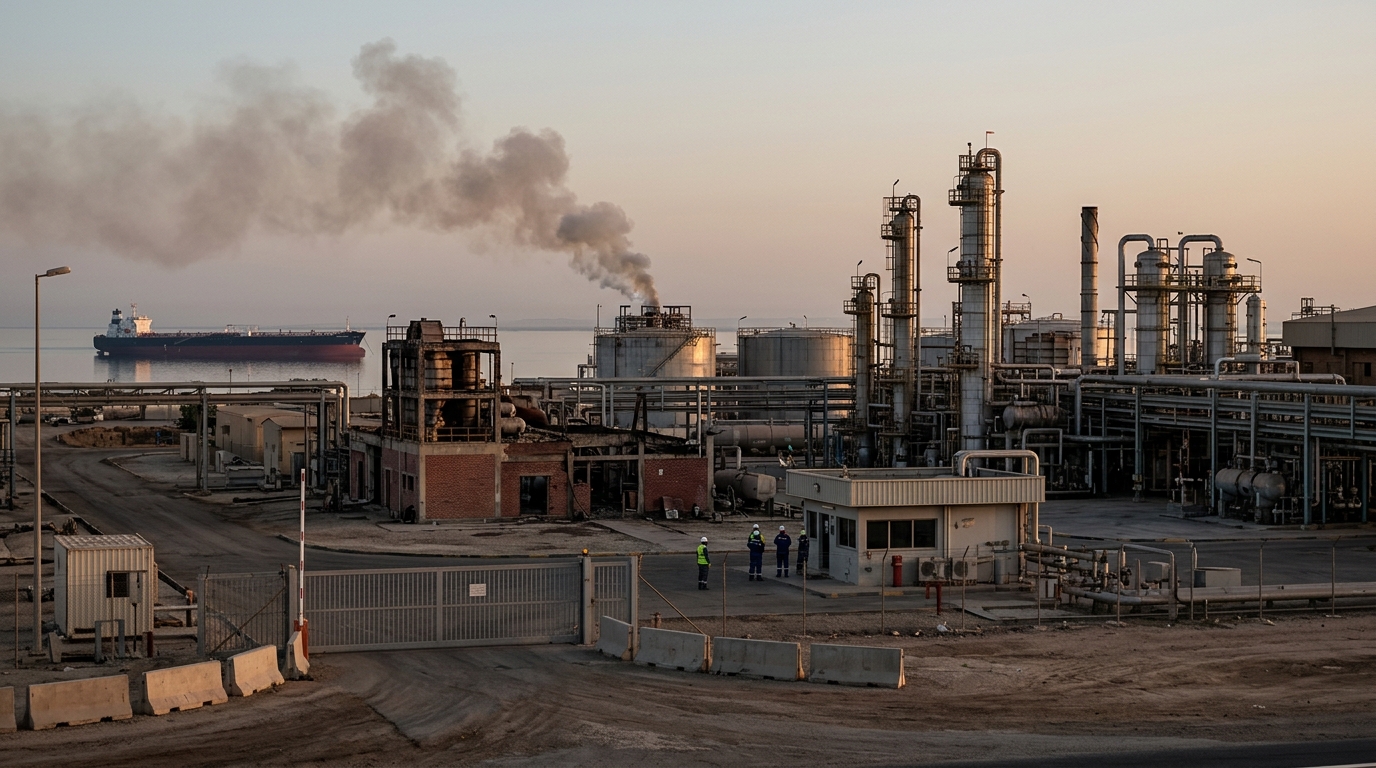
On Tuesday, Houthi forces launched drones and ballistic missiles at Abha airport, King Khalid Air Base, and Saudi Aramco-linked sites across southern Saudi Arabia, Jazan and Najran among them. Seventy-three people were wounded, and Saudi authorities said fires broke out at several oil facilities and utilities and that operations at affected sites were temporarily suspended. The Jazan refinery alone has capacity of about 400,000 barrels per day. Riyadh has since struck back against Houthi positions in Taiz and Marib.
Why the Risk Type Change Matters
For months, the oil market priced Gulf disruption primarily as a transit problem: ships stranded or rerouted, with the Strait of Hormuz shock removing roughly 18 million barrels per day of trade flows, including about 14 million barrels per day of crude and condensate, according to Rystad Energy. That risk is real, but it is external to Saudi production. Tuesday’s strikes are different. Attacks on the Jazan refinery and other sites represent direct hits on fixed infrastructure inside the kingdom. Middle East export volumes are already structurally constrained versus pre-conflict levels. Add domestic Saudi refining capacity offline, and the spare-capacity buffer that kept Brent capped through late August starts to look thinner.
Goldman Sachs raised its Brent forecast by $5 to $85 for December 2026 before this morning’s move, and flagged that a sustained Gulf production shortfall could push Brent above $120 in an upside scenario. The bank frames $120 as an upside scenario, not base case, with its 2027 central view near $80. Barclays has also floated $120 as a near-term test if the current conflict drags on. The arithmetic is straightforward: there is no volume of non-OPEC supply that offsets both a shipping closure and damaged Saudi refining capacity simultaneously.
Sector Breakdown: Producers vs. Refiners
Energy remains the standout S&P 500 sector in 2026, up roughly the low-40% range year-to-date. XLE pushed to fresh highs in early September. XOM carries about a 19.7% weight in the fund; CVX holds about 15.1%. Both reported strong Q2 results: Exxon posted Q2 earnings of $14.5 billion with $23.6 billion in cash flow from operations. Chevron reported Q2 adjusted EPS of $6.06.
Refiners are a different trade entirely. Crack spreads surged during the Hormuz shock, and diesel has been the pressure point in the product complex. Phillips 66 and Valero have benefited from wide product margins, but the key variable for traders is whether the margin regime persists as crude and products re-route and inventories adjust. PSX trades at a forward P/E in the low double digits, leaving earnings sensitivity high if cracks mean-revert. A fresh Jazan outage tightens refined product supply further, directly widening spreads that VLO and PSX can capture as margin.
Technical and Trading Framework
Brent had spent much of Tuesday struggling just below $100 before the Saudi-site headlines helped push the level. The question now is whether $100 holds as support rather than resistance. WTI’s key zone sits between $92 and $95; a close below $92 on heavy volume would suggest the move is fading rather than accelerating. XLE in the mid-$60s is pressing against recent highs, with the 20-day moving average acting as support in the low-$60s. Recent sessions have shown volume consistent with institutional participation rather than a purely retail chase.
Scenario Modeling
Bull Case
Damage proves more extensive than initial reports, Saudi throughput falls by 500,000-plus barrels per day for 30 days or more, Brent tests $112–$120. XLE pushes higher; VLO and PSX re-rate as crack spreads remain elevated. OXY, levered to crude price, approaches analyst targets near $75.
Base Case
Jazan is partially restored within two to three weeks, Brent consolidates in a $95–$105 range, spare-capacity anxiety lingers but does not escalate further. XLE holds near current highs. Producers sustain elevated free cash flow; refiners’ crack spreads compress modestly from extreme levels but remain above historical norms.
Bear Case
Saudi counterstrikes contain the Houthi threat quickly, damage assessments come in lighter than feared, and a diplomatic signal from Tehran eases Gulf tensions. Brent retraces below $90, crack spreads compress sharply; media analysis has noted that forward returns for refiners tended to lag after prior extreme margin episodes. XLE pulls back toward $58–$60 support.
Active Trader Strategy Framework
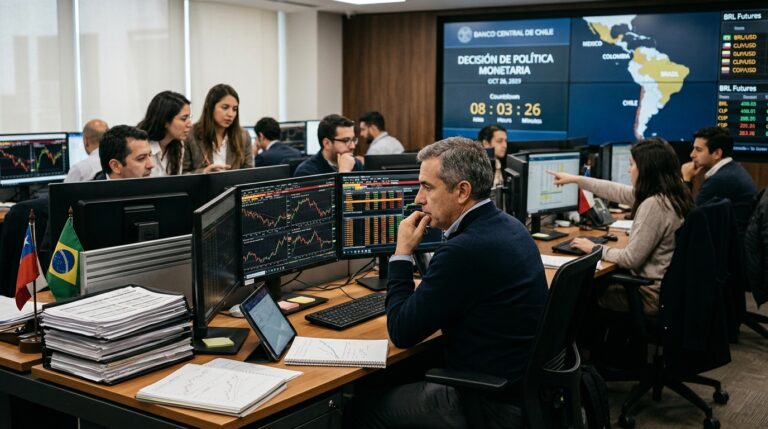
The market is now pricing two distinct risks simultaneously: transit disruption and production-site vulnerability. Traders should consider whether current positions reflect both, or only the first. For upstream exposure, key levels to monitor are WTI at $92 on the downside and $97 on the upside. For refiner positioning, crack spread direction is the primary variable, a compression from around $70 toward $45 would structurally pressure VLO and PSX regardless of crude price direction. Implied volatility across energy names has expanded; options premiums reflect the uncertainty. Position sizing relative to that volatility is the discipline that separates preparation from reaction.
The Jazan strike did not invent the energy trade of 2026. It changed its character. Shipping-lane risk was always theoretically reversible the moment a ceasefire held. Damaged Saudi refining infrastructure is a physical reality with a repair timeline measured in weeks, not hours. Traders who mapped their exposure only to transit risk are now holding a different book than they thought.