
September 17, 2026
Saudi repairs ease the East-West shock, but Hormuz remains crippled and the Q3 supply deficit is not resolved.
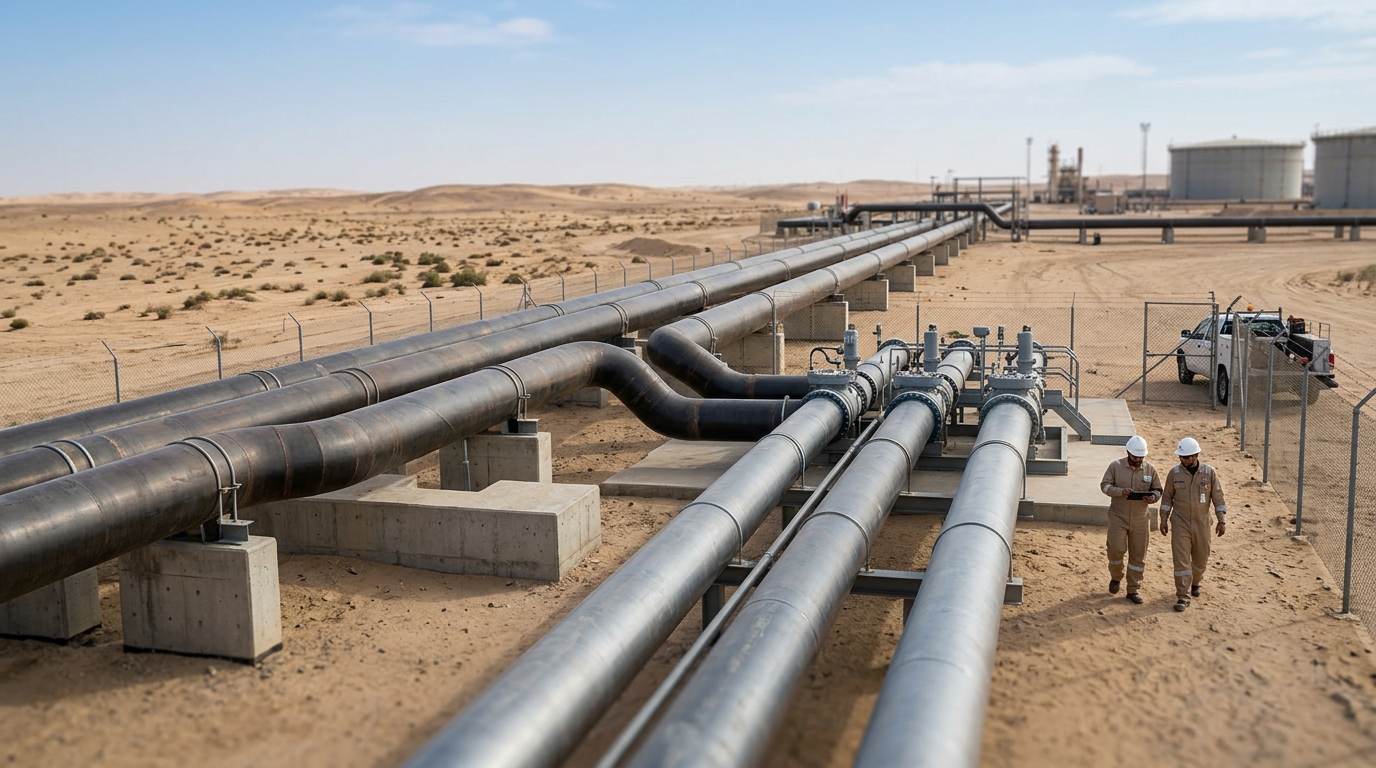
The war premium is deflating in stages, not all at once. Brent crude slid from $109.21 on Tuesday to roughly $105.80 this morning. WTI fell more than 3% Wednesday and is trading near $102 today. The catalyst is specific: Bloomberg reported Wednesday that Saudi Aramco is bypassing a damaged section of the 1,200-kilometer East-West Pipeline, aiming to restore roughly half of the route’s pre-attack capacity of 4 to 5 million barrels per day within days, with full restoration targeted in approximately six weeks.
Big Tech is bidding against itself for dead mines
Google quietly backstopped a bitcoin miner for 1.8 billion dollars.
Amazon signed 5.5 billion with a second one. Microsoft wired 9.7 billion to a third.
Roughly 63 billion dollars of Big Tech money landed on bitcoin miners inside a single year.
None of it is about bitcoin.
They are bidding for something the miners picked up cheap in 2021, and once a site is taken it is gone for twenty years.
That is the number traders need to disaggregate. The pipeline was the only viable Saudi export corridor while the Strait of Hormuz remained severely disrupted. IMF PortWatch recorded 8 vessel transits on September 13 against a pre-crisis baseline of roughly 85 per day. Brent breached $100 on September 9. By Tuesday, September 15, it had reached $109.21. The move from mid-August’s sub-$87 range to that peak represents roughly $22 per barrel added in fewer than three weeks, with the East-West outage accounting for the most acute leg of that acceleration.
What the Repair Timeline Prices In
Half capacity restored in days partially resolves the Red Sea supply bottleneck. Full restoration in six weeks is a different calculation entirely. Earlier this year, Saudi Arabia was using the East-West line at its full capacity of about 7 million barrels per day while Hormuz traffic was constrained. The September 10 attack damaged multiple facilities, making the six-week window credible but not guaranteed. Reuters has reported the pipeline was hit in multiple locations, including the Riyadh and Medina regions; the full damage scope remains only partly clear.
Trump Takes on Foreign “Cartel” (and You Could Profit)
Trump is finishing a 25-year battle against a foreign “cartel.” And a single ticker is handing investors the chance at payouts like $8,704 in six days from the fallout.
Hormuz is not the relief valve here. The Strait remains severely disrupted, with single-digit daily transits against an ~85-vessel baseline. U.S. Energy Secretary Chris Wright has said flows through the strait are recovering versus the lows earlier in the conflict, but the IMF PortWatch transit count was still in single digits as of September 13. War-risk insurance runs as high as 7.5% to 10% of hull value, according to Marsh and S&P Global.
Sector Positioning: Producers vs. Refiners
The crude drop hits upstream names differently than downstream. ExxonMobil posted Q2 2026 earnings of $14.5 billion, more than doubling from Q2 2025, while Chevron reported Q2 2026 earnings of $12.1 billion. Both are exposed to directional crude. XOM is up roughly 29% year-to-date; CVX has gained about 25%. ConocoPhillips carries a similar upstream leverage profile, with Stoxcraft rating it the top-rated energy name in its universe on financial health.
5 Little-Known Stocks Behind Today’s Defense Tech Shift
Behind the headlines, a major transformation is underway.
Modern warfare is being driven by AI, autonomous systems, and next generation technology. A handful of lesser known companies are helping power this shift.
This report uncovers five stocks quietly playing a critical role in the future of defense.
Refiners face a more complicated calculus. The WTI 3-2-1 crack spread reached about $64.34 per barrel in early September 2026, far above long-run norms. Valero posted Q2 adjusted EPS of $12.54 against a $10.03 Street estimate; Phillips 66 delivered Q2 adjusted EPS of $9.41 versus a $7.50 consensus; Marathon returned $2.8 billion to shareholders in the quarter alone. These margins are geopolitically derived and therefore geopolitically reversible. Any pipeline restoration that meaningfully normalizes Middle East crude flows can compress crack spreads faster than most models currently assume.
Scenario Framework
- Bull case (crude holds $105-$110 Brent): Aramco’s bypass attempt hits technical complications, full restoration slips beyond six weeks, Hormuz transits stall in the single digits, and the structural deficit of roughly 1.8 million barrels per day estimated by the IEA for Q3 keeps the forward curve in steep backwardation. Upstream names retest recent highs.
- Base case (Brent $98-$106): Half capacity restored within a week removes the acute supply shock; markets price six-week full restoration as credible; Brent consolidates in the mid-$100s as Hormuz uncertainty sustains a residual premium. XOM and CVX trade rangebound; refiner crack spreads compress modestly toward $55-$60.
- Bear case (Brent retreats toward $88-$92): Repair progresses ahead of schedule, a diplomatic opening on Hormuz adds incremental tanker flow, and U.S. crude inventories continue drawing less than expected. The pipeline premium exits entirely, retracing the September spike. MPC, VLO, and PSX face meaningful downside given how far the refining-and-marketing complex has run.
Active Trader Framework
The $109.21 Tuesday high is now the key resistance level for Brent. A failure to reclaim it on any renewed supply disruption signals the East-West premium is fully priced out. On the downside, $100 Brent is the psychological and structural level where upstream equity positioning tends to shift. For refiners, watch the September NYMEX 3-2-1 spread daily: any close below $60 per barrel on confirmed repair progress is the leading indicator, not the crude price itself. Volatility in energy names will remain elevated into the six-week restoration window. Position sizing should reflect that Brent has moved $40 per barrel in each direction twice already in 2026. Preparation, not prediction, is the only durable edge in this market.