
September 22, 2026
Bonus Content: AMD Hit $1 Trillion. The Real AI Trade Is Now CPUs.
Early in July, oil prices were falling fast as it looked like the peace deal with Iran would go through.
Then outta nowhere, a whopping massive bet on Polymarket came in hinting that oil would spike soon.
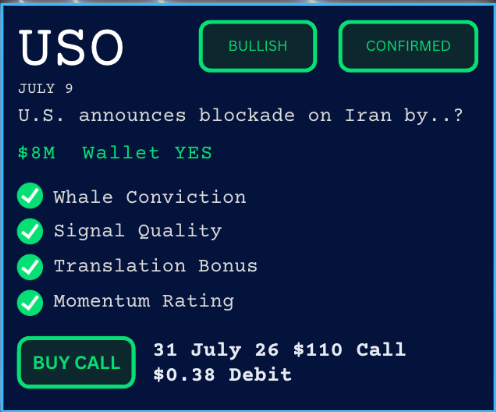
Just a few days later, the bombs started dropping on Iran and oil prices surged.
Acting on the signal from Polymarket locked in a 37% return over the weekend!
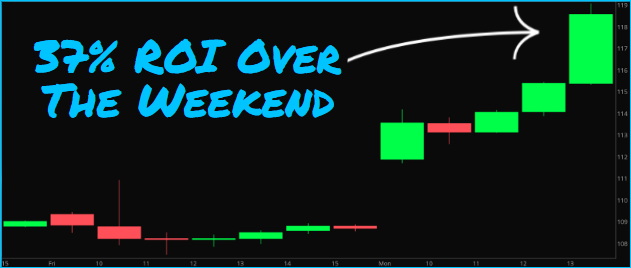
It didn’t end there…
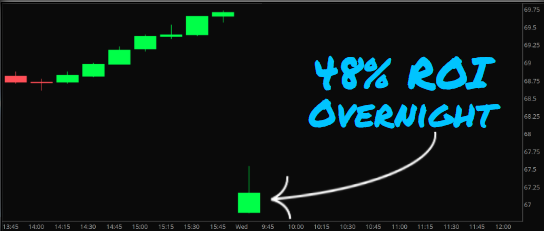
These massive insider bets also tipped off winners like 48% on SLV overnight…
And 83% on ETHA in 2 days…
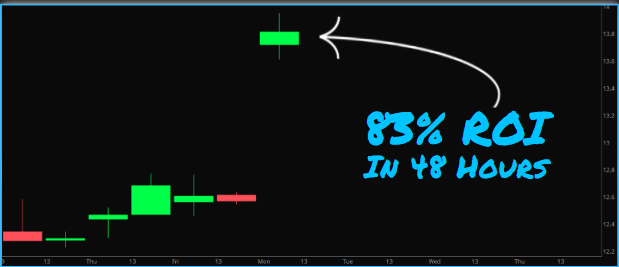
There were smaller wins and those that didn’t work, and we won’t be making reckless promises when it comes to trading…
But tracking these moves is all thanks to a first-of-its-kind predictions market tracker… Oracle.
Oracle watches those sneaky bets and reveals the stocks that could explode because of them.
Together with the best matching options…
Giving us the room to front-run the market before the rest of the crowd even has a clue of what’s going on.
For the first time ever… I revealed this breakthrough and even better, handed out free access!
If you’d like to secure access at no cost to you….
And begin tracking those sneaky insider bets in the predictions market…
Tap here to access Oracle for FREE.
To Better Trading,
Alex Reid
AMD Hit $1 Trillion. The Real AI Trade Is Now CPUs.
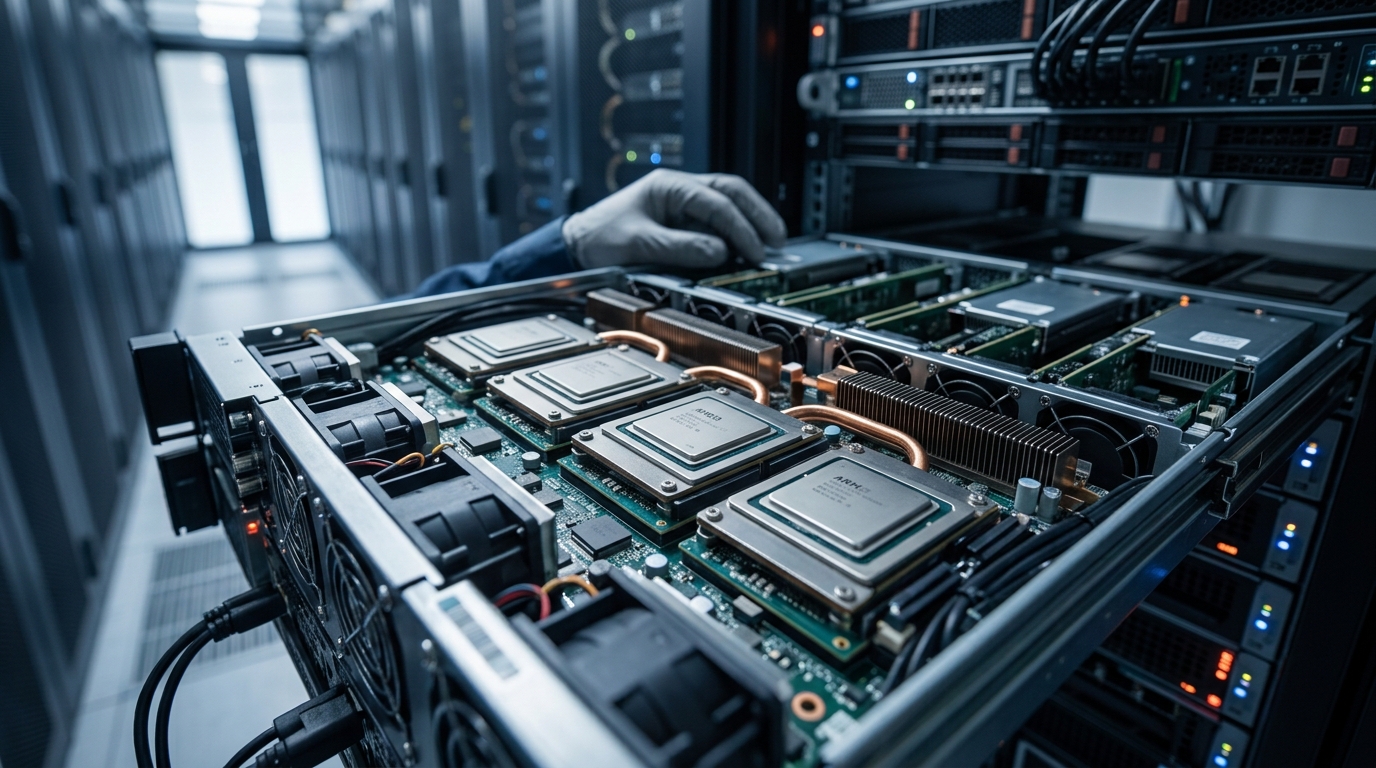
Monday was a rotation event, not just a record. AMD touched $615.99 intraday and briefly crossed a $1 trillion market capitalization for the first time, becoming the fourth U.S. chipmaker to clear that line after Nvidia, Broadcom, and Micron. Arm Holdings gained about 17.2% on the session. Intel closed up about 12.1%. Nvidia added about 2.3%. The divergence is the trade.
- AMD peaked at $615.99, touching $1 trillion in market cap for the first time; stock up about 185% year-to-date
- Arm Holdings gained about 17.2%; Intel surged about 12.1%; Nvidia added about 2.3% on the same session
- Nebius raised on-demand AMD EPYC Genoa CPU rental rates 25% and memory about 41%, effective October 1, its second price hike in three months
- Intel CEO Lip-Bu Tan said the company can supply only about 50% of current CPU demand, driven by AI inference workloads
- AMD Q2 2026 revenue: $11.5 billion, up 50% year-over-year; Data Center segment hit $6.7 billion, up 107%
- Intel Q2 2026 revenue: $16.1 billion, up 25% year-over-year; Data Center and AI segment up 59% to $6.3 billion
- AMD guided Q3 2026 revenue to approximately $13 billion at the midpoint
Market Context
The Philadelphia Semiconductor Index rose 4.29% Monday as a broader tech rally sent the Nasdaq to a record closing high. Oil fell sharply, with Brent settling at $100.34 per barrel, easing cost-of-capital concerns across capital-intensive infrastructure names. That macro tailwind matters for chipmakers carrying heavy capex schedules, but it does not explain the internal sector rotation by itself.
The rotation has a structural explanation. The driver, according to Intel CEO Lip-Bu Tan, is an explosion in demand for CPUs to run AI inference, the work models and agents do after training, and that work leans on CPUs working alongside graphics chips that dominate AI headlines. Meta’s shares surged 11.4% after Wells Fargo raised its price target following the recent launch of its Muse AI assistant, reinforcing the inference-demand thesis and keeping the CPU discussion in focus.
The Nebius Price List Is the Signal
The most actionable data point from the past week is not a stock price. Nebius will raise rental rates for selected Nvidia GPUs by 17% to 21%, CPU-only instances by 25%, and memory by about 41% beginning October 1, as shortages in AI computing expand beyond GPUs to include CPU and memory units. This marks the company’s second price hike in three months.
AMD EPYC Genoa CPU rates will increase 25% to $0.015 per vCPU-hour, while Genoa memory pricing rises about 41% to $0.0045 per GiB-hour. Those are spot-market prices for infrastructure buyers. When cloud pricing moves that fast, it tends to migrate upstream into semiconductor valuations within weeks.
Company Financials
AMD reported Q2 revenue of $11.5 billion, up 50% year-over-year, with Data Center segment revenue reaching $6.7 billion, up 107%, fueled by EPYC processors and Instinct GPUs, accounting for about 58% of total company revenue. Non-GAAP gross margin was 56% in Q2. TrendForce reported that AMD also warned customers of price increases near 10% on AI accelerators, graphics chips, and motherboard chipsets from Q4, passing on higher manufacturing costs. That is a margin lever AMD can pull independent of volume.
Intel’s recovery is less obvious but equally important here. Non-GAAP gross margin improved from 29.7% a year earlier to 41.8% in Q2, with management guiding to 42% for Q3. Intel’s Q2 revenue rose 25% year-over-year to $16.1 billion. Margin expansion at high fixed-cost factories, when capacity is already constrained, compounds quickly.
Technical Framework
AMD’s intraday high of $615.99 is now the level to watch. A close above that mark sustains the trillion-dollar threshold and likely invites further momentum positioning. That kind of extension typically brings mean-reversion risk, so volume confirmation on any retest of the $590-$600 zone matters. Arm’s 17% gap creates wide support near the prior consolidation range, with limited technical reference above. Intel’s 12% surge reclaimed the 50-day moving average on elevated volume, a constructive signal for continuation.
Scenario Modeling
Bull Case
AMD closes above $616 on strong volume, confirming the trillion-dollar valuation. AMD Q3 revenue of about $13 billion or better extends the re-rating. CPU pricing power, evidenced by Nebius hikes, continues to be reflected in AMD and Intel margin guidance. Arm sustains its move as royalty rates on AI-optimized chips compound.
Base Case
AMD consolidates between $590 and $615 ahead of Q3 results, with Intel and Arm giving back a portion of Monday’s gains as profit-taking offsets fresh demand. CPU pricing holds firm but additional catalyst is needed to push AMD durably through $616. Nvidia’s 2.3% move on the session signals that capital is rotating rather than leaving the sector.
Bear Case
AMD fails to close above $612, valuation concerns dominate and macro conditions tighten, particularly if bond yields rebound, pressuring high-multiple growth names first. Intel’s supply constraint, if it persists, could cap the upside for CPU bulls.
Active Trader Framework
The Nebius rate card is a forward signal for AMD and Intel margin trajectories. Traders monitoring AMD should treat $615.99 as the reference level and watch whether volume on any approach to that zone confirms institutional accumulation or fade. For Intel, the 50-day moving average reclaim on volume is the key technical hold. Position sizing should account for the recent multi-session run in AMD. Options implied volatility is likely elevated after a sharp single-session move, making defined-risk structures worth considering over outright directional exposure ahead of Q3 earnings.
The AI trade did not end when GPUs got expensive. It broadened. Monday’s session priced that broadening into the market. Disciplined traders watch the levels, respect the extension risk, and let the Nebius price list do the fundamental work.