
Marvel was valued at $54 billion. Star Wars at $181 billion. And Pokemon at $115 billion.
What do they have in common? IP with a passionate fanbase.

And that’s great news for companies like Skybound Entertainment.
Skybound is one of the few companies that have successfully struck deals with major streamers and studios while keeping 250 of their own IP properties and the profits across gaming, merchandise, and licensing.
The opportunity to own a piece of it closes soon.
Here’s how they use that IP to create global franchises: They create the comics, where audience response helps shape their next breakout hits, then scale the strongest stories through TV and film, and monetize through releasing games, merchandise, and more. The Walking Dead and Invincible are just two big names in their portfolio.
Now you can own a piece of what’s next. Final days to invest before the opportunity ends.
Washington Is Studying a Diesel Export Ban. Valero, Marathon and Phillips 66 Are at Risk.
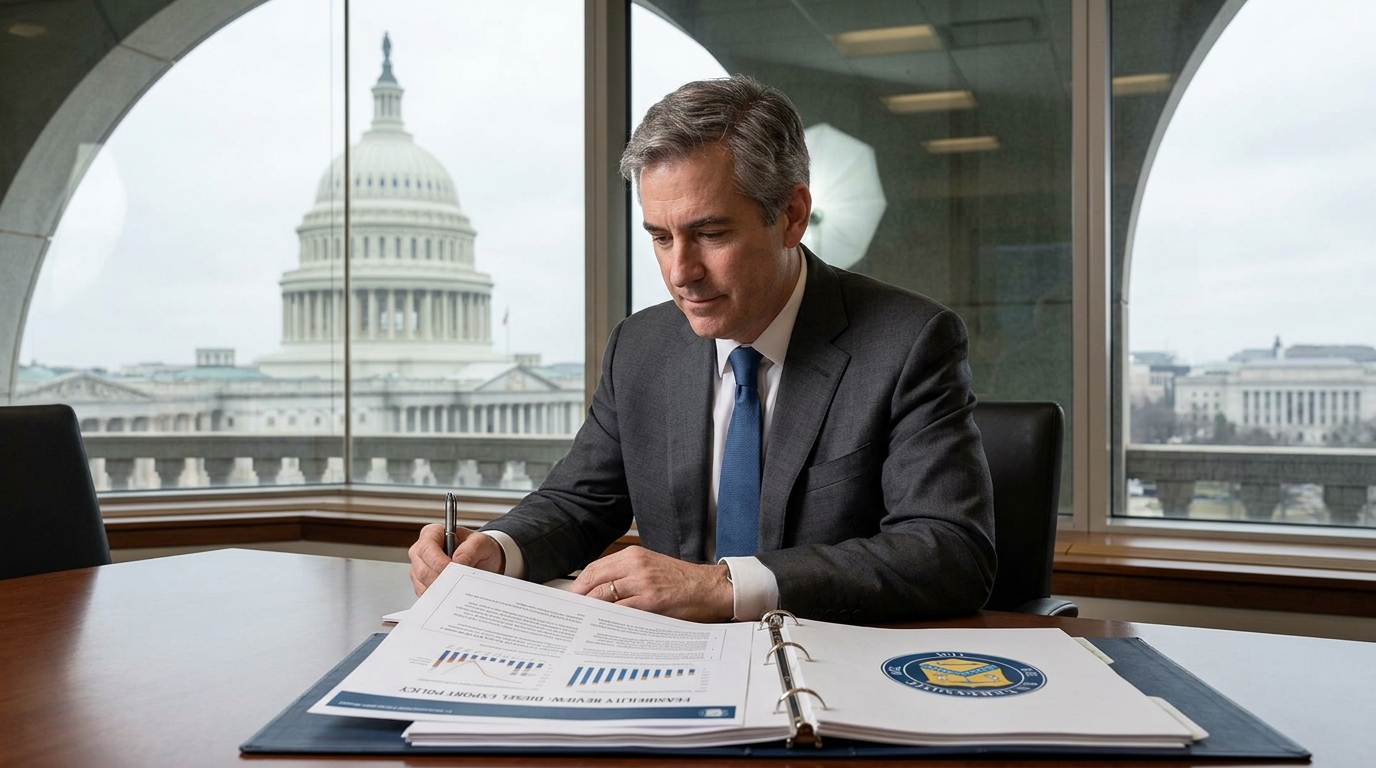
Two events collided at the UN General Assembly on Tuesday, and together they frame the most consequential policy threat hanging over U.S. refining stocks since 2022. Treasury Secretary Scott Bessent said the Trump administration is looking into the feasibility of a diesel export ban. Hours later, Zelensky signaled that Kyiv is prepared to stop hitting Russian refineries, provided Moscow stops striking Ukrainian power infrastructure. Neither outcome is certain. Both would, through different channels, collapse the very conditions that have made Valero, Marathon Petroleum and Phillips 66 the best equity trades of 2026.
- The national average price of diesel has surged to about $6.53 per gallon, roughly 77% higher than this time last year.
- Distillate fuel exports rose to about 1.6 million barrels a day, according to EIA data.
- The diesel crack spread set a record above $106 a barrel.
- Phillips 66 closed Friday at $272.99, up 116% year-to-date, after a second quarter that generated $52.04 billion in revenue and $9.41 in adjusted EPS.
- Marathon Petroleum posted a Refining & Marketing margin of $36.33 per barrel, versus $17.58 a year earlier, with adjusted EPS of $17.73.
- Analysts currently place roughly a 35% probability on an export ban being enacted before the midterm elections.
- Goldman Sachs more than doubled its diesel-margin forecasts, now seeing U.S. margins averaging $63 a barrel next year, up from a prior forecast of $27.
The Macro Moment
Global diesel markets were thrown into chaos at the start of the U.S.-Iran war, while months of Ukrainian drone strikes on Russian refineries limited fuel production and eventually prompted Moscow to impose restrictions on diesel exports. Seven major U.S. refinery closures and conversions since 2019 removed roughly 1.2 million barrels per day of crude processing capacity, and the IEA has flagged a steep year-over-year decline in global refinery runs in Q2 2026. That structural gap is why crack spreads reached levels no analyst modeled at the start of the year.
The EIA forecasts U.S. distillate inventories falling below 100 million barrels in September and remaining below the five-year low through the end of 2026 and most of 2027. With refiners already running near capacity, there is no easy path to rebuilding stocks.
What a Ban Actually Means for VLO, MPC and PSX
The export trade is the entire earnings story right now. Export restrictions could significantly damage the bull case: current profits are made from the export arbitrage where refined products are sold to areas where closer refineries have been destroyed, and if the U.S. caps exports in a protectionist effort, it would eliminate the ability for producers to benefit from the supply and demand imbalance.
Valero is one of the largest U.S. distillate exporters and would face pressure on crack spreads if a ban gains traction; Marathon Petroleum has significant Gulf Coast exposure that could see run cuts under an export cap; and Phillips 66 faces margin compression risk. HF Sinclair is more domestically weighted and could see a different reaction than the export-heavy peers.
The geopolitical override works in the same direction. Ukraine supports a total ceasefire on all energy infrastructure, including oil and diesel refineries, but it will only work if Russia commits to the same truce. The Kremlin has previously rejected the proposal, pointing instead to efforts to reach a comprehensive peace settlement. If Moscow eventually accepts, Russian diesel flows return and the global supply gap narrows from a different angle.
Technical Framework
VLO, MPC and PSX broke extended momentum runs following Tuesday’s headlines, with Bloomberg noting the refiner rally had stalled as the export ban debate intensified. The $100 crack spread level is the structural reference point: any confirmed policy action that compresses it toward the Goldman base case of $63 implies meaningful downside to consensus earnings estimates for the group. Watch the CRAK ETF, which gained sharply over the past six weeks, as a clean real-time signal for institutional positioning across the sector.
Scenario Modeling
Bull Case
Bessent’s review concludes a ban is operationally infeasible given refining capacity constraints. The energy ceasefire talks collapse as Russia declines Kyiv’s offer. Crack spreads hold near $100 per barrel and the refiner group resumes its advance. Key levels: MPC above $430, VLO above $420.
Base Case
A partial export restriction, targeting perhaps 0.5 to 0.7 million barrels per day rather than the full 1.6 million, is studied through Q4. The policy threat alone suppresses crack spreads toward the Goldman 12-month target of $63 per barrel, compressing forward earnings multiples. Stocks consolidate 15 to 25% below recent highs.
Bear Case
A full export ban is announced before the November midterms. The impact on export volumes around 1.6 million barrels per day would represent a significant hit to refiner revenue streams. Simultaneously, an energy ceasefire holds and Russian barrels re-enter global trade. The double catalyst compresses crack spreads sharply and cuts 2027 earnings estimates by 40% or more across VLO, MPC and PSX.
Active Trader Strategy Framework
Position sizing deserves adjustment now, not after a formal decision. The ban headline has already introduced a binary policy risk that did not exist last week. Traders long the refiner complex should define their risk relative to the Goldman base-case margin scenario of $63 per barrel rather than the current $100-plus environment. Reduced position size with defined stops near recent breakout levels allows participation if the ban is rejected while limiting exposure to an adverse ruling. Watch Bessent’s next public appearance and any Kremlin response to the Zelensky energy truce offer as the two near-term catalysts most likely to force a re-rating in either direction.
Conclusion
The refiner trade of 2026 was built on a specific set of conditions: global supply offline, U.S. exports at record highs, domestic inventories at multi-decade lows. Washington is now actively studying whether to dismantle one leg of that structure, and Kyiv is offering to dismantle another through diplomacy. Disciplined traders do not need to predict which outcome arrives first. They need to know the levels at which each scenario stops being theoretical and starts being priced. Those levels are now clearly defined. Preparation, not prediction, is the edge.