October 7, 2026
Bonus Content: Big Pharma Is Paying $10 Billion for Unproven Obesity Drugs
Dear Reader,
You check your balance.
But how closely do you follow the systems behind it?
Four federal information collections touch bank deposits, financial customer-data security, securities-market activity and institutional trade settlement.
Each has a public-comment window closing October 26, 2026.
That gives you a specific reason to look beyond your account statement.
Start with what the proceedings actually cover.
Then watch a public FDIC discussion about explaining the resolution of major financial institutions while maintaining public confidence.
It includes a remark from former Goldman Sachs president Gary Cohn that deserves to be heard in context.
We’ve brought those materials together with our bank-branch closing counter so you can examine the details yourself.
See what the public can comment on before October 26.
Bill Brocius
Author of The Vanishing Dollar and Digital Dollar Exposed
Dedollarize News
Big Pharma Is Paying $10 Billion for Unproven Obesity Drugs
The price of admission to the obesity race has never been higher, and the drugs being bought have never been less proven. That tension is the trade right now.
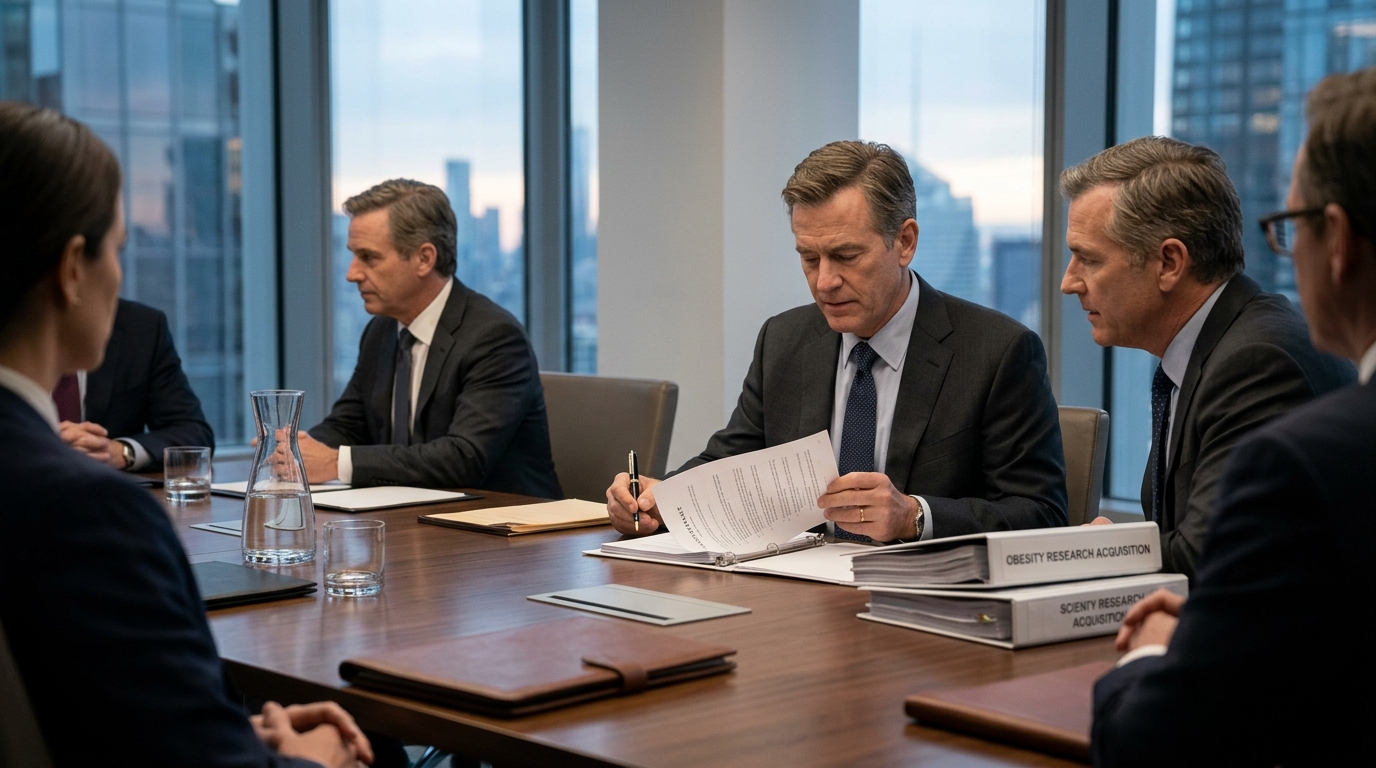
- Pfizer spent roughly $10 billion acquiring Metsera, a clinical-stage biotech with no approved product, after losing a bidding war that drove the price well above its initial $4.9 billion offer.
- AstraZeneca committed up to $18.5 billion in its largest-ever licensing deal for a once-monthly injectable weight-management portfolio from CSPC Pharmaceutical Group, contingent on development and commercial milestones.
- Roche signed a deal with Zealand Pharma for petrelintide that totals up to $5.3 billion including milestones, then separately agreed to acquire 89bio for up to $3.5 billion including a contingent value right.
- Biopharma M&A volume through mid-2026 exceeded $84 billion, with IQVIA forecasting $140 to $160 billion for the full year.
- Viking Therapeutics carries a 38.5% implied acquisition probability on Polymarket, with analysts setting an average price target around the low-to-mid $90s against a share price near $28 to $30.
- The weight-loss drug market is projected to reach $150 billion by 2035.
Why Desperation Is Driving the Price
Large pharmaceutical players are accelerating dealmaking to offset roughly $300 billion of branded pharma revenue exposed to patent expiration by the end of this decade, a figure widely cited in industry analyses and deal commentary. That structural pressure is colliding with a supply constraint: there are only a handful of late-stage obesity assets left to buy. The obesity and cardiometabolic space drew more licensing dollars in 2025 than any other therapeutic area, according to multiple deal trackers. When scarcity meets urgency, premiums inflate.
Pfizer discontinued its main obesity candidate danuglipron due to safety concerns, then secured a next-generation pipeline through its roughly $10 billion acquisition of Metsera after an aggressive bidding war with Novo Nordisk. The winner paid top dollar for an asset that was not yet in Phase 3 at the time of the deal.
The Asset Everyone Is Still Watching
Polymarket traders are watching Viking Therapeutics more closely than any other biotech for an acquisition, with VKTX carrying a 38.5% implied probability of being acquired before 2027. The speculation stems from the development of VK2735 and an upcoming clinical data readout that could further increase investor confidence. Viking’s roughly $3.6 billion market cap is a fraction of what Pfizer paid for Metsera, making the math attractive for a buyer that missed the last wave.
Technical and Positioning Framework
VKTX has traded in a 52-week range of roughly $25.77 to $43.15. The stock sits well below the Street’s average target in the low-to-mid $90s, implying the market is heavily discounting acquisition probability rather than pricing it in. A break above the $35 to $37 range on elevated volume would signal institutional accumulation ahead of a data catalyst or deal announcement. The $28 level has acted as near-term support; a close below it shifts the risk profile materially.
Scenario Modeling
Bull Case: VK2735 Phase 3 data meets or exceeds Phase 2 benchmarks, a bidding war erupts between two mega-cap acquirers, and VKTX trades toward $80 to $90, consistent with analyst targets. The Metsera precedent shows buyers will pay a 100% or greater premium for a clean late-stage asset.
Base Case: Viking advances independently through Phase 3, licensing terms are negotiated rather than an outright acquisition, and shares consolidate in the $30 to $50 range pending data. Deal activity broadly continues at the $140 to $160 billion annual pace IQVIA forecast.
Bear Case: Phase 3 data disappoints or shows tolerability issues, as happened with Pfizer’s danuglipron. Acquisition interest collapses, VKTX retests $22 to $24, and the acquirer field narrows further.
Active Trader Framework
The asymmetry in this situation runs in one direction: a deal or strong data readout produces a step-change move, while the downside is capped for anyone sizing risk at current prices relative to the consensus target. Position sizing matters more than conviction here. Traders monitoring the space should watch for unusual options activity in VKTX and in Structure Therapeutics (GPCR), which has also been flagged in deal chatter as a potential obesity takeout candidate. M&A premiums can still clear 50% or more for high-quality, scarce assets, and that range defines the risk-reward parameters worth modeling.
The obesity rollup is not a theme. It is a structural pipeline emergency being funded by the largest cash balances in pharmaceutical history. The companies without a GLP-1 franchise by 2028 will be paying even more for whatever is left.