October 20, 2026
Bonus Content: Houthis Claim Aramco Strikes. Brent Still Has Room
National Investor Network
Special Situation Letter
A Private Message for Independent Investors
Are Pesticides the New Tobacco?
Why an industry the world cannot live without may be approaching a change it can no longer avoid…
Dear Investor,
I want to ask you a strange question.
What happens when the public turns against the products of a giant industry… but the world still needs the job those products perform?
That is not a theoretical question.
We have watched versions of this story before. For years, tobacco appeared untouchable. It was profitable, familiar and woven into everyday American life.
Then the pressure started building.
Scientific concern. Public scrutiny. Lawsuits. Regulation. A slow but unmistakable change in what consumers would accept.
Tobacco demand could fall because people could stop smoking.
|
But people cannot simply stop controlling mosquitoes, termites, roaches, ticks and the pests that threaten homes, businesses, food and public health. |
That is what makes today’s pesticide story so interesting.
If traditional chemical products face mounting pressure, the need does not go away. The money does not necessarily disappear. It may begin moving toward a different kind of solution.
And quietly – well outside the spotlight of most Wall Street research – one small private company has spent years developing botanical pest-control products designed for this changing market.
That company is Med-X, Inc. It has reserved MXRX for possible use following a successful future Nasdaq listing.
I am not asking you to buy a stock. I am asking you to examine a question before the answer becomes obvious to everyone else:
If pesticides are entering their “tobacco moment,” where could the demand go next?
We prepared a detailed report that follows the entire story – from the historical comparison, to the unavoidable demand for pest control, to the botanical category and the company attempting to build inside it.
The report is long. Deliberately so. It gives you the argument, the counterarguments and the facts you should investigate for yourself.
Click here now to read “Are Pesticides the New Tobacco?”
You may agree with the comparison. You may reject it. Either way, this is a market transition worth understanding.
Sincerely,
The Editors
National Investor Network
P.S. The most consequential changes often look gradual – until suddenly they do not. Read the full investor letter here and decide for yourself whether pest control is approaching one of those moments.
|
Houthis Claim Aramco Strikes. Brent Still Has Room
For most of 2026, the geopolitical premium baked into Brent crude has been a shipping-lane story: tankers rerouted around Africa, war-risk insurance spiking, and Strait of Hormuz traffic collapsing. Markets priced that risk and moved on. What changed Monday is the target.
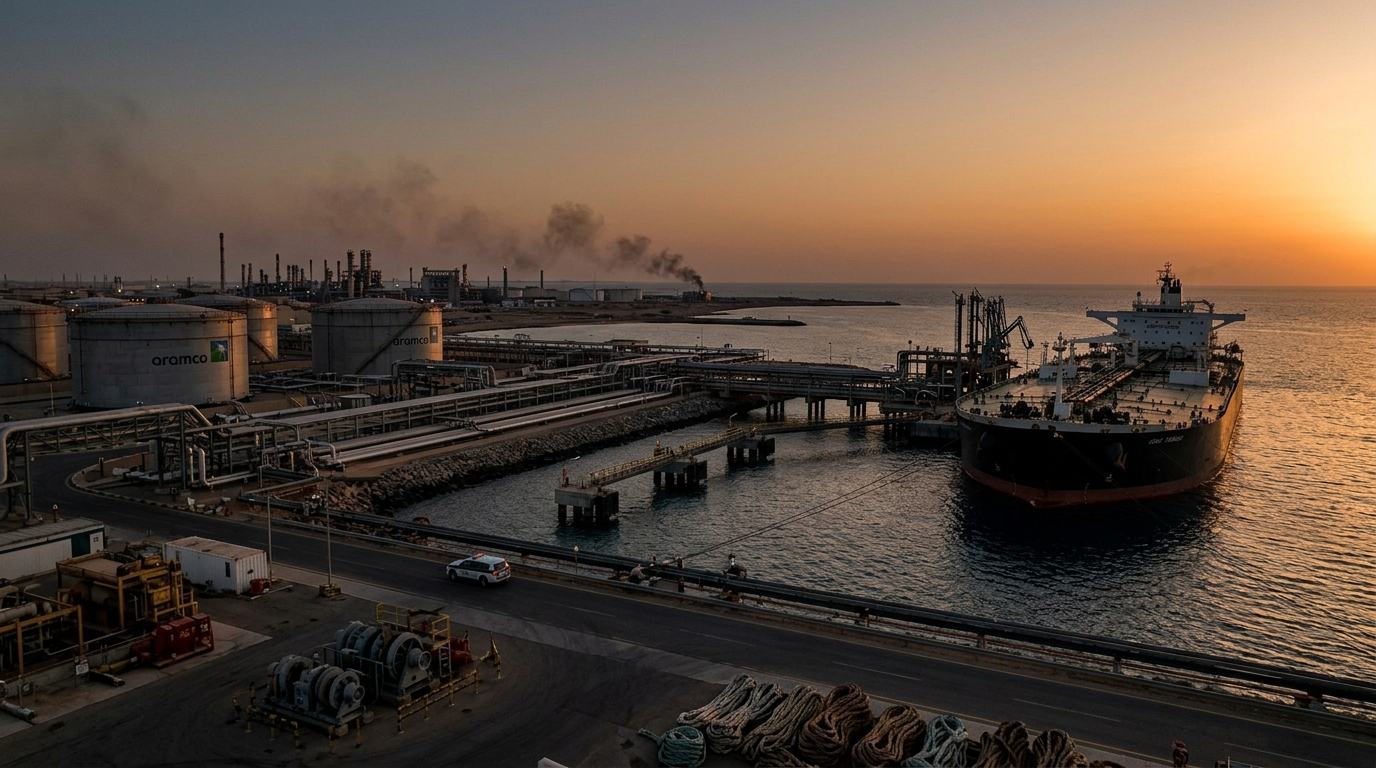
The Houthis claimed attacks on Saudi Aramco facilities in Yanbu on the Red Sea coast, the Shaybah oilfield in the Empty Quarter, King Khalid International Airport in Riyadh, Abha International Airport, and Saudi naval forces. Reuters reported there was no immediate Saudi confirmation and it could not independently verify the claims. That distinction matters for the timing of any sustained price move. It does not change the strategic reality: the Houthis are now targeting the production and export nodes rather than only the vessels that carry the barrels.
Yanbu and Shaybah are the relevant nodes here. Yanbu is a Red Sea export and refining hub, so confirmed damage there would tighten crude and product flows directly, while Shaybah sits deep inland and its targeting signals range rather than near-term supply loss. Shaybah’s maximum sustainable capacity is about 1 million barrels per day. The East-West pipeline (Petroline) linking eastern production to Yanbu is widely cited at roughly 4.8 to 5.0 million barrels per day. Disruption to either node would not be a shipping inconvenience; it would be a supply event.
Brent did not close at $110.49 on October 20. On Monday, October 19, Brent settled at $109.55 a barrel, down 0.3% on the day, according to a report carried by the Saudi Press Agency. The market is already priced for disruption. The question is whether it is priced for disruption at the source. It is not, yet. Earlier Monday, Saudi Arabia postponed its Future Investment Initiative conference, previously planned for October 26 to 29 in Riyadh, with organizers saying it will now take place in 2027 after the recent attacks. That decision is signal: Riyadh is not managing a propaganda cycle. It is managing a security crisis.
What Changes in Positioning
Tanker operators have been the clearest equity expression of the Gulf crisis all year. But the specific year-to-date figures in the draft do not hold up cleanly against widely quoted price histories, and they move day-to-day. The core point stands: tanker equities have dramatically outperformed in 2026 on rerouting, risk premia, and tight vessel supply. But the calculus shifts if Yanbu loading capacity is physically impaired. Fewer barrels leaving the Red Sea coast means fewer cargoes to move, regardless of how tight vessel supply is. Tanker revenue days are worth nothing without cargo.
Quoted war-risk premiums for Saudi-linked tankers calling at Yanbu have risen to around 3% of a vessel’s value, up from less than 1% in early July, according to Reuters reporting in late September. The draft’s specific weekly percentage drops for Frontline and International Seaways into October 16 cannot be verified as stated, and the driver attribution is also too specific without a clean primary quote. The Yanbu headline adds a separate headwind: a source-level supply shock compresses tanker upside while it expands the crude price upside. These are not the same trade.
The war-risk premium is only one of two headwinds now bearing down on tanker equities. The Trump administration’s shadow-fleet sanctions review has already begun compressing the rate environment that inflated FRO, DHT, and INSW valuations all year.
Scenario Framework
Bull case for Brent: Saudi Arabia confirms physical damage at Yanbu or Shaybah. Verified output loss of even 500,000 barrels per day pushes Brent back toward the year’s highs near the $118 area. Exxon Mobil and Chevron, with minimal Saudi exposure in their upstream, reprice as beneficiaries of higher realized prices on their own production.
Base case: Claims remain unverified. The tells are Saudi confirmation or denial, satellite and shipping evidence of loadings at Yanbu, war-risk insurance moves, and any coalition retaliation, since escalation cycles have historically driven the durable premium rather than the initial strike. Brent consolidates in the $107 to $113 range pending confirmation. Tanker stocks recover partially if the shadow-fleet policy headline fades.
Bear case: Rapid diplomatic de-escalation or a ceasefire materializes before verified damage emerges. The headline premium fades, Brent retreats toward key trend support, and tanker operators face a simultaneous vol compression and potential rate softening.
De-escalation risk cuts differently across the energy complex. Domestic refiners running record crack spreads on rerouted Gulf flows face their own single-headline exit risk if Hormuz disruptions ease.
Tactical Levels
For Brent, the $110 level is now the inflection point. A daily close above $112 on confirmed infrastructure damage opens the path to the $118 area. A failure to hold $107 on no Saudi confirmation resets the short-term range. On tanker names, FRO and INSW have defined risk to recent lows, with the shadow-fleet policy risk still live. Position sizing should reflect both the binary nature of the verification event and the elevated implied volatility across the energy complex. Wait for confirmation before sizing into the crude-infrastructure thesis. The Houthis have a pattern of overclaiming, and initial headlines do not always translate into verified supply loss.