Brent crude has done something remarkable in the past eight days: it climbed from roughly $94 toward $117, then collapsed back through $97, all without a single barrel of Iranian oil changing hands. That round trip, driven entirely by headlines, is the market’s central problem right now. The futures price is behaving as a geopolitical sentiment gauge. The physical market underneath it still carries the weight of a war that has not ended.
In an interview with CNN on Sunday, President Donald Trump said renewed fighting with Iran was “highly unlikely,” but he conditioned that view on whether Tehran would sign what he called “a very strong agreement.” He is scheduled to meet Qatar’s Prime Minister Sheikh Mohammed bin Abdulrahman Al Thani at the White House today, according to his official schedule. Secretary of State Marco Rubio said over the weekend that diplomacy “hasn’t been very productive” and that Iran’s demands were “unacceptable” and, in parts, “outrageous and ridiculous.” Those two messages are not in harmony, and crude investors may be pricing the first while discounting the second.
The Scoreboard
By mid-morning in London, Brent crude was down about $1.65, or roughly 1.7%, near $96.67 a barrel, while WTI was down about $0.96 near $89.87. Reuters reported last week’s slide was the steepest weekly percentage fall for Brent since the start of the COVID-19 pandemic, with Brent down more than 16% on the week. The war premium did not disappear. It shrank.
Before the U.S. midterms, Brent had broken above $100 and briefly traded above $110 as traders weighed tanker attacks and continued disruption risks around the Gulf. Goldman Sachs has estimated a war-related risk premium of about $27 a barrel during October’s run-up. At around $97, the market has unwound a large portion of that embedded risk. Whether the remaining premium is correctly sized is exactly the question.
What the Market May Be Missing
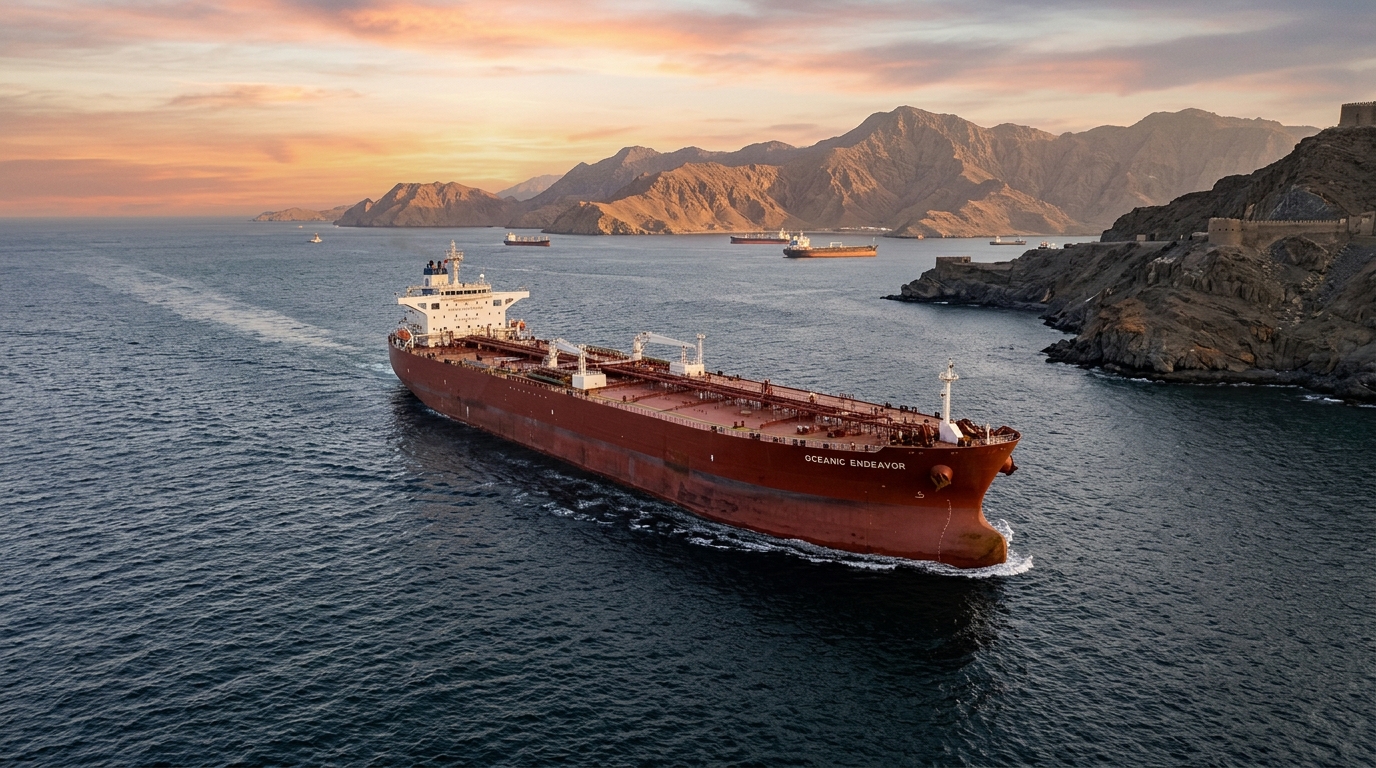
The futures selloff is clean and legible. The physical picture is less so. Before the war, roughly one-fifth of the world’s oil flows moved through the Strait of Hormuz. On Sunday, Iranian Revolutionary Guard statements carried by regional outlets said three tankers caught fire in the strait area after taking what Iran described as unauthorized routes and violating regulations. Whatever one calls it, a “closure” or a choke point under siege, the commercial outcome has been the same: traffic remains severely constrained under the strain of attacks and a long-running U.S. naval blockade. One live tracker that monitors the disruption labels November 9 as around day 253 since the crisis began.
Physical Gulf crude is not trading like peace has arrived. Murban has recently been quoted at a premium to Brent futures, reflecting persistent supply and logistics risk that the headline benchmark price has started to discount. That gap between paper and physical is the signal most readers will miss today.
Where It Shows Up
The obvious casualties of a sustained de-escalation are the energy majors. Chevron and ExxonMobil recently notched 52-week highs as Iran tensions lifted crude, with CVX around $225.67 and XOM around $179.30 at their peaks, according to market data cited in financial press. Both have retraced from those highs. ExxonMobil’s third-quarter filings and prepared remarks pointed to stronger results supported by higher oil prices and unusually strong refining margins, and the company said it expects share repurchases of $20 billion in 2027, assuming reasonable market conditions. Those plans were articulated against war-elevated margins. If Brent settles durably below $100, the Q4 earnings comparison gets harder.
Airlines benefit from the other side of this trade. Lower jet fuel costs directly expand margins for carriers like Delta. But the same caveat applies: unless the Strait normalises, fuel sourcing remains operationally complicated regardless of the futures price.
Risks and Counterpoints
The bull case for crude is straightforward. Analysts have argued that without a meaningful diplomatic breakthrough followed by sustained normalisation of shipping flows through the Strait of Hormuz, oil is likely to retain a geopolitical risk premium, even if futures briefly trade down into the low-to-mid $90s. Trump’s “highly unlikely” is conditional language, not a ceasefire. He has also warned publicly that the United States has identified additional infrastructure targets should military action resume.
The bear case is that traders decided the Democrats’ midterm gains would constrain escalation and increase the odds of a deal, so they sold the premium before anything was signed. If that read is correct and a deal materialises, JPMorgan has recently estimated the global oil market moved into a surplus of roughly 1.1 million barrels per day in September, which would argue for downside once Hormuz transit meaningfully improves.
What to Watch Next
Today’s White House meeting between Trump and Qatar’s prime minister is the most immediate catalyst. Any statement about resumed nuclear talks, a truce framework, or a credible plan to restore normal transit through Hormuz would move crude immediately. Watch whether the Murban-to-Brent physical spread narrows or widens after the meeting concludes: that spread is the honest verdict on whether the peace signal has reached the barrels that actually need to move.
The EIA’s Short-Term Energy Outlook on Tuesday and OPEC’s monthly report on Wednesday will frame the supply picture. The next OPEC and non-OPEC ministerial meeting is scheduled for November 29. Brent at $97 is not cheap by any pre-war standard. The question the market is currently answering, incompletely, is how much of the roughly $27 war premium it has earned back.