Three leaders. One villa in Shenzhen. A trade truce that expires January 10, 2027. That is the frame professional investors are placing around Thursday’s events at Kylin Villa, where Trump, Xi Jinping, and Vladimir Putin held the first trilateral meeting in the history of their three countries.
The theatrics were real. The Associated Press reported Trump said the U.S., Russia, and China are “uniquely positioned” to discuss cutting the world’s nuclear weapons stockpile and reducing the risk of use. Putin confirmed Ukraine was discussed. Xi called the gathering “groundbreaking.” But the two margin items, not the headline one, are what equity investors are actually pricing.
The Farm Goods Ask
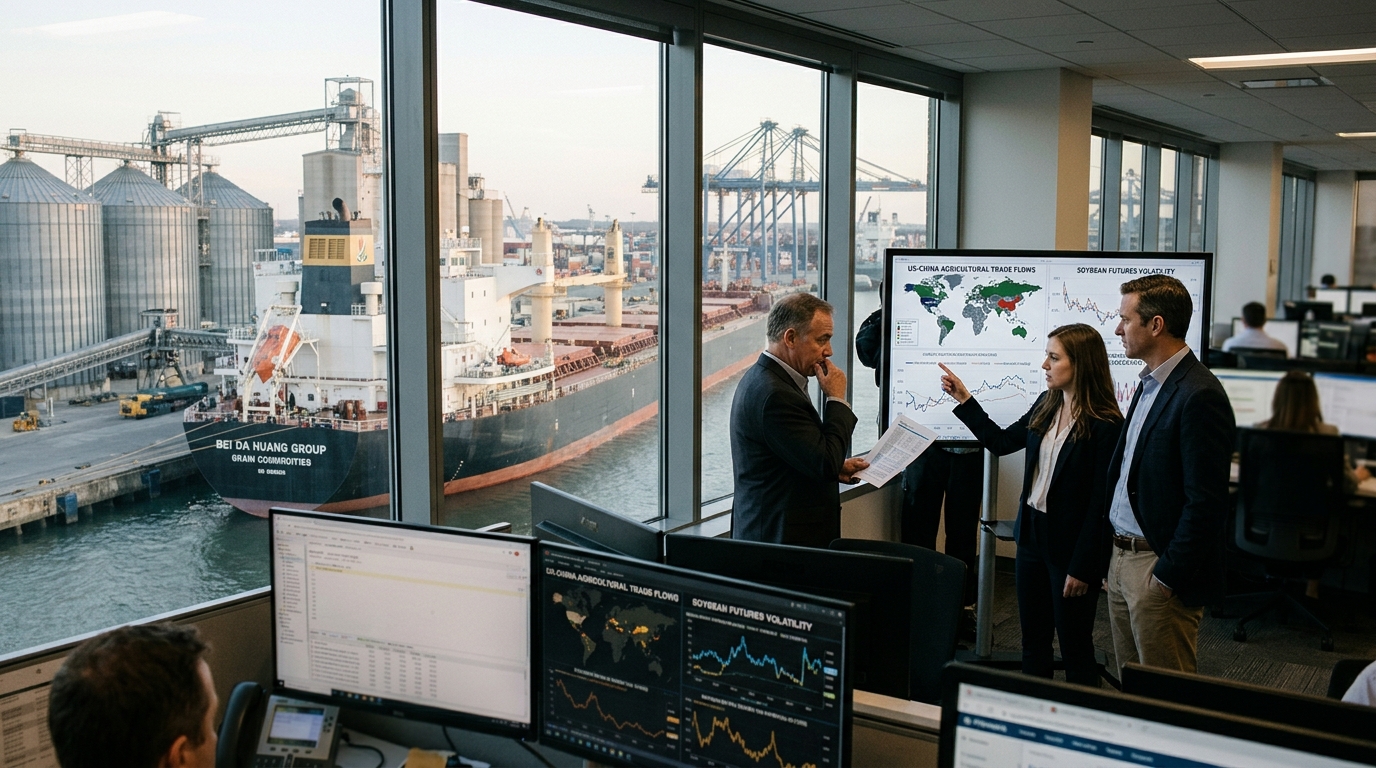
The Associated Press reported Trump pressed Xi to increase purchases of American agricultural products, putting struggling U.S. farmers at the center of high-stakes trade negotiations. His exact words were pointed: “I’ll be asking you to do some more for our farmers because China has an insatiable appetite.”
The problem is that China has heard this before and delivered unevenly. Ahead of APEC, Treasury Secretary Scott Bessent and U.S. Trade Representative Jamieson Greer met with Chinese Vice Premier He Lifeng, and U.S. officials said afterward that China had not fully honored its earlier commitments on U.S. purchases.
Soybeans are the cleaner story. Still, what the summit did not produce, at least in the public readout, is a new number. No details emerged of any farm-goods purchase commitment from Xi, or whether the leaders agreed on specific steps. For ADM and Bunge, the question heading into January 10 is whether Trump extracts a commitment on corn and sorghum, two crops that would add incremental volume on top of the soybean floor.
The Hormuz Signal
The oil remark was deliberate. The Associated Press reported Trump said both the United States and China have an interest in ensuring energy flows through the Strait of Hormuz.
Brent’s reaction tells the real story. Brent rose 0.8% to about $92.67 a barrel on November 19, a muted response for a waterway that has carried a sizable risk premium through this year’s Iran war. Oil has since pulled back sharply. The market is weighing Trump’s words against a structural reality: Chinese and other non-hostile ships have continued to navigate the strait, and Beijing has bolstered strategic oil reserves and invested heavily in green energy. Beijing’s incentive to push Tehran hard is limited.
The Clock
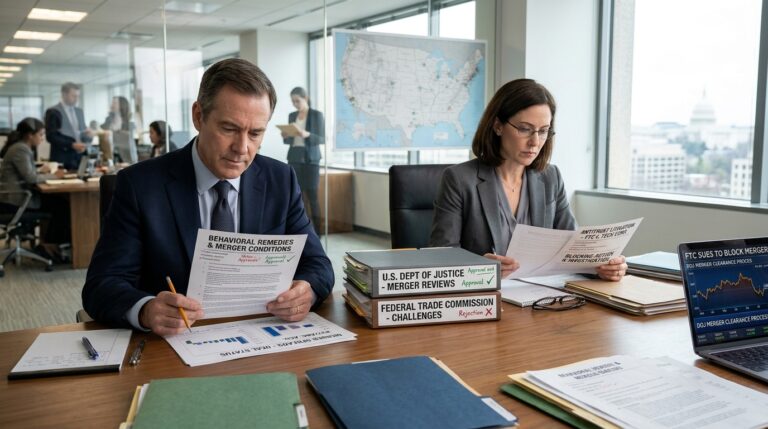
Everything in Shenzhen is filtered through one date. Looming over the Trump-Xi meeting is a trade truce negotiated around last year’s APEC summit, where the two countries agreed to pause an escalating battle of export controls and begin regular talks on trade and investment. That truce expires on January 10, 2027. Investment committees walking out of this morning’s briefings are not debating nuclear warheads. They are debating whether today’s language on farm goods hardens into a written commitment before that deadline, and whether a joint statement on Hormuz oil translates into Chinese pressure on Tehran or remains a photo-caption position.
Stocks to Watch
Archer-Daniels-Midland (ADM) is the most direct beneficiary of a firmer farm-goods pledge. The existing soybean pace already supports guidance; any extension into corn or sorghum is upside the market has not fully modeled.
Bunge Global (BG) runs a similar exposure with one additional lever. Bunge reported Q3 2026 adjusted EPS of $2.56 and maintained a full-year adjusted EPS outlook of $9.25 to $9.75, a range that assumes Chinese buying continues through year-end. A truce collapse in January is the clearest downside risk to that guidance range.
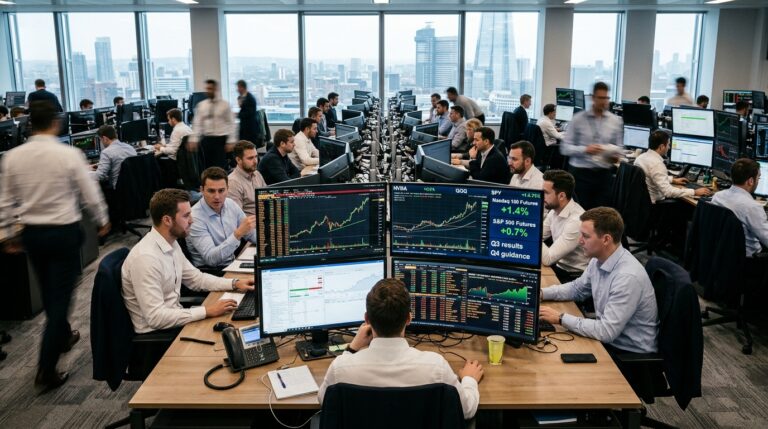
Brent crude is the geopolitical proxy. The Iran war risk premium has compressed into the low $90s. Bloomberg reported in early November that Goldman Sachs lifted its December Brent forecast to $105 per barrel. A credible joint U.S.-China diplomatic push on the strait could accelerate the compression. A breakdown in Shenzhen follow-through could reverse it. The bid today is modest; the range on resolution is not.