July 16, 2026
The Lithium Gold Rush Just Minted a $1B Unicorn
The Lithium Gold Rush Just Minted a $1B Unicorn
With lithium demand growing 5X by 2040, a modern-day gold rush is underway. Elon Musk put it bluntly saying, “Do you like minting money? Well, the lithium business is for you.” EnergyX turned this demand into a new $1B valuation. Their tech can recover 3X more lithium than traditional methods, earning investment and partnership from General Motors and POSCO.
Now they’re unlocking up to 9.8M tons in Chile.
Become an early-stage EnergyX investor by Thursday.
DISCLOSURE: EnergyX’s Regulation A offering has been qualified by the SEC. Before investing, carefully review the offering circular, including the risk factors. The offering circular is available at invest.energyx.com
FEATURED
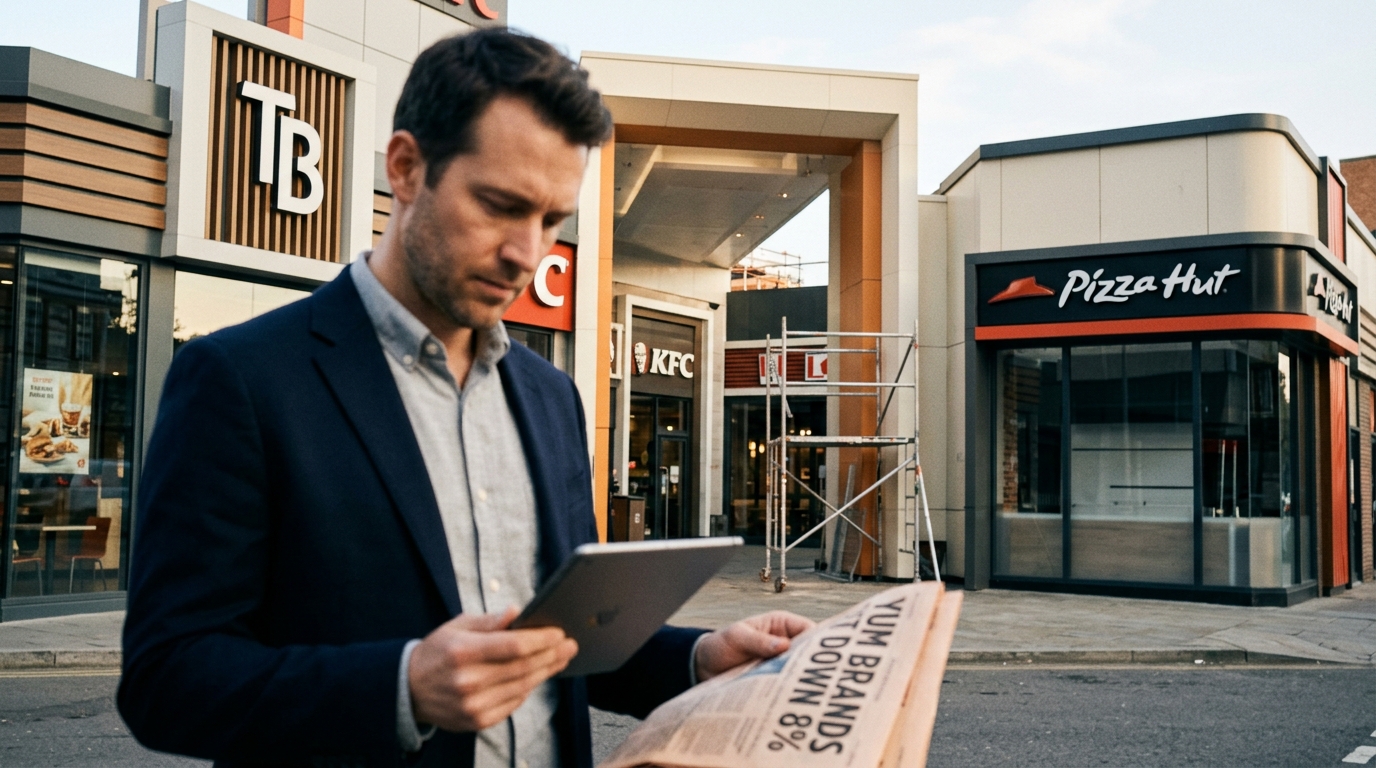
Yum Brands Is Down 8% This Week. The Real Risk Is Not the Outbreak.
Here is the weird thing about Yum! Brands (YUM) right now. The stock is taking its worst week of 2026 because of a parasite investigation that has not been confirmed. And the more interesting story is something completely unrelated to lettuce.
Let me explain both.
The Cyclospora Situation
Federal and state health officials began investigating whether Taco Bell may be linked to a growing cyclosporiasis outbreak that has now been reported across 34 states. The CDC said it is aware of 1,645 lab-confirmed domestically acquired cases since May 1 as of July 14. Taco Bell voluntarily and temporarily removed limited fresh ingredients at select restaurants as a precaution. The company has been explicit: public health officials have not confirmed any link between Taco Bell and the outbreak.
The stock fell as much as 4.5% the day the story broke and is now down roughly 8% over the last five trading sessions. Sweetgreen, which has no confirmed connection to anything, fell 5.6% in a single session. Chipotle dropped 4.8%. Markets are not waiting for facts in the early innings of a food safety story.
That pattern is not new. McDonald’s went through a similar cyclospora investigation in 2018 linked to salads. Chipotle faced multiple E. coli and norovirus events. In both cases, the stocks recovered. The question is always duration of impact on same-store sales, not permanent brand destruction.
TD Cowen put it plainly after the story broke: if Taco Bell suspending key items materializes, it is a one-quarter risk. One quarter. That framing matters when you are trying to separate the noise from the actual investment case.
Analyst targets heading into this week’s turbulence: Citi raised its price target to $178 in the days before the outbreak news. Deutsche Bank had already moved its target to $177. The consensus sits around $173-$177, implying double-digit upside from current levels. Yum reports Q2 earnings on August 3.
The More Interesting Story: What Yum Looks Like After the Pivot
Yum agreed to sell its global Pizza Hut business in a split transaction valued at $2.7 billion. LongRange Capital is acquiring operations outside mainland China for $1.5 billion. Yum China is buying the mainland China business for $1.2 billion. The company expects the transactions to close in the second half of 2026, pending regulatory approvals and other customary closing conditions.
This is not a small thing. Pizza Hut has been a drag on Yum’s story for years. The brand has faced franchisee issues, outdated store formats, and declining market share against Domino’s. Management has been trying to fix it. The decision to sell signals they decided fixing it was not worth the distraction.
What is left after the sale closes is essentially a Taco Bell and KFC company. And both of those brands are growing. KFC remains the world’s largest chicken chain. Digital now accounts for about 60% of the global business. The franchise model throws off high-margin royalties without putting capital at risk in individual restaurants.
The $4 billion buyback authorization that came alongside the Pizza Hut sale is the signal that management knows the story has changed. They are not investing in a struggling pizza brand. They are returning capital and letting Taco Bell and KFC do the compounding.
Bull / Base / Bear
- Bull: Cyclospora link to Taco Bell is never confirmed, same-store sales impact is minimal, Pizza Hut sale closes on schedule, and the focused Taco Bell and KFC portfolio re-rates higher. Stock approaches analyst consensus near $175.
- Base: One quarter of softness at Taco Bell from the investigation, Pizza Hut sale closes in the second half of 2026 as planned, Taco Bell international continues at mid-double-digit growth. Stock recovers to the $160-$165 range over six months.
- Bear: Cyclospora is confirmed linked to Taco Bell, meaningful same-store sales declines hit Q3 numbers, and the stock tests multi-month lows below $145. That outcome requires a confirmed source, which has not happened.
What Matters Now
The August 3 earnings call is the next real data point. Management will address the investigation directly. They will give color on whether Q3 traffic trends shifted materially. And they will update on the Pizza Hut closing timeline.
The stock is roughly flat year-to-date, which tells you the market had already priced in a lot of uncertainty before this week. A buy rating from 26 analysts with a price target averaging near $174 against a current price in the low $150s is a gap that is hard to ignore if the outbreak story fades.
The perception risk is real. So is the business underneath it.
For informational purposes only.