
Hey there, bargain hunter. Here is something the market keeps treating like a short-term trade when it is actually a decade-long structural shift: global defense spending has now risen for eleven consecutive years, and it just hit a record $2.887 trillion in 2025.
Europe was the main engine. Expenditure there surged 14% to $864 billion – the fastest annual increase among NATO’s European members since 1953. Germany alone crossed the 2% GDP threshold for the first time since 1990, with spending rising 24% to $114 billion, and Berlin has since pledged to reach 3.5% by 2029. NATO allies collectively posted a 20% increase in defense investment compared to 2024. For the first time ever, all NATO members met the 2% of GDP commitment.
And this is before the big number drops: spending approved by Congress for 2026 has already risen to over $1 trillion, with a potential further rise to $1.5 trillion in 2027 if the current budget proposal passes.
This Is Not a Geopolitical Trade. It Is a Backlog Story.
The distinction matters. Defense stocks are not a bet on whether a specific conflict escalates. They are a bet on order books, production ramp timelines, and contract durations measured in decades – not quarters. When Germany commits to 3.5% of GDP by 2029, that money is already partially allocated. It flows into specific programs. It becomes revenue visibility.
Look at RTX Corporation. Q1 2026 adjusted EPS came in at $1.78, beating estimates of $1.52 by 17%. Revenue hit $22.1 billion against $21.45 billion expected. The company raised full-year adjusted EPS guidance to $6.70–$6.90. Multiple billion-dollar contracts hit in the quarter, including a potential $11.9 billion Germany deal and a $3.8 billion F-35 program extension. RTX carries a $268 billion backlog. That is not sentiment. That is contracted future revenue.
Northrop Grumman closed FY2025 with a record $95.7 billion backlog, free cash flow up 26% to $3.3 billion, and Q4 revenue growth of 9.6%. Management guided $43.5–$44 billion in 2026 sales. The B-21 Raider acceleration deal, closed in late February 2026, added $2–$3 billion over a multiyear period with improved return potential. International momentum is building, with 20 countries having formally requested Northrop’s IBCS system.
The One That Actually Looks Cheap
Lockheed Martin is the name worth sitting with. At roughly $508, LMT trades at 16.89x next twelve months earnings and 11.94x EV/EBITDA. That is a discount to every major peer. RTX trades at 25.6x NTM P/E. Northrop sits at 19.8x. General Dynamics comes in at 20.6x. Lockheed is the cheapest large-cap defense name in the group despite running the most direct exposure to the munitions ramp.
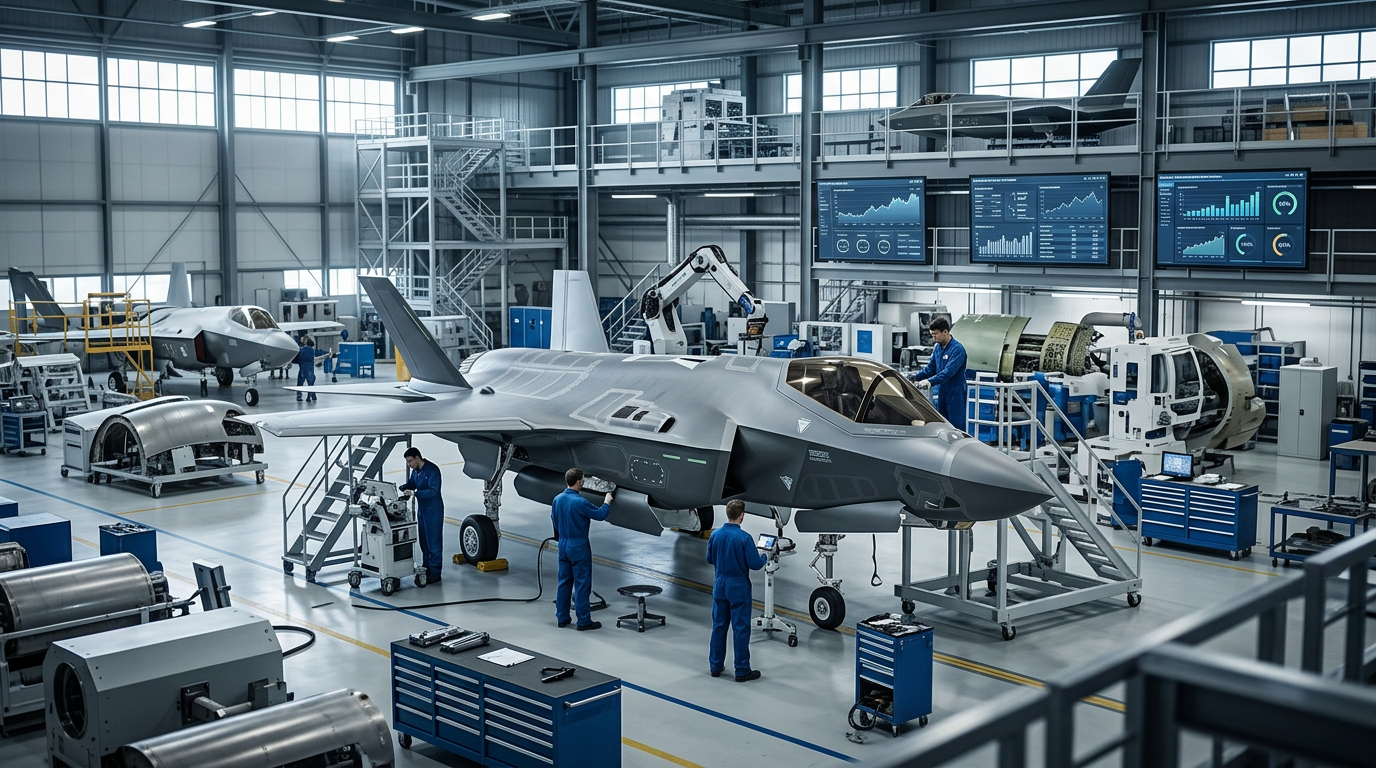
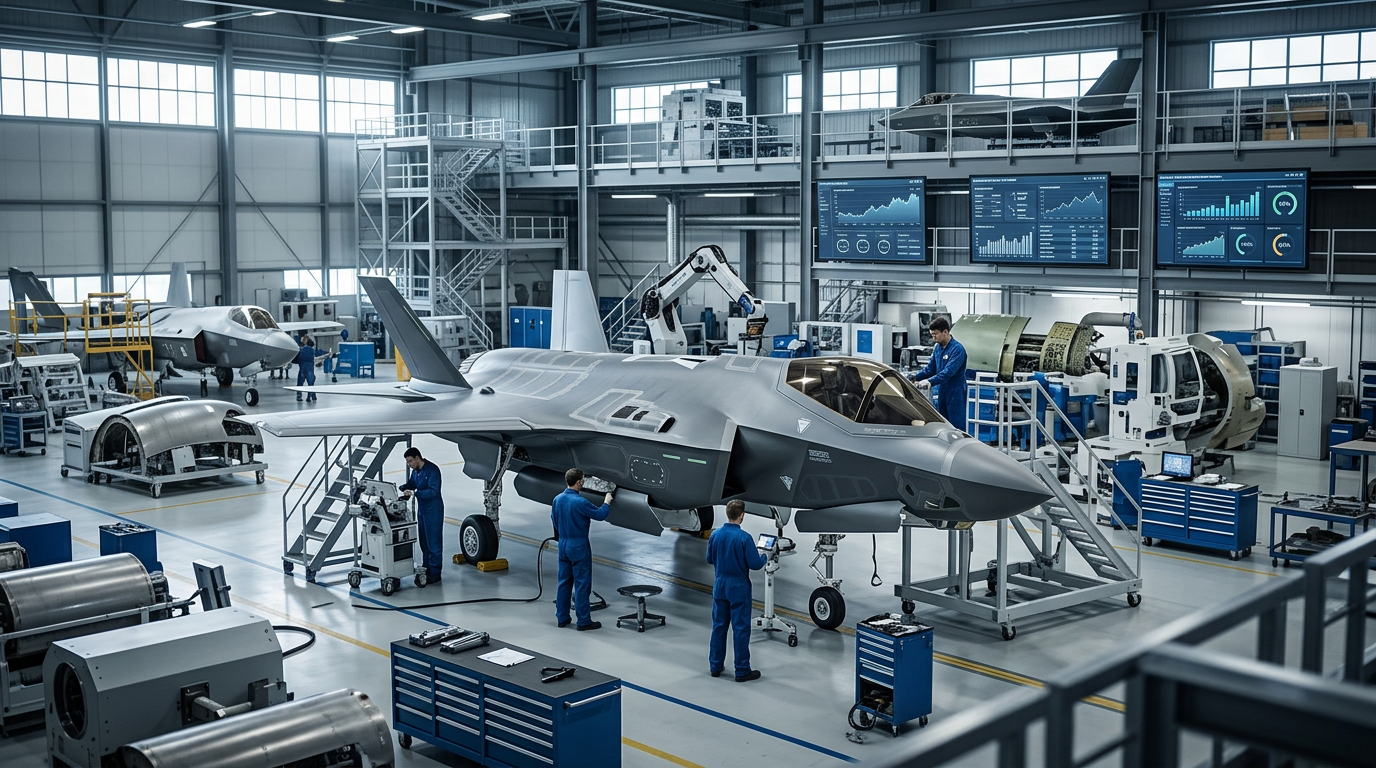
The business has trailing twelve-month revenue of $75.1 billion and return on equity of 67.6%. The F-35 program alone has over 3,500 jets planned across allied nations – producing predictable multi-decade cash flows. Sikorsky secured a $5.8 billion Black Hawk replacement contract in Q1 2026. Lockheed is also a confirmed prime contractor on the Golden Dome space-based interceptor program alongside Northrop Grumman and Anduril. The 2.1% dividend yield has grown for 23 consecutive years.
The discount reflects Aeronautics execution risk and uncertainty around classified programs. The first clean quarter on both fronts came in Q1 2026. That is worth watching.
What Could Go Wrong
Defense is not a risk-free sector. Budget politics in Washington remain unpredictable, and fiscal headwinds could slow the domestic spending ramp. European rearmament timelines can slip. Production bottlenecks in precision munitions and advanced fighter jets are real constraints – demand is outpacing the industrial base’s ability to deliver. And investors piling into defense names as a geopolitical trade tend to exit just as fast when headlines cool.
The structural case is intact. Eleven straight years of global spending growth, a NATO target now set at 5% of GDP by 2035, and a geopolitical environment that shows no signs of cooling. Whether the market gives Lockheed the multiple it deserves in the next six months is anyone’s guess. But at 17x earnings with a $194 billion backlog? The margin of safety is there.