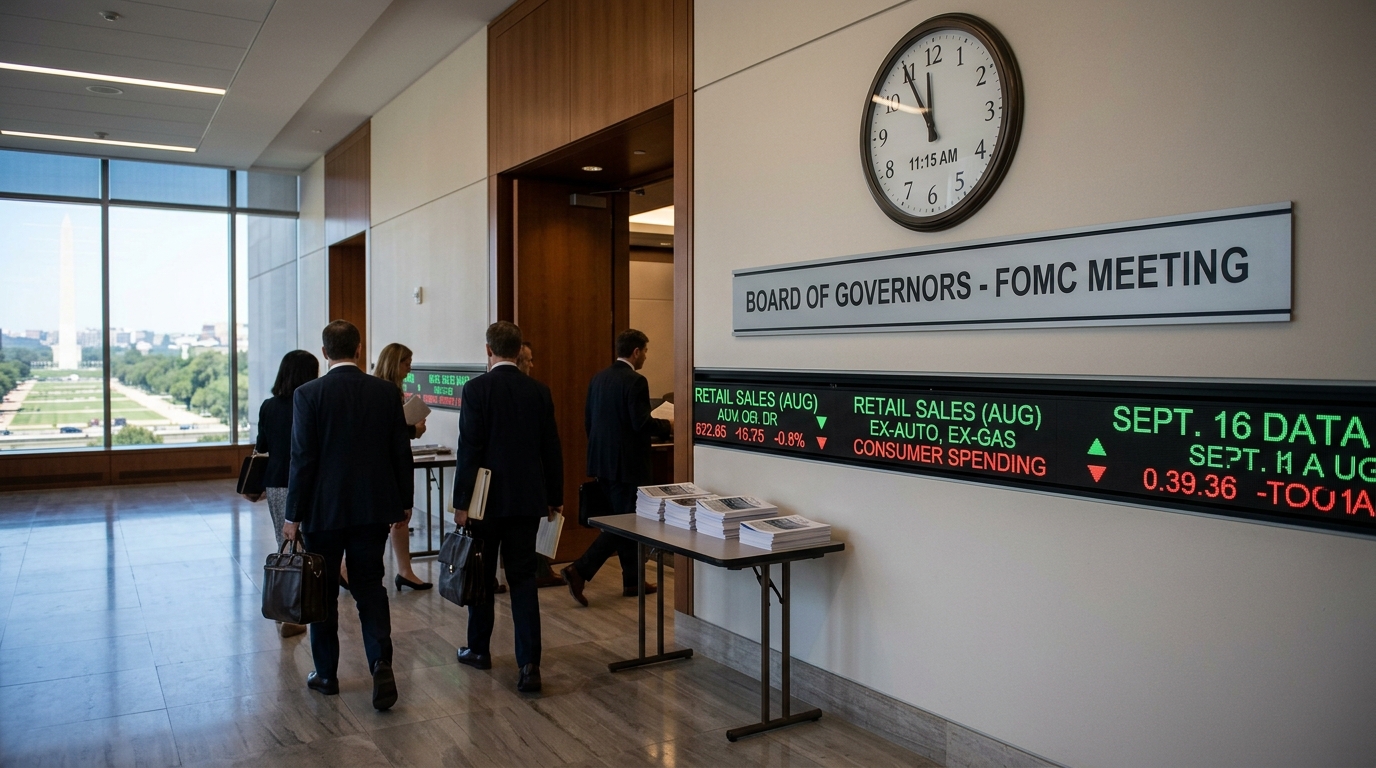
There might be no clear end in sight to the Iran war…
But this escalation is likely distracting you from a stunning pattern quietly heating up in the predictions market…
Corporate and Political insiders, folks with firsthand info on potential announcements, deals, policy changes coming up and more…
Have been making sneaky yet massive bets on platforms like Polymarket…
And quietly front-running the market in the process.
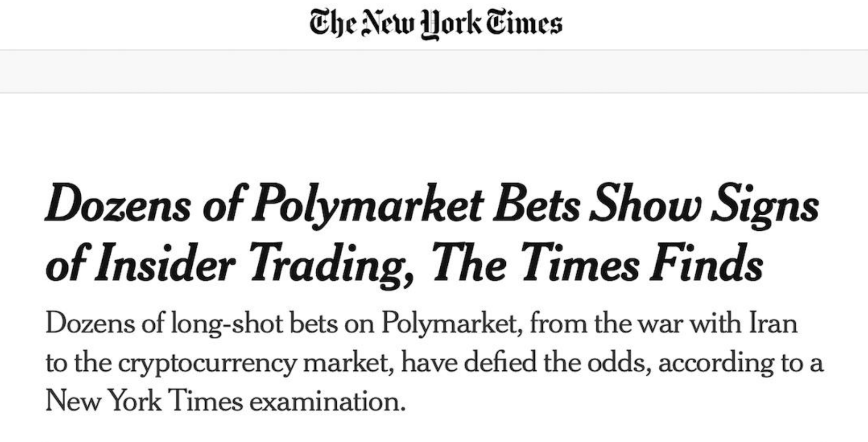
That’s why you’d have noticed news about this pattern flying around…
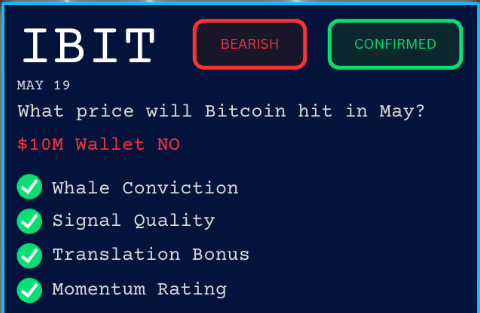
Out of the blue on May 19th this year…
I tracked a large bearish bet on Bitcoin from an account with over $10 million in volume…
Days later… News came out that the SEC was delaying plans to further crypto innovations, obvious bad news for Bitcoin.
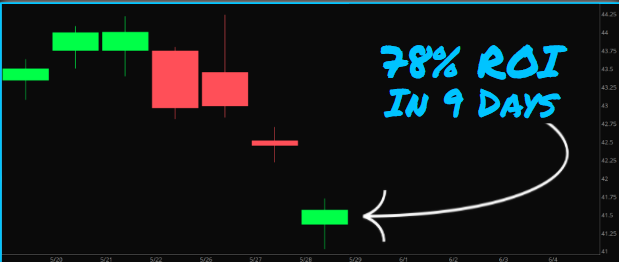
Acting on the bearish bet before the news came out with a quick trade locked in 78% in 9 days.
It doesn’t end there…
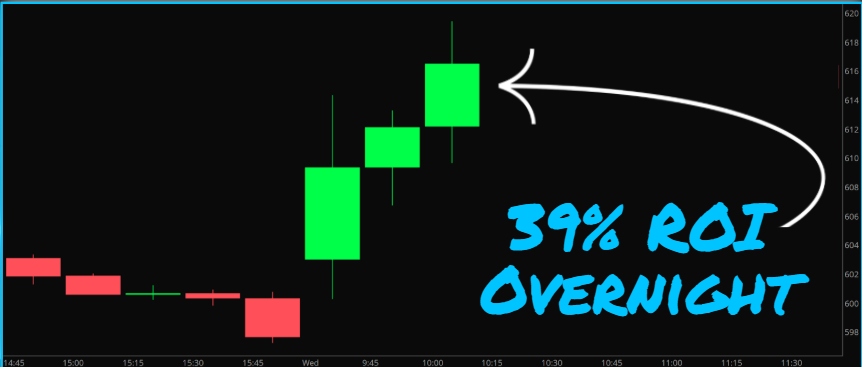
These massive insider bets also tipped off a 39% winner on META overnight.
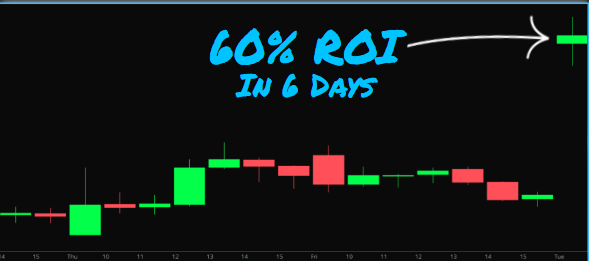
And even 60% on TSM in 6 days.
There were smaller wins and those that didn’t work and I won’t make reckless guarantees about the stock market…
But in the next few minutes…
I’ll show you the special secret I use to track these insider bets…
Better yet…
You’ll get FREE access to use this secret for yourself too… with no catch.
All you have to do is tap this link to get instant FREE access and start tracking these insider bets yourself.
To Better Trading,
Alex Reid.
Retail Sales and the Fed Land on the Same Wednesday
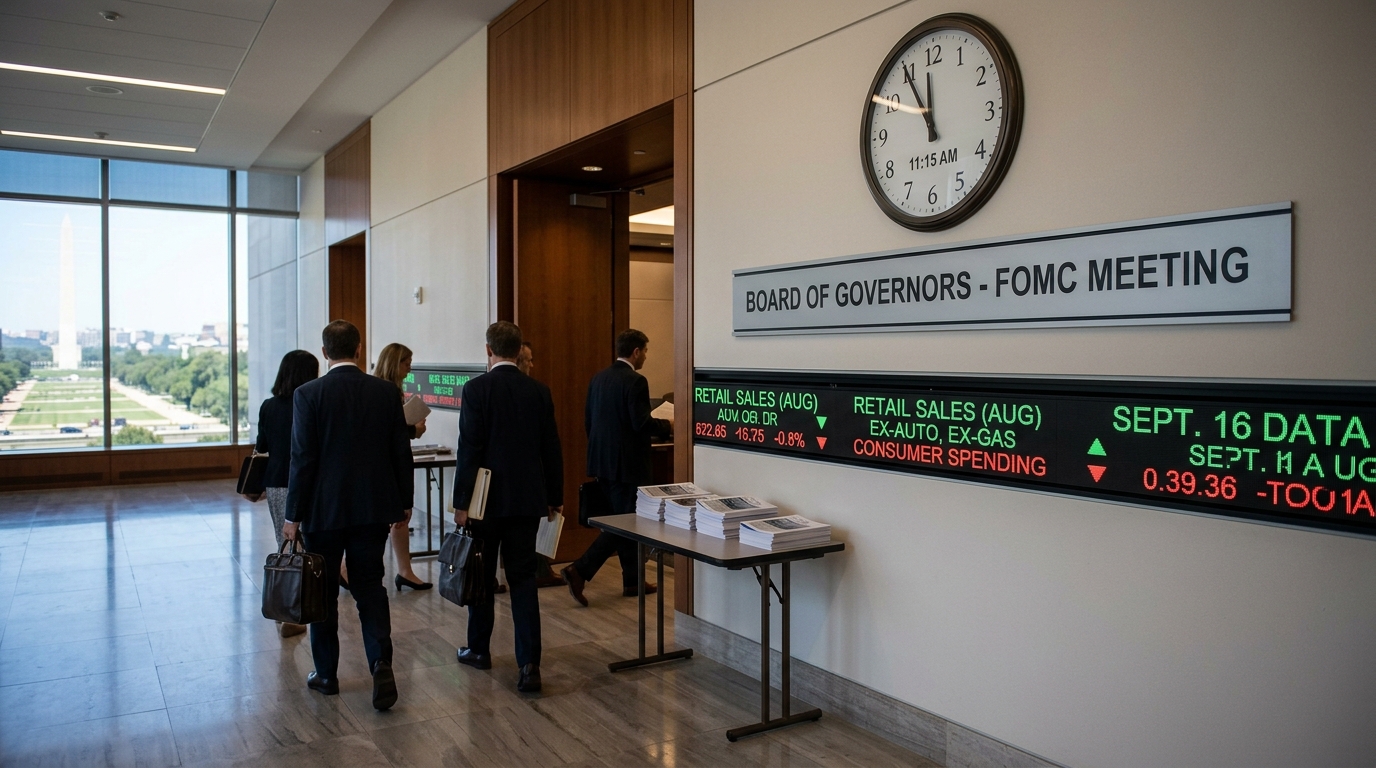
Wednesday, September 16 carries two market-moving events separated by five and a half hours. The Census Bureau publishes advance August retail sales at 8:30 a.m. Eastern, and Chair Kevin Warsh delivers the FOMC decision at 2:00 p.m. The overlap is not coincidental noise. It means a single data point, the ex-auto, ex-gas control group, will simultaneously recalibrate consumer health estimates and tilt rate-hike probabilities in real time.
Market Context
The fed funds target range has sat at 3.50% to 3.75% since December 2025, held there through the July 29, 2026 meeting under Chair Warsh. Market-based hike odds are elevated into Wednesday, though the exact probability is moving day to day into the decision. Goldman Sachs Research has framed a September hike as unlikely in its recent commentary, while J.P. Morgan has outlined conditions under which a quarter-point hike is plausible, a genuine split in emphasis among major forecasters. August CPI data released Friday, September 11 showed inflation still above the Fed’s 2% target, keeping the hike debate live. Into this finely balanced environment, retail sales land first.
Diesel hit a record $5.85 per gallon on Sept. 4, and has since pushed above $6 nationally in early September, according to reporting that cited AAA averages. A year ago, diesel was about $3.71. That price shock is the single biggest distorting force inside Wednesday’s headline number, which is exactly why the ex-gas reading carries the interpretive weight.
Sector and Company Backdrop
The Goldman Sachs Global Consumer and Retail Conference runs Monday and Tuesday, with management fireside chats providing real-time positioning intelligence ahead of the data. Genesco confirmed its management team will present at the conference on Monday, September 14, with a live audio webcast of the fireside chat beginning at 8:30 a.m. Eastern.
Sector guidance credibility is already damaged. Lululemon reported fiscal Q2 revenue declining 4% to $2.4 billion with comparable sales falling 9%, then cut its full-year revenue outlook to $10.35 billion to $10.5 billion, implying a 5% to 7% decline versus fiscal 2025 results. Shares dropped sharply on the report.
Walmart’s fiscal Q2 results showed U.S. comparable sales rising 2.6%, below the 3.8% analyst consensus cited by FactSet in coverage of the release. Management also flagged about $2 billion in incremental fuel cost headwinds and noted that fuel and food costs are pressuring lower-income shoppers.
The Number That Matters
The ex-autos measure strips out motor vehicle dealers, which represent roughly one-fifth of total retail sales. Ex-autos-and-gas removes the second major distortion from price-driven filling station receipts. The control group, which also excludes building materials and food services, is the most watched figure among macro economists because it feeds directly into the GDP consumption calculation.
July’s report showed the headline declining 0.6% month over month versus a forecast for a small gain. Ex-autos came in at -0.3%, and ex-autos-and-gas at -0.2%. The core control group fell 0.4%. A second sequential decline in the control group on Wednesday would crystallize the consumer deceleration that Walmart’s comparable-sales miss has kept in focus.
Scenario Modeling
Bull Case: Ex-auto, ex-gas rises 0.3% or better. The consumer shows absorption of fuel costs, real spending holds, and the Fed holds rates steady rather than risk tipping a resilient economy. Discretionary retail, including Walmart and Target, recovers initial post-data losses. LULU, already trading near cycle-low valuation levels in analyst commentary after the guidance cut, could see a relief bid on improved category read-through.
Base Case: Control group posts a flat to modestly negative reading, consistent with July’s trend. The Fed proceeds with a 25-basis-point hike as inflation data has already set that expectation. Two-year Treasury yields hold near current levels; consumer discretionary stays under pressure. Goldman conference management teams strike cautious tones that validate the softness.
Bear Case: Another negative ex-auto, ex-gas month alongside a hawkish 25-basis-point hike and an upward dot-plot revision produces a simultaneous tightening shock. Retailers with damaged guidance credibility face a compounding multiple compression. The 30-year Treasury, recently near 5.3%, extends its move higher.
Active Trader Framework
The 8:30 a.m. release typically moves markets within two to three minutes. Volatility compression before 8:30 and expansion immediately after is the mechanical pattern to expect. Spreads on consumer discretionary names frequently widen in the first 15 minutes post-release. Wednesday’s added complexity is the 2:00 p.m. FOMC statement, which creates a second volatility event in the same session. Traders running positions across both windows carry gap risk in both directions.
Key levels to monitor: the control group’s sign, positive versus negative, is the binary that matters most for rate expectations. Any reading weaker than -0.3% against a hawkish Fed would represent a stagflationary data combination that has historically punished both bonds and consumer discretionary simultaneously. Genesco’s GCO fireside chat at 8:30 a.m. Monday provides early management tone on footwear demand before Wednesday’s macro data confirms or contradicts.
Conclusion
Wednesday’s calendar does not reward reactive positioning. The data and the decision arrive in the same session, which compresses the window to adjust. Traders who know which sub-component of retail sales actually moves rate pricing, and have clear levels in mind for each scenario, are the ones positioned to act rather than react. Preparation, not prediction, is the discipline the next 72 hours require.