September 18, 2026
Bonus Content: Oil Has Dropped Three Days Straight. Tuesday’s Gulf Summit Could Reverse That Fast.
Before any options trade, there are exactly 4 questions worth 5 minutes of your time:
When does this company report earnings next?
What’s on the economic calendar during my trade?
Does this stock pay a dividend – and when’s the cutoff?
And how many days does my option have left?
Four questions. Four free lookups. Five minutes, total.
Get a bad answer to any of them, and you’ve just found a landmine – a scheduled event that would have detonated your trade no matter how good your analysis was. Skip the trade, shift the date, or pick a different expiration… and the disaster simply never happens.
My new report walks you through all four: what each event is, why it blows up options positions, where to find each date in 30 seconds, and the exact check to run every time.
The Options Landmine Calendar. Normally $29.97. Free today.
Good Trading,
Bill Poulos
P.S. Five minutes before the trade beats five weeks of regretting it after. Grab the check free.
Oil Has Dropped Three Days Straight. Tuesday’s Gulf Summit Could Reverse That Fast.
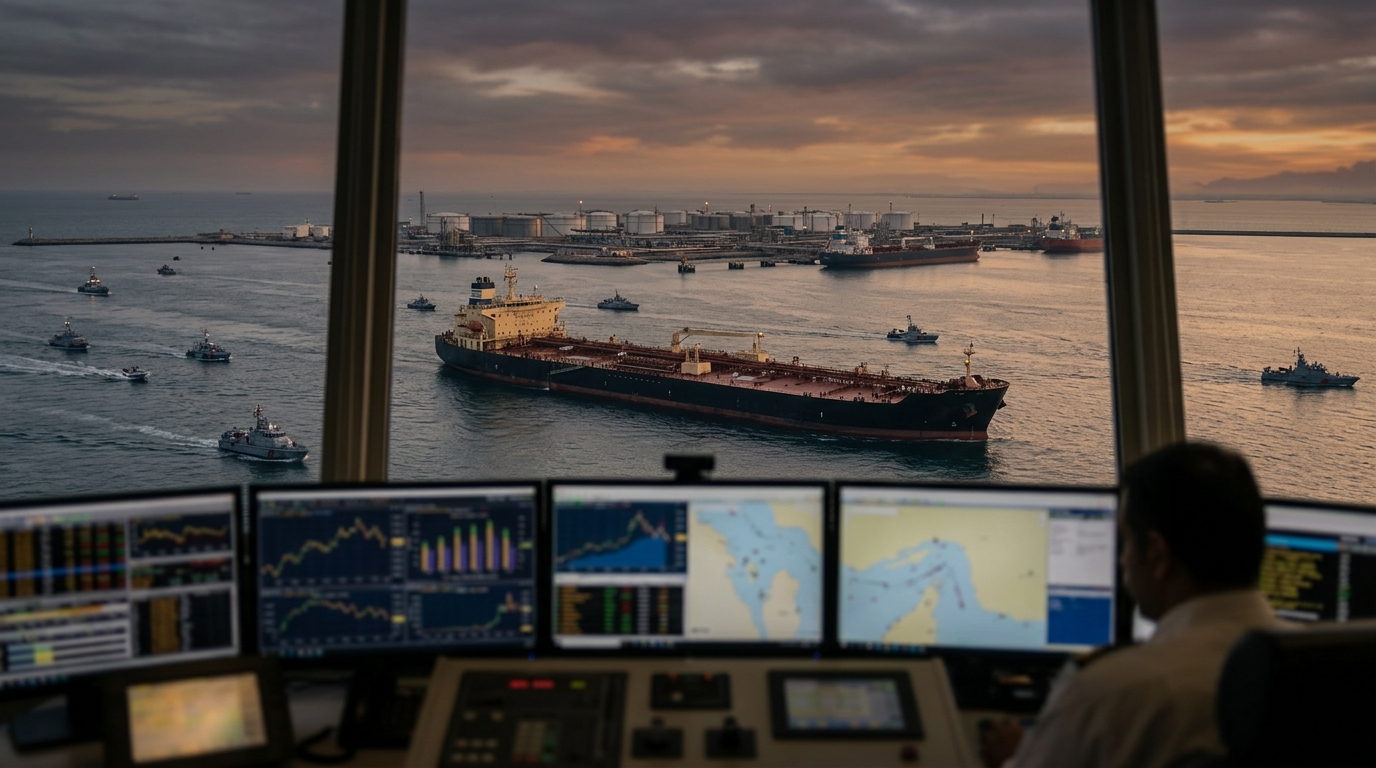
Brent futures lost $1.01 on Thursday to close at $104.82 per barrel, while WTI shed 52 cents to settle at $101.91. That is a third consecutive declining session, and yet the conflict has caused the restriction of nearly all traffic through the Strait of Hormuz, leading to what the International Energy Agency has characterised as the largest supply disruption in the history of the global oil market. The divergence between falling prices and a still-closed strait is the central tension every energy trader must hold in mind going into Tuesday.
The latest decline in crude prices reflects a partial unwinding of the geopolitical risk premium rather than a fundamental change in the oil market. The proximate cause of that unwind: oil prices fell as Saudi Arabia shifted some crude exports through the Strait of Hormuz to compensate for the closure of a key pipeline, easing market fears that the outage would cause another major disruption to global supplies. US Energy Secretary Chris Wright has said roughly 7 million barrels per day of oil and fuel shipments are now flowing through the Strait of Hormuz, about half of the volumes stranded at the start of the Iran war. Markets read that as supply relief. They may be reading it wrong.
The Decision Sitting Over the Market
President Trump said Thursday he is approaching a major decision on whether to restart massive attacks in the Iran war. His comments come ahead of a planned Tuesday meeting with leaders from six Gulf countries, including Saudi Arabia, the UAE, Qatar, Bahrain, Kuwait, and Oman, on the sidelines of the UN General Assembly in New York. The meeting could shape the next phase of the war, including whether to make another push for diplomacy or intensify military action.
If Trump wants to resume major combat operations, he would need buy-in from his regional allies. That dependency is the crux. Saudi Arabia is simultaneously extending a de-escalation offer: Saudi Arabia has proposed a two-week ceasefire to Yemen’s Iran-backed Houthi rebels, with a high-ranking source saying Riyadh transmitted the proposal through the Omani government to discuss ways to resolve humanitarian issues in Yemen. Rapidan Energy told clients Thursday that risk remains skewed toward a larger disruption if the pipeline outage extends past September or if Iran, the Houthis, or other proxy groups escalate attacks.
Sector and Instrument Positioning
As of September 17, XLE closed at $64.48. Over the past year, XLE has outperformed the broader market, and over the last three months it has also led SPY. The ETF’s top two holdings, ExxonMobil at roughly 20% weight and Chevron at 15%, carry direct upstream exposure to Brent-linked realizations. XLE’s near-term support sits at $63.13, with resistance at $64.93.
Analysts say geopolitical developments will remain the key driver for oil prices in the near term. The Houthi ceasefire offer, if accepted, removes one threat vector but does nothing to reopen Hormuz. Conversely, resumed US strikes on Iran could close the strait more completely and drive Brent sharply higher from current levels.
Scenario Modeling Into Tuesday
Bull Case for crude and XLE: Gulf leaders signal backing for resumed US operations, or the Houthi ceasefire collapses before Tuesday. Hormuz remains shut and the pipeline repair timeline slips beyond September. Brent reclaims $110 and XLE tests its 52-week high of $66.17. Upstream names with Brent-linked production, particularly ConocoPhillips and EOG Resources, see outsized relative strength.
Base Case: Trump defers the escalation decision, the Houthi ceasefire enters a fragile early phase, and Saudi alternative routing holds. Brent consolidates in the $102 to $107 range. The US Energy Information Administration expects the majority of shut-in Middle East crude oil production to be back online in the first quarter of 2027, implying the current level already embeds meaningful residual premium. XLE drifts in the $63 to $65 band pending clarity.
Bear Case for crude: A credible US-Iran diplomatic framework emerges from the Tuesday UNGA sideline talks, Saudi alternative supply routes hold firm, and Houthi attacks on Saudi infrastructure pause. Brent unwinds toward $95 to $97. XLE breaks below the $63.13 support level, with refining-heavy names such as Marathon Petroleum and Valero vulnerable to compressed crack spreads at lower crude prices.
Active Trader Framework
Tuesday’s meeting is a hard binary. Traders should size energy exposure to tolerate movement in either direction across a roughly $10 Brent range. The three-day decline in crude has not been accompanied by any structural resolution of the Hormuz disruption, so fading the move without a defined stop is not a disciplined posture. US crude is up nearly 2% for the week and has advanced more than 18% for the month, which means trailing stops and defined-risk structures carry particular value heading into a high-conviction, low-visibility catalyst. Watch Thursday’s overnight Houthi response to the Saudi ceasefire proposal as an early signal of Tuesday’s likely tone.
Preparation, not prediction, is the edge available right now. The levels are clear. The catalyst date is fixed. Position sizing is the decision that matters most before Tuesday morning opens.