
September 24, 2026
Bonus Content: The 10-Year Hit 5.12%. Here Is What Traders Must Watch Before Today’s 7-Year Auction.
Dear Reader,
The expert who briefed Congress on the rise of the iPhone years in advance… now believes Elon is planning to launch a device that could KILL the iPhone and all its competitors.
And predicts it will be Musk’s biggest and most ambitious project to date.
It could become the first truly physical AI device of its kind…
Ultimately setting Elon up for total domination over yet another multitrillion-dollar industry, and making early investors huge gains in the process.
And thanks to a new FCC ruling…
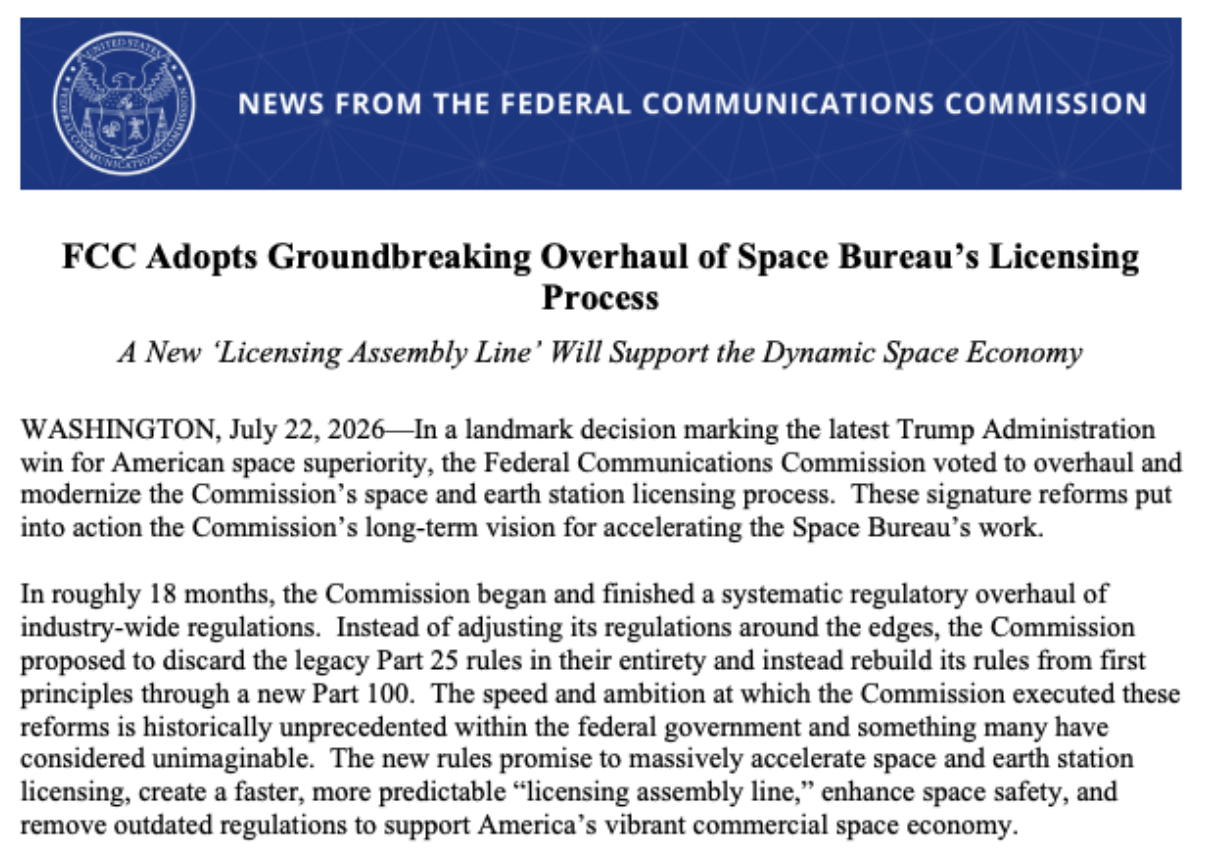
He believes Starphone’s launch is imminent… and is pointing you to where some of the biggest tech gains are about to come from.
This is the latest prediction from Josh Baylin, one of the most accurate tech experts of the past 25 years.
He’s tracked $200 million positions for “the world’s most envied hedge fund.”
His wisdom is so sought-after, he’s earned an invitation to the White House correspondents’ dinner…
And to private events where he’s rubbed elbows with everybody from Steve Ballmer, Larry Page and Sergey Brin… to even Elon Musk himself.
He’s also been ahead of big trends in all types of conditions – including buying Palantir (PLTR) … Microsoft (MSFT)… and Apple (AAPL)… all ahead of huge triple-digit runs.
Today, he’ll show you the best way to buy the stocks behind the Starphone, for what he believes could be the biggest Musk payday yet.
Including a free ticker you can act on right away.
Click here for the full story.
Regards,
Matt Weinschenk
Publisher, Stansberry Research
P.S. In addition to the one I included above, the FCC granted another key approval for Elon’s mobile network just last week. That means another piece of this story just fell into place. It’s all developing very fast, and you’re going to hear more and more about it in the coming weeks. Learn where to move your money here.
The 10-Year Hit 5.12%. Here Is What Traders Must Watch Before Today’s 7-Year Auction.
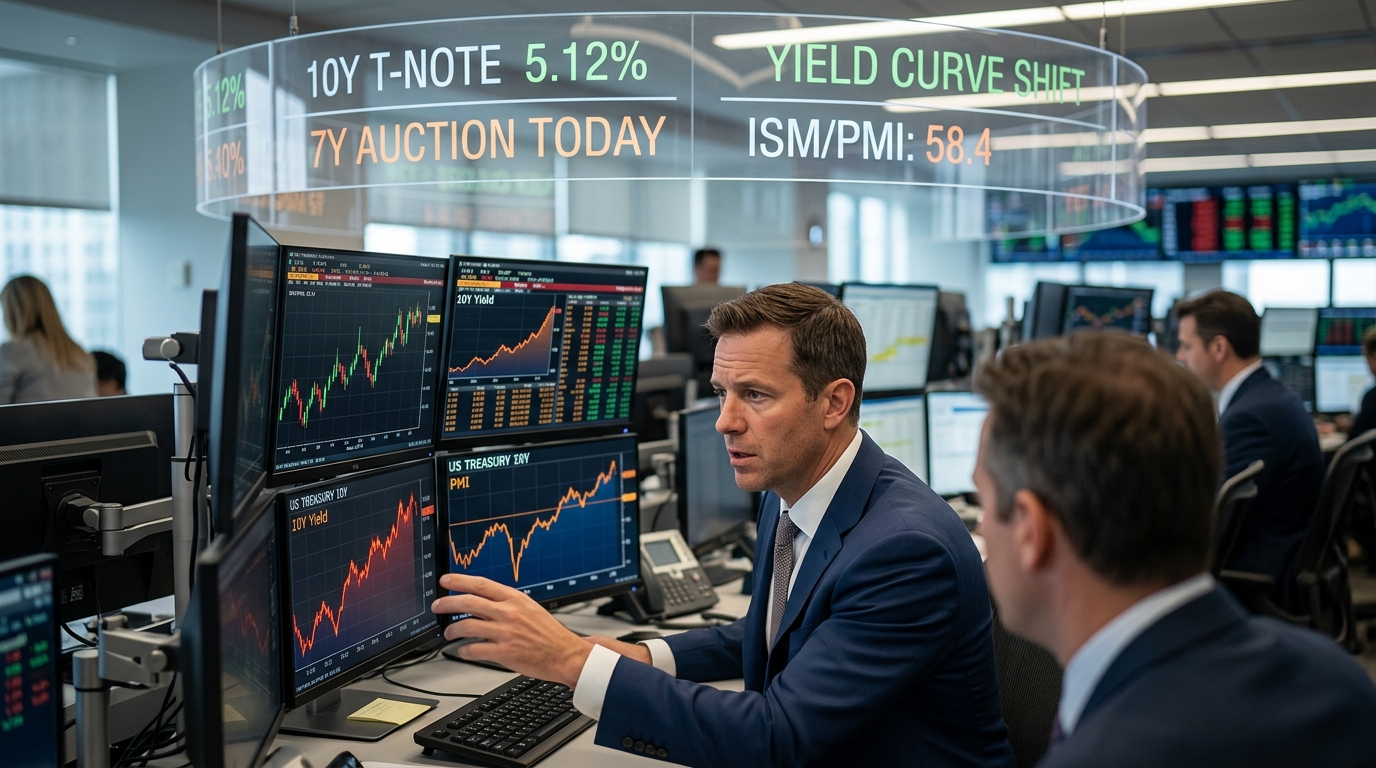
Wednesday’s session delivered a compound shock that active traders cannot treat as noise. The S&P Global flash composite PMI for September came in at 58.4, a 62-month high, versus a consensus of 54.9. Within hours, the 10-year Treasury yield surged about 15 basis points to 5.12%, the highest level since July 2007. The 5-year note cleared 5% for the first time since 2007 as well. Then the Treasury’s $70 billion 5-year note auction tailed 3.1 basis points to price at 5.033%, with a bid-to-cover of 2.21 against a trailing average of 2.33. Indirect bidders took 54.3%, well below their 65.2% average. Primary dealers absorbed 15.8% of the offering. Today’s $44 billion 7-year auction arrives into that open wound.
What the PMI Actually Said
The composite reading of 58.4 was not just a beat. It was the fourth consecutive month of accelerating growth, with manufacturing PMI jumping 3.1 points to 57.0, a 52-month high, and services rising 2.2 points to 58.7, a 59-month high. S&P Global’s chief business economist noted that the survey data implies annualized GDP growth of roughly 5% for September and roughly 4% for the third quarter as a whole. That is the number bond traders were pricing when yields gapped. Input costs also rose sharply, sharpening the Fed’s already complicated calculus. The bond market’s read: no cuts, possibly more hikes.
Sector Scorecard from Wednesday
The Nasdaq Composite fell 1.1% while the S&P 500 lost 0.75% and the Dow shed 0.7%. The iShares Russell 2000 ETF fell 1.8%, consistent with the pattern that has emerged since August: smaller companies, carrying floating-rate debt loads, bleed faster when yields spike. The Russell 2000 is already tracking down roughly 1.8% on the week. XLE, the energy sector ETF, bucked the move, rising 1.6% as crude held firm. XLU, the utilities sector, dropped 1.6%, the worst performer among sectors, a direct consequence of rate-sensitive dividend payers losing their yield cushion as Treasuries compete.
The Nasdaq 100 entered Wednesday fresh off back-to-back record closes. With the risk-free rate now at 5.12%, the equity risk premium compression is visible and mechanical: the higher the discount rate, the more aggressively future cash flows are haircut. Duration-heavy growth names feel this first. The Russell 2000’s debt structure compounds the problem from the other direction, through financing costs rather than valuation math.
Bond ETF Positioning
TLT, which holds 20-plus-year Treasuries with roughly 15 years of effective duration, faces roughly a 2.5-point price decline for every 17-basis-point yield increase, all else equal. Wednesday’s move was roughly that magnitude. IEF, targeting the 7-to-10-year segment with duration near 7 years, carries about half the sensitivity but is directly in the path of today’s 7-year auction. SHY, with duration under 2 years, remains the curve’s ballast, but at current short-rate levels it is not a refuge so much as a parking spot.
Technical Framework
The 10-year at 5.12% has now broken above the 5% level that served as resistance through mid-September. Wednesday’s close above that level establishes a new reference. For equities, watch the S&P 500’s 7,600 level as a key structural zone, and the Nasdaq Composite’s 50-day moving average. The Russell 2000 registered a bearish MACD cross in August and has since posted a series of lower highs and lower lows. That downtrend structure is intact.
Scenario Modeling
Bull Case: Today’s 7-year auction attracts strong foreign demand, the bid-to-cover rebounds above 2.5, yields retrace toward 4.90%, and equity futures stabilize. Probability hinges on whether offshore buyers step in at levels they found attractive in prior cycles. The S&P 500 holds 7,600 and the Nasdaq recovers toward 27,200.
Base Case: The 7-year auction clears with modest softness, the 10-year consolidates in the 5.05% to 5.15% range, and equities grind lower as rate uncertainty persists. The Russell 2000 underperforms by 50 to 80 basis points. TLT faces continued pressure. Volatility, measured by VIX, remains elevated above 16.
Bear Case: The 7-year auction tails again, the 10-year pushes toward 5.25%, and the equity sell-off accelerates with the S&P 500 breaching 7,600. The Nasdaq would face intensified multiple compression with a forward P/E approaching the low-20s range. The Treasury buyback of 2046 to 2056 coupons scheduled for today introduces an additional liquidity variable at the long end.
Active Trader Framework
The auction window is the event risk. Positioning ahead of a 7-year result after Wednesday’s 5-year debacle carries meaningful duration exposure in either direction. Traders monitoring TLT and IEF should treat the auction result as a binary catalyst. In equities, the Nasdaq-Russell spread trade remains in focus: the two indices are responding to the same yield shock via different mechanisms, valuation compression versus debt-cost pressure, which creates measurable relative-value structure. Risk management should anchor to the 5.12% 10-year level as the pivot. A sustained hold above 5.15% materially changes the positioning calculus for rate-sensitive sectors.
Preparation for this session means knowing your levels before the 7-year results cross. The PMI confirmed the economy is running hot. The auction market confirmed demand is not keeping up with supply. Those two facts together define the risk environment going into today’s close.