
September 28, 2026
Bonus Content: America’s $1B Fuel Hit Just Got Worse. Here’s What Traders Need to Know.
Fellow Investor,
Imagine being able to pinpoint – and profit – from short-term trading opportunities…
Without spending endless hours sitting in front of your computer…
Or having to learn some far-flung strategy that’s big on promises…
But short on actually delivering results.
Sound like an impossible dream? I assure you it’s not.
And to prove it to you… I’ve put together an e-book called “How To Master The Retirement Trade” which will show you how to do exactly that.
Over and over again.
Better still, I want to send you a free copy right now.
Just click here to claim yours.
To your investing success,
Dave Aquino
Partner, Base Camp Trading
America’s $1B Fuel Hit Just Got Worse. Here’s What Traders Need to Know.
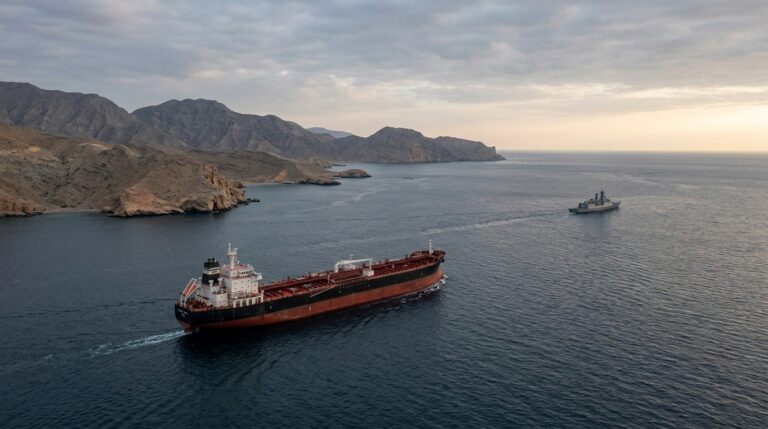
Friday’s peace-deal headlines gave airline investors a brief window to breathe. That window closed overnight. Oil jumped Monday in Asian trading after President Trump rejected an Iranian proposal aimed at reopening the Strait of Hormuz, with Brent up about 2% and WTI trading above $93 a barrel, according to Reuters reports carried in market coverage. For AAL, UAL, DAL, LUV, and ALK, that is not an abstract commodity move. It is a direct hit to the cost structure, with Q3 earnings reports three weeks out.
Where Fuel Stands
As of the September 17 IATA reading, the global average jet fuel price had climbed to $181.46 per barrel after rising 6.1% in one week. IATA’s June industry outlook had assumed an average 2026 jet fuel price of $152 per barrel, meaning the latest weekly reading was already roughly 19% above a full-year assumption that had itself looked severe at the time it was set.
Jet fuel has risen even faster than crude during the war, reflecting both higher crude prices and tight supplies of the refined fuel. Aviation risk management expert John Gradek of McGill University told Forbes that some scenarios could see jet fuel reaching $225 a barrel by year-end.
The Carrier Breakdown
American Airlines said fourth-quarter fuel prices had risen roughly $1 a gallon from the level assumed in July, and the airline indicated it could adjust capacity later in the fourth quarter. In American’s 2025 annual filing, the company said it had no fuel hedging contracts outstanding and that its policy is not to hedge, leaving it fully exposed to spot price fluctuations.
United has warned that higher oil prices imply nearly $6 billion in additional fuel expense for the full year versus its earlier expectations, based on company and Reuters-reported commentary. Southwest has already reduced its planned 2026 capacity growth to about 1.5%, down from 2% previously, effectively cutting the plan by roughly half versus its original 2% to 3% range.
Delta occupies a structurally different position. Delta stands alone via its Monroe Energy Trainer refinery, which inverts the crack-spread logic: when the spread between crude and jet fuel widens, Delta’s refinery economics can offset part of what competitors absorb as pure cost. In the 2022 oil shock, Monroe generated $777 million in operating income, and Reuters reporting has estimated the refinery’s structural value in jet-fuel squeeze conditions using Delta’s disclosed consumption.
Technical Framework
Brent’s daily chart had been under pressure earlier this month, with market reporting noting a dip toward the high-$90s before the latest rebound. Today’s gap back above $105 changes the short-term structure. For the airlines, the VWAP levels from September 16, the day executives disclosed fuel guidance at the Morgan Stanley conference, serve as the near-term reference anchors. AAL and UAL both failed to hold post-conference levels; a recovery above those levels would signal the market is pricing in cost absorption via fares rather than margin erosion.
Scenario Modeling
Bull Case: A renewed diplomatic signal from Tehran, or Saudi Arabia’s East-West pipeline restoring meaningful supply, pushes Brent back toward $95. Jet fuel retreats toward $175 per barrel, AAL’s Q4 fuel bill shock narrows below $700 million, and the carriers rally 8%–12% into earnings.
Base Case: Brent holds in the $103–$110 range through October, keeping airline planning and guidance fluid at Q3 earnings. AAL trades sideways to down 5% as investors wait for Q4 capacity cut specifics.
Bear Case: The Wall Street Journal reported that Trump privately told aides he expects U.S. strikes on Iran to resume after November’s midterm elections. Brent breaches $115, jet fuel tests $210, and global airline industry profits compress toward IATA’s revised $23 billion full-year estimate against about $350 billion in fuel costs. AAL tests year-to-date lows.
Active Trader Considerations
The sector spread between DAL and AAL is the most actionable expression of this fuel regime. DAL’s refinery provides a structural offset that no amount of capacity discipline replicates at AAL. Traders should monitor Brent’s $101.75 level as the inflection between controlled fear and structural price reset. IATA has also noted that airlines have hedged only a portion of expected 2026 fuel consumption globally, which keeps the industry broadly exposed to sustained price increases.
Position sizing should reflect that Q3 earnings releases, three weeks out, represent a binary catalyst. Volatility premiums in airline options are likely understating the range of outcomes given the Hormuz variable. Preparation, not prediction, is the framework. Watch Brent’s overnight level each session; in this environment, it is the most reliable leading indicator for where AAL opens the next morning.