October 2, 2026
Bonus Content: Diesel Is Above $6.50 a Gallon. The Refining Trade Is Just Getting Started.
When news broke overnight about China’s Moonshot AI unveiling its new model…

The market gapped down 1% before most traders even poured their morning coffee…
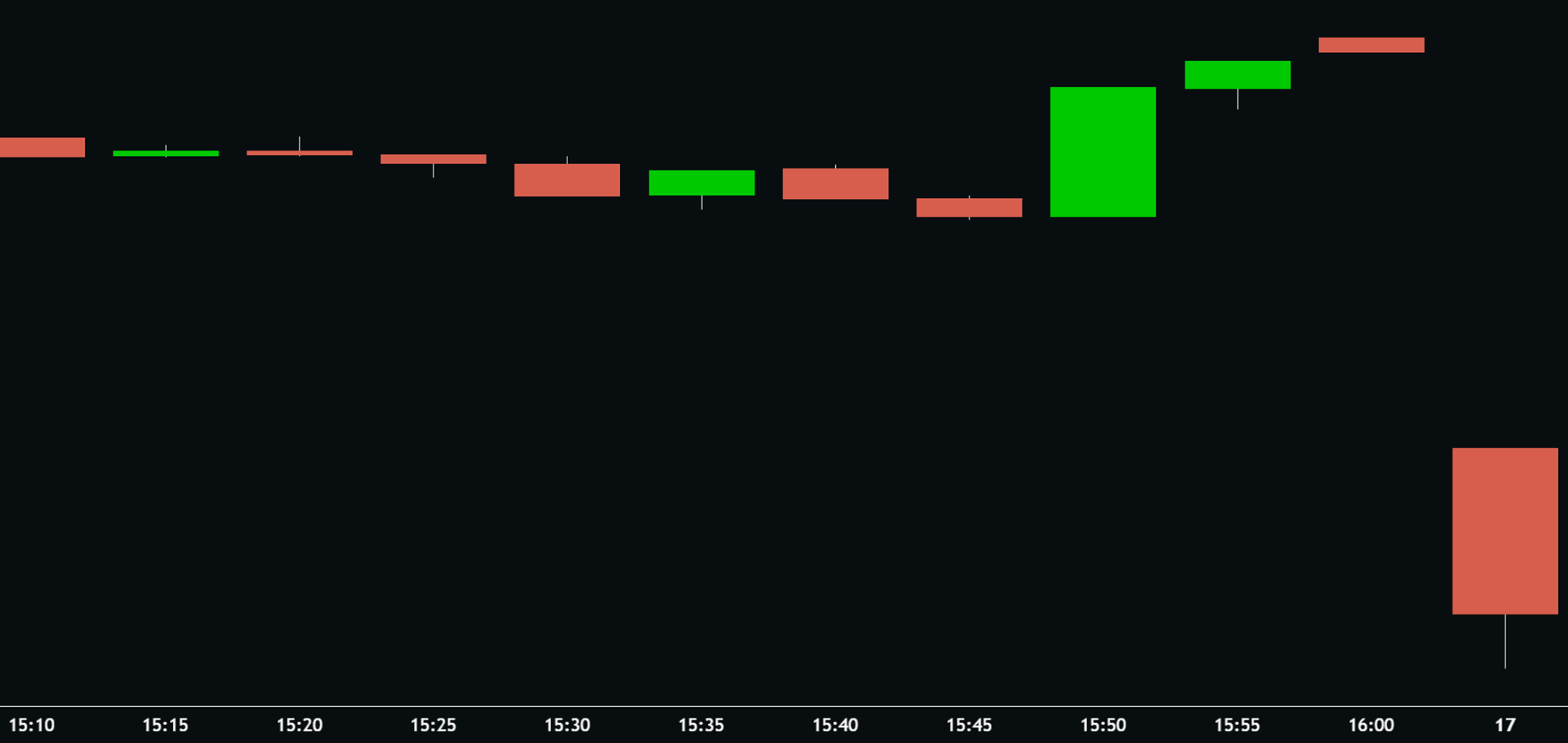
For standard portfolios, it looked like the start of another stressful day…
And over the next two hours, the market barely crawled higher… moving a tiny 0.2%…
To traditional buy-and-hold investors, a 0.2% move is practically useless…
Yet, according to our research, anyone who ignored the overnight headlines and waited until exactly 9:50 AM Eastern could have locked in a $529 payout before lunchtime… on a simple $1,000 starting stake…
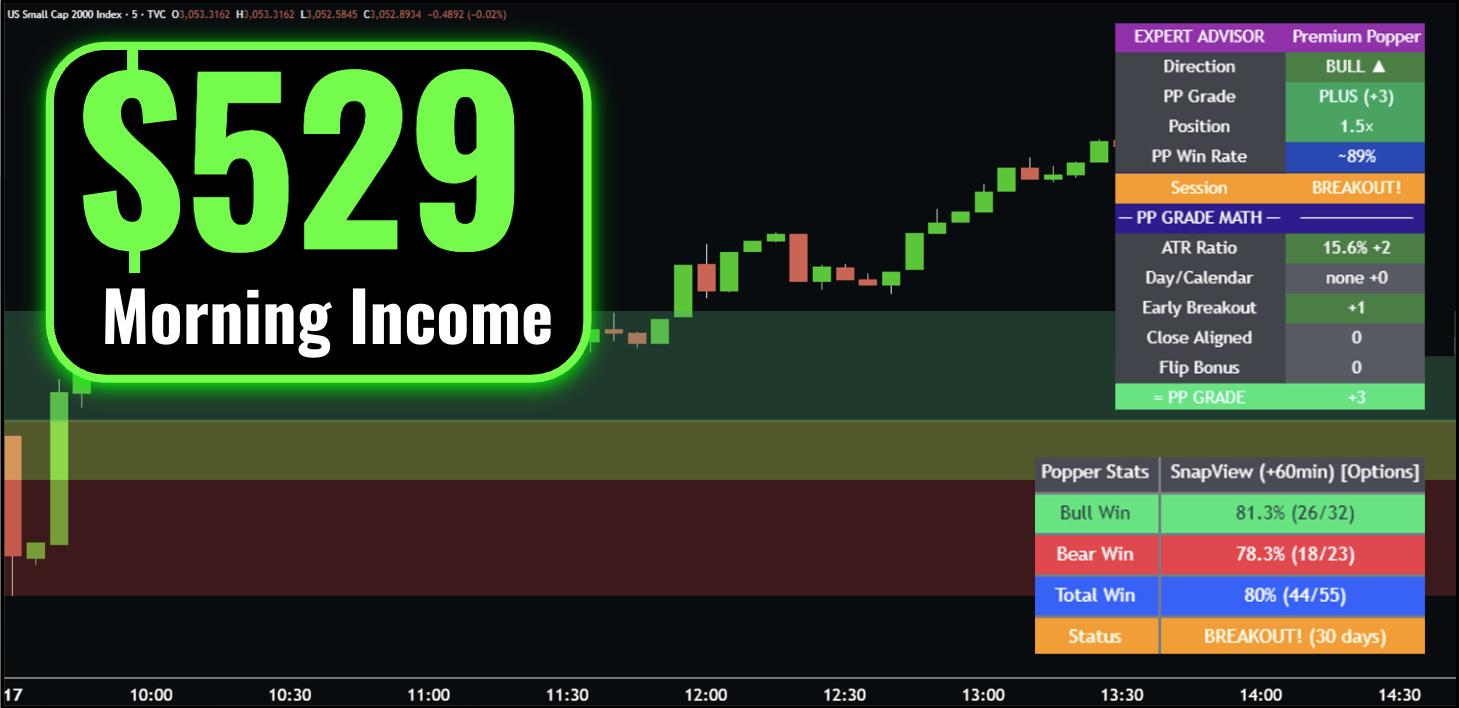
That would not have been an isolated fluke either…
Back on June 25th, when inflation surged past 4%…
And panicked investors expected a massive market beatdown… the market moved just 0.3% after the open… yet that exact same morning setup yielded another $526 payday before lunch…
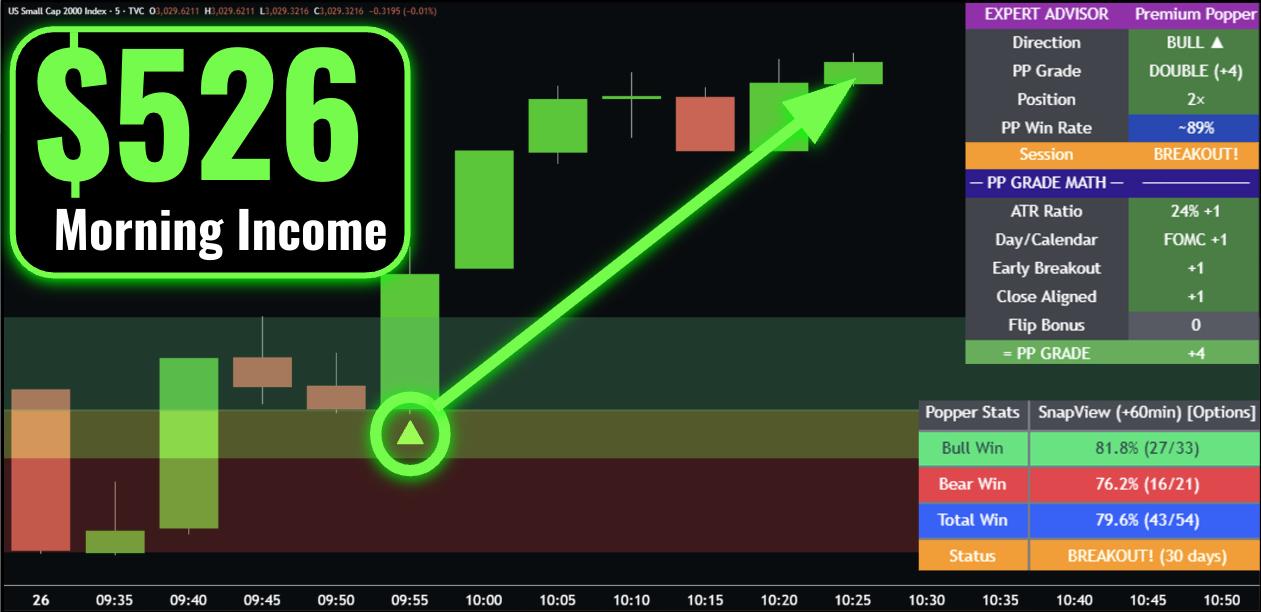
Of course, there would have been smaller gains and some that did not work out, but…
How would it have been possible to pull $500+ out of the market on a tiny fraction-of-a-percent crawl… while traditional traders are getting chopped to pieces?
It all comes down to an institutional phenomenon that happens during the first 20 minutes of every trading day…
Between 9:30 AM and 9:50 AM, Wall Street heavyweights enter a massive brawl to settle block orders… pushing nearly 25% of the entire day’s volume into a brief 20-minute window…
Right around 9:50 AM, the brawl ends… the dust settles… and the market literally hands us its direction for the rest of the morning…
By placing just one simple trade on one ticker right as that direction becomes clear…
You give yourself a shot to walk away with $500 in hand before lunch, leaving you completely free for the rest of your day…
While I cannot make any guarantees in the market…
Recently, I sat down live on camera with a former money manager to lay out the floor data behind this 9:50 AM morning phenomenon…
And how anyone with a normal brokerage account can take advantage of this step-by-step…
Tap here to watch the complete video breakdown before access is taken down.
See you there,
Silas Peters
Diesel Is Above $6.50 a Gallon. The Refining Trade Is Just Getting Started.
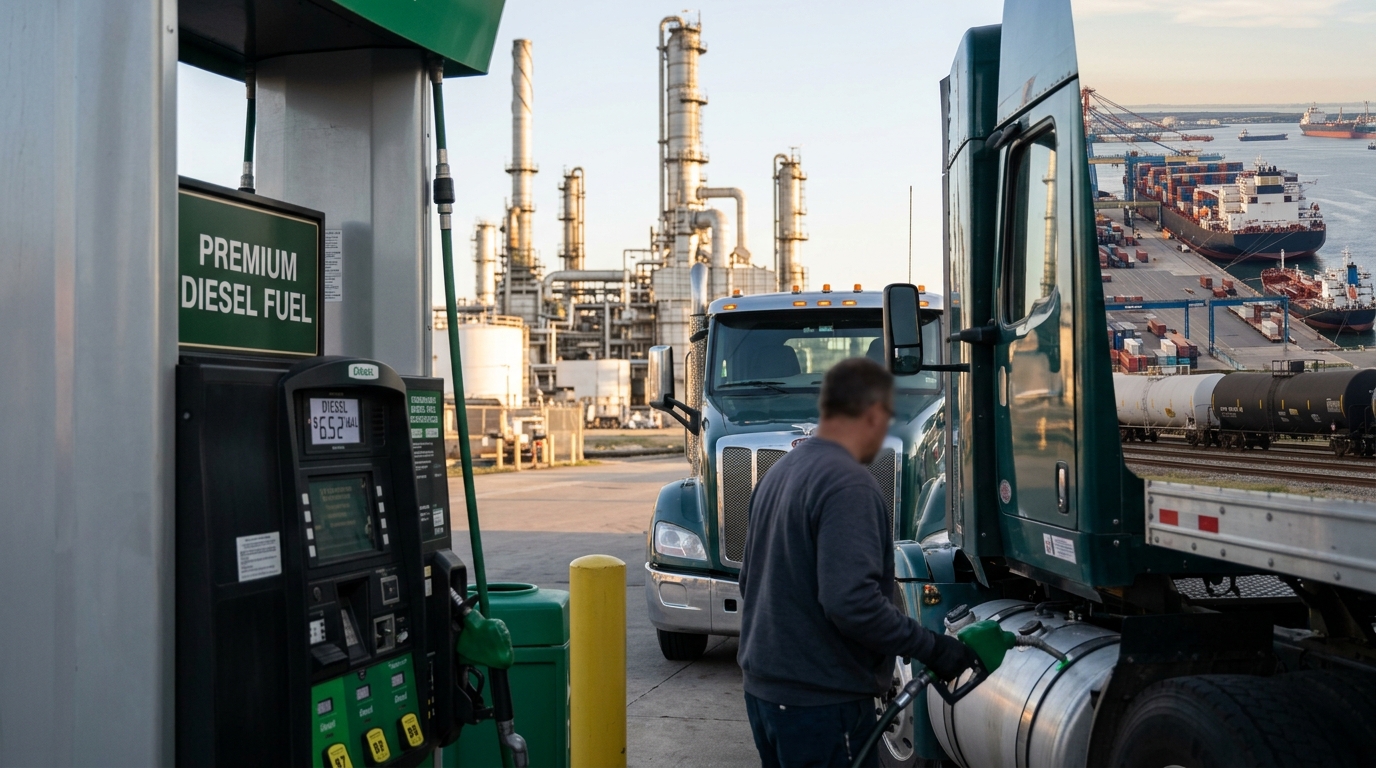
Two supply shocks landed within hours of each other on October 1, and neither is resolved. According to people familiar with the matter, as reported October 1, Chinese refiners suspended exports of oil products to regions beyond Hong Kong and Macau until further notice from Beijing, following the Golden Week holiday that runs until October 7. Simultaneously, people close to the talks said the US, through Energy Secretary Chris Wright, pressed the European Union to release 120 million barrels of diesel from emergency reserves over six months, with France and Germany singled out in the warning. If they refuse, the two countries could face a US diesel export ban aimed directly at them, according to the same reporting.
The crude market responded, but the distillate market responded harder. In US morning trading October 1, Brent was reported around $100.85 per barrel. The more telling number is at the pump: the US average retail on-highway diesel price was $6.38 per gallon for the week ended September 28, 2026, after hitting a record $6.53 the prior week, according to the US Energy Information Administration. The increase has been unusually rapid: diesel was about $3.46 per gallon in an early-January EIA weekly reading, implying roughly an 84% rise to the latest $6.38 level. That gap between crude and refined product is where the tradeable opportunity lives.
Why the Fuel Market Is Tighter Than the Crude Market Suggests
China’s export pause matters because it removes a flexible swing source of marginal barrels precisely when global distillate stocks are already tight. What makes this move tradeable is not the headline itself but the uncertainty around when export permissions resume after Golden Week, and how quickly cargo programs can be rebuilt if Beijing keeps the window shut into mid-October.
In the US, policy risk is amplifying the same pressure. The administration’s focus on diesel prices keeps export controls, whether formal or informal, in play. That matters because distillate and gasoline are joint products, so interventions aimed at diesel can ricochet into refinery run decisions and broader product balances.
Refiner Financials: Where the Numbers Are
Second-quarter downstream earnings validated the fundamental link between tight products and refiner cash flow. Valero reported net income attributable to stockholders of $3.7 billion in Q2 2026. Marathon Petroleum reported net income attributable to MPC of $5.1 billion in Q2 2026. On the operational side, Marathon’s most recent full-year cycle showed the leverage: in Q4 2025 it reported adjusted net income of $4.07 per diluted share, with an R&M margin of $18.65 per barrel and crude capacity utilization of 95%.
Phillips 66’s realized margins also moved with the tape. In Q2 2026, Gulf Coast realized refining margins were $24.25 per barrel, up from $8.71 in the prior-year period, as the company pointed to improved market crack spreads. With China offline for at least a week and European stocks under political pressure, the Q3 backdrop for all three names looks structurally stronger, not weaker.
The Washington Wildcard
A targeted US diesel export ban on France and Germany would not necessarily benefit domestic consumers. Market analysts have warned that a broad ban could leave US refiners long diesel with limited immediate outlets, quickly stressing Gulf Coast storage and forcing meaningful run cuts, on the order of roughly 2 million barrels per day. Wright has also publicly criticized the instrument. In late September, he said: “The blunt tool of banning diesel exports definitely doesn’t work.” The threat carries more political weight than policy coherence.
Scenario Modeling
Bull Case: Beijing does not reinstate export permissions after October 7, European nations release reserves slowly or not at all, and the EIA diesel series re-accelerates back toward the $6.50 area. Crack spreads widen further; Valero, Marathon, and Phillips 66 extend year-to-date gains toward 100%+. Brent tests $110.
Base Case: China resumes partial exports post-Golden Week, Europe negotiates a phased reserve release, and diesel stabilizes near $6.00 to $6.25 by late October. Refiners consolidate gains; crack spreads compress modestly from the high-$50s per barrel area toward $45. Brent holds the $95 to $105 range.
Bear Case: Supply routes normalize faster than expected and policy rhetoric fades without implementation, easing the panic bid in distillates. China floods markets with pent-up exports. Crack spreads compress sharply toward $20 per barrel, reversing much of refiners’ geopolitical premium. Valero’s consensus target around $335 becomes a ceiling rather than a floor.
Active Trader Framework
Refining names trade as a high-beta proxy on crack spreads, not on crude. Watch the WTI 3-2-1 spread daily: with the spread near $59 per barrel in late September, a sustained break below $45 per barrel would challenge the bull positioning built up over nine months. Key support levels to monitor include Marathon’s 50-day moving average, which has held through two prior pullbacks in 2026. Volume in VLO and MPC options markets has been elevated; implied volatility reflects the binary policy risk from Washington. Size positions accordingly. The October 7 date, when Beijing’s Golden Week ends and export permit decisions become clearer, is the first hard catalyst.
Preparation here means knowing which event moves the spread rather than crude, and having levels defined before Beijing’s next announcement lands.