Here is the tension inside Apple’s week: the company has asked some suppliers to reduce component production for the iPhone 18 Pro and iPhone 18 Pro Max after demand fell short of expectations, with October orders cut by 15% to 20% compared with original requests, and Morgan Stanley has since backed those reports, adding further weight to signs of softer-than-expected demand. Two days after that news landed, Apple is hosting a major hardware event.
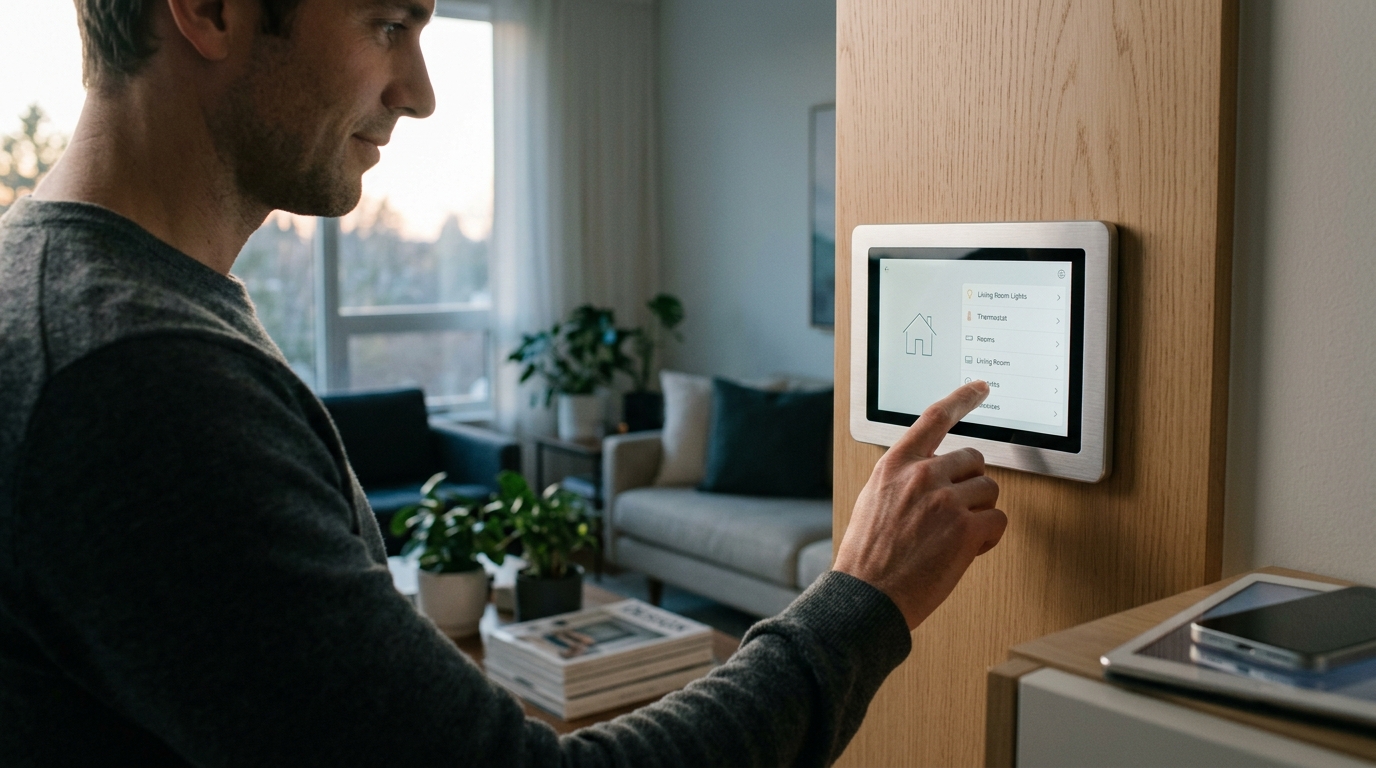
Apple announced its second event of the fall, and this one is focused on smart home products, set for October 13 at 9AM ET. The headlining announcement will be the HomePad, Apple’s long-rumored smart display, which Apple believes can serve as a central hub for the house, powered by Siri AI and Apple Intelligence. Alongside it, a new Apple TV 4K and the HomePod mini 2 are expected, while code in the tvOS 27.2 beta suggests the Apple TV will be able to pair with up to four HomePods as a surround sound system.
The real question for investors is not whether the HomePad is a compelling product. It is whether it can move the needle on the one part of Apple’s business that matters most right now: services.
Device profits from the home category are likely to be small. Apple earned 40.1% margins on products versus 75.6% on services in its fiscal Q3, so most of the financial value of a home push would come from what it does for services revenue and for loyalty to iPhone. Video storage, security, and AI features attached to the home can be sold as subscriptions at services margins. For comparison, Amazon charges $19.99 a month for Alexa+, and Prime members get it at no additional cost. Apple hasn’t announced a subscription model for the HomePad, but the architecture for one clearly exists.
In its Q3 FY2026 results, Apple reported revenue of $109.4 billion, up 16% year over year, yet services missed expectations slightly, coming in at $30.739 billion against a $31.22 billion estimate. A home hub that drives subscriptions to iCloud, HomeKit Secure Video, or a future Apple Intelligence tier would give that segment a new growth vector independent of how many iPhones ship each quarter.
A supply chain manager cited by Nikkei said demand in the second half of this year isn’t as strong as in previous years, likely because there is no baseline iPhone 18 model. The same report suggested that lower shipment volumes may not necessarily hurt Apple’s revenue, as the iPhone 18 Pro models are priced higher than their predecessors. That arithmetic holds only if consumers absorb the price increase. The order cuts suggest some are not.
Bull Case
A household whose lights, cameras, and locks run through Apple has one more reason to stay in the ecosystem. A small change in iPhone retention is worth more than the hub’s own profit. Bloomberg also reports that Apple is working with LG on a range of connected home devices, including a smart doorbell, thermostat, deadbolt lock, and security cameras, which points toward a recurring revenue platform, not just a single device launch.
Bear Case
At a rumored $350, Apple would be charging well above many competitors. The Google Nest Hub 2nd Gen is often sold for around $100, and the Amazon Echo Show 8 is frequently discounted. Pricing is a primary concern. For households considering multiple units to cover different rooms, the cost could quickly escalate, making it less appealing to budget-conscious consumers. Apple has also delayed the HomePad repeatedly, and Bloomberg’s Mark Gurman has reported that the device’s timing has been tied to the readiness of Siri AI, meaning Tuesday’s launch is as much a verdict on that rebuilt Siri as it is on the hardware.
What to Watch
Pricing and subscription details are the two numbers that matter most on Tuesday. A hardware price around $350 is manageable if Apple bundles meaningful services. A $350 device sold standalone, with no services layer attached, does little to offset the iPhone 18 Pro shortfall. Watch also for whether Apple announces availability of new HomeKit-compatible accessories alongside the hub. A thin partner ecosystem at launch would signal that the services revenue opportunity is further out than the stock currently implies.