October 11, 2026
Trump’s no-strike-on-Iran pledge was supposed to cap crude through the midterms
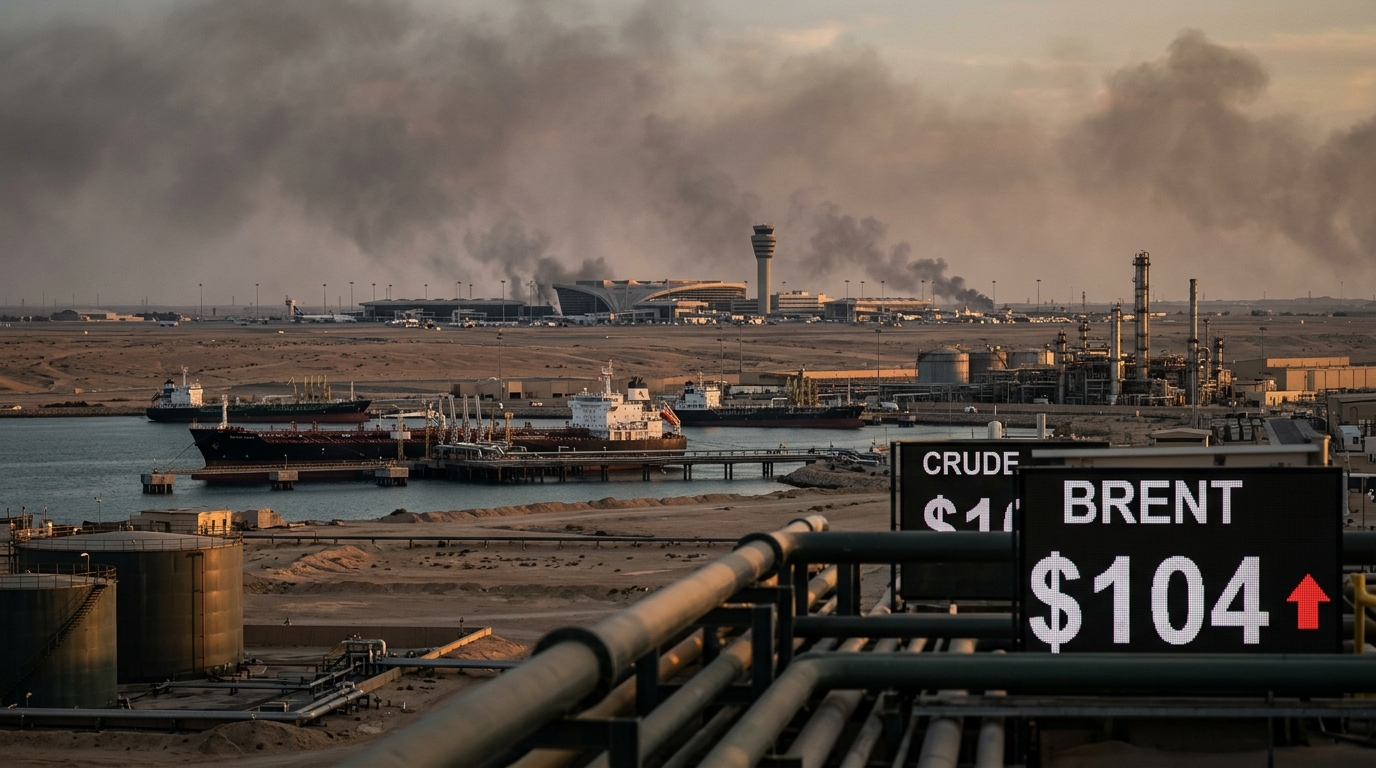
Traders who positioned around Trump’s pre-midterm restraint on Iran now face a different risk calculus. A Houthi ballistic missile struck the complex housing Terminals 3 and 4 at King Khalid International Airport on Saturday, killing 12 people and wounding more than 300, according to Saudi civil aviation authorities and reporting by The Associated Press. Saudi civil aviation authorities suspended airport operations after the attack. The Associated Press described it as the deadliest attack in any Gulf Arab country since the start of the Iran war.
A 64% Dividend from Gold?
One little-known fund tied to gold is quietly delivering 64% Yields – paid monthly. And almost no one is talking about it.
Click here to discover the secret gold income fund before the next payout.
The attack was not isolated. The Associated Press has reported a surge in strikes on Saudi airports and other infrastructure in the week since Saudi-backed Yemeni government forces launched a counteroffensive against the Houthis. That escalation cycle has now included multiple airport strikes in a matter of days. On Saturday, the Saudi-led coalition said a projectile fell near King Fahd International Airport in Dammam.
Market Context
Brent settled at $104.43 on October 9, up 0.14% on the session, though still 2.97% lower over the prior month, according to Trading Economics. The more instructive data point is the October 8 candle: Brent surged 4.07% that session alone, opening at $101.03 and touching $105.92, on volume of 449,980 contracts. That move priced the initial airport strikes. Saturday’s mass-casualty escalation arrived after the close.
President Trump said he was evaluating whether the U.S. should join Saudi strikes against the Tehran-backed Houthis, according to reporting by The Associated Press. That directly undermines the market assumption that Trump’s pre-midterm stance kept a ceiling on the conflict premium. The EIA’s October 6 outlook already reflected a structural upward revision. Reuters reported the agency lifted its Q4 2026 Brent forecast to $105 per barrel, $14 above its September estimate, citing volatility risk tied to the war and physical oil-market disruption.
Energy Sector Positioning
The energy complex moved before the weekend. On October 8, XOM gained 3.07% and CVX advanced 3.48%, with the energy-fossil fuels sector rising 3.27%.
The “Safe” Stock That Could Destroy You
It could be in your 401(k) anchoring your portfolio.
But our independent Weiss Ratings, which have correctly called nearly every major financial event of the 21st century, just slapped this popular stock with a “SELL”.
And it’s not the only one…
We found nine other popular but toxic stocks.
Click here to discover the 10 toxic stocks and protect your wealth now
At Friday’s close (October 9), XOM stood at $168.94, and CVX closed at $211.98, based on widely published end-of-day pricing. UBS raised its CVX target to $235 on October 8, according to syndicated analyst-note reporting. CVX’s investor relations calendar lists its 3Q 2026 earnings conference call for October 30.
The structural risk sits further upstream. Earlier this year, The Associated Press reported that Saudi Aramco said it shifted some exports to its East-West Pipeline to avoid disruptions at the Strait of Hormuz, and Aramco CEO Amin Nasser said the line was operating at its maximum capacity of 7 million barrels per day. Analysts have flagged limits to resilience under sustained interruption. If export routes are constrained long enough, storage becomes the binding variable. That is why shipping lanes around the Bab al-Mandab Strait remain a key tail risk for Asia-bound flows. The Jizan refinery, designed for up to 400,000 barrels per day, has already been targeted multiple times.
Technical Framework
Brent’s 50-day SMA sits near $96, and the 200-day near $88. The RSI (14) on October 10 reads 58.1, indicating room to run before reaching overbought. The October 8 gap higher from $100 to $101 is the first reference support; a failure there would re-test the $97-$98 area. Resistance clusters at $108 to $110, the zone traded in September before the pullback.
Scenario Modeling
Bull Case
U.S. military engagement alongside Saudi forces materializes within days. Shipping insurers re-price Gulf risk sharply, tanker rerouting tightens physical supply, and Brent gaps toward $115 to $118. XOM and CVX add 8% to 12% on realized-price expansion. Lloyd’s of London and AIG face elevated marine and aviation liability claims that widen reinsurance spreads.
Nuclear Energy’s Comeback Could Spark Before 2026
Global energy demand is surging and one overlooked power source is quietly returning to the spotlight. New policy support and supply constraints are setting the stage for a surprising shift in the energy markets.
Base Case
Trump’s statement remains rhetorical. U.S. intelligence and logistics support for Saudi forces escalates quietly, but no direct strikes on Houthi territory follow before the midterms. Brent trades $105 to $112 through November, supported by physical tightness and a sustained geopolitical bid. XOM and CVX consolidate near current levels ahead of October 30 earnings.
Bear Case
Ceasefire signals emerge, possibly through Omani mediation, similar to prior efforts to de-escalate cross-border strikes. Brent retraces toward $96 to $98 on position unwinding. Energy equities give back the October 8 gap. The 2019 Abqaiq precedent, where a strike temporarily removed about 5.7 million barrels per day of Saudi output before a rapid recovery, remains the cautionary template for assuming lasting supply disruption.
Active Trader Strategy Framework
The asymmetry here favors watching how Sunday’s overnight session in Asia handles Brent above $105. A gap higher that holds through the London open confirms institutional reset of the policy premium. Position sizing in energy names should account for the October 30 earnings binary: strong Q3 realizations are already expected; the question is whether management guides to sustained Middle East risk premiums. Volatility expectations in crude options are the cleaner expression of weekend risk than outright equity length. Key level to monitor on the downside: Brent $100, the psychological and technical inflection that triggered the initial 4% surge last Wednesday.
Preparation means mapping your exposure before Monday’s open, not after it.