October 13, 2026
Bonus Content: Oil Is Up 70% in a Year. OPEC’s Report Won’t Explain Why Its Barrels Aren’t Moving.
Dear Investor,
One year ago today, Bitcoin was trading around $118,000.
This morning, it’s in the low $80,000s. Roughly 30% cheaper, in the same month.
But that’s nothing compared to the coin I want to show you.
It once traded above $16. Today it’s under $2.
Still roughly 88% below its all-time high.
And the business underneath it never stopped working. It’s one of the busiest trading platforms on Solana, one of crypto’s largest blockchains. Traders swap through it every day. And 12% of the fees from those trades go toward buying back its own token.
That’s the part I can’t ignore. As October heats up and trading picks up, those buybacks pick up with it.
The market has started noticing. It more than doubled over the past month.
But from a starting point 88% below its peak, I believe the real move could still be ahead.
That’s the kind of setup behind my biggest calls. OCEAN at seven cents. KDA at sixteen cents. Overlooked, then suddenly everywhere.
Past results never guarantee future ones. But I know which side of this I’d rather be on.
The full report is normally $97. On this page, $3.
See my #1 coin for October (before this month’s biggest moves).
To your massive success,
Bryce Paul
Crypto 101
Oil Is Up 70% in a Year. OPEC’s Report Won’t Explain Why Its Barrels Aren’t Moving.
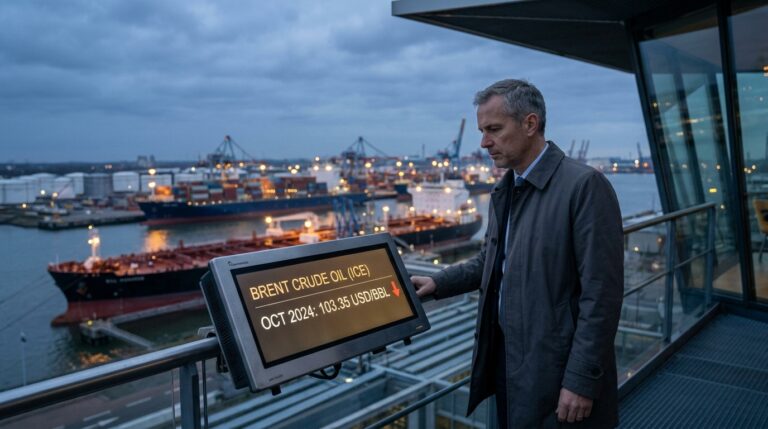
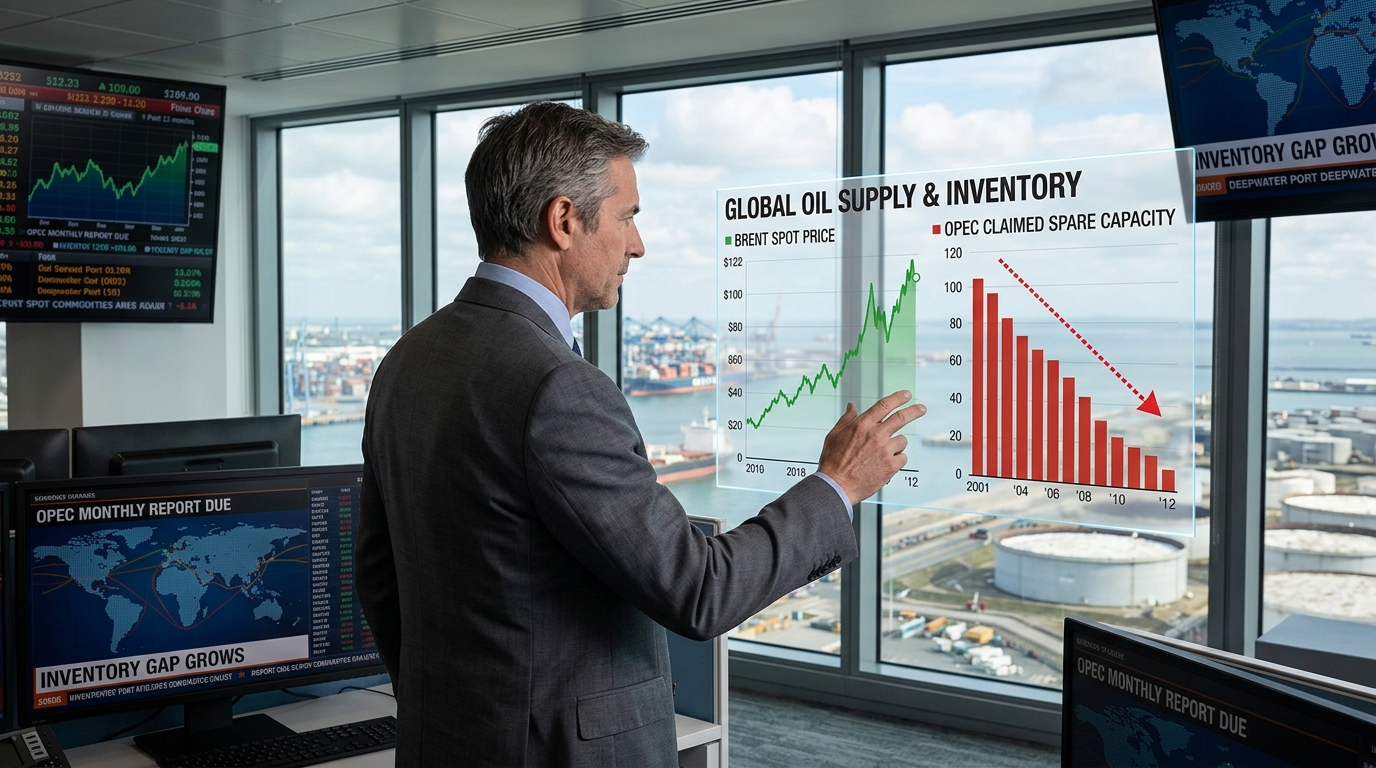
At 10:00 this morning, OPEC releases its October Monthly Oil Market Report. Brent sits near $106 this session, down on the day but up roughly 70% versus a year ago, and the more important number is not on the screen. It is the one OPEC will publish in the next few hours: its claimed spare capacity figure. Because that number, whatever it says, has already been overtaken by the physical market.
The Macro Backdrop
The security situation in the Strait of Hormuz has continued to deteriorate, with near-daily incidents reported in early October. The UK Maritime Trade Operations agency has issued repeated incident advisories in and around the Strait of Hormuz this month, and reporting around the corridor has described a ship being struck nearly every day.
Last Friday, OFAC issued Russia-related General License 135, authorizing transactions related to the sale, delivery, offloading, and importation of diesel fuel of Russian origin. The license runs through April 7, 2027. The move aims to ease diesel supply constraints after retail diesel prices set a September record. U.S. on-highway retail diesel stood near $6.27 a gallon as of October 9, below the late-September peak near $6.53.
The Spare Capacity Problem
This is what OPEC will not say plainly: spare capacity is gone. EIA’s effective OPEC spare crude capacity estimate for May 2026 was 0.00 million barrels per day. The IEA’s September Oil Market Report showed effective spare capacity in the low hundreds of thousands of barrels per day. The cartel’s own report this morning may still cite a larger theoretical buffer, but most of that buffer sits in Saudi Arabia and the wider Persian Gulf, behind the Strait of Hormuz. A spare barrel you cannot load is not spare capacity. It is stranded inventory.
Sector Breakdown
The beneficiaries of this dislocation are the refiners with no Middle East exposure and the U.S. upstream producers running Permian and Gulf of Mexico barrels. ExxonMobil posted Q2 earnings of $14.5 billion, more than doubling year-over-year. Exxon’s upstream production was 4.5 million oil-equivalent barrels per day in Q2, and the company described it as its highest in more than two decades excluding Middle East disruptions. Q3 results are due October 30.
Refiners are running hard. For Valero’s Gulf Coast operations, the spread number cited here cannot be verified from primary company reporting. Marathon Petroleum’s Refining & Marketing segment adjusted EBITDA was $6.655 billion in Q2, up from $1.890 billion a year earlier, with Refining & Marketing margin at $36.33 per barrel versus $17.58. VLO reports October 22; MPC on November 3.
Technical Framework
Trading Economics models target Brent at $108.60 by quarter-end. The October range has compressed between roughly $100 and $108. A clean break above $108 on today’s OPEC data, if the report acknowledges supply constraints the market already knows exist, opens the prior September high near $125 as a measured objective. The 50-day moving average on Brent sits just under $103, which has held as support through the October consolidation. WTI, near $93 in today’s session, trades about a $12 discount to Brent, reflecting the Hormuz premium priced into seaborne crude.
Scenario Modeling
Bull Case
OPEC’s October report acknowledges supply disruptions explicitly, revises the global balance to a deficit exceeding 4 mb/d, and cuts its own spare capacity estimate. Brent breaks $110 intraday. XOM, CVX, VLO, and MPC extend their year-to-date advances. Target: Brent toward $118 before Q3 earnings season closes.
Base Case
OPEC publishes a report that moderates the supply picture without fully acknowledging the Hormuz-driven disruptions, holding its global demand growth forecast near 1.4 mb/d. Brent consolidates between $100 and $110 through October. Refiner crack spreads stay wide. Russian diesel volumes under GL-135 arrive too slowly to compress margins materially before year-end.
The same Hormuz disruption that keeps refiner crack spreads wide is also running through industrial supply chains. Aluminum markets moved into backwardation as physical scarcity from the Strait closure hit LME prices.
Bear Case
A surprise ceasefire announcement or de-escalation signal from Tehran collapses the geopolitical risk premium. UK and EU sanctions on Russian diesel remain in force, limiting the GL-135 impact, but a diplomatic breakthrough in the Hormuz corridor could send Brent toward $88-$90 quickly. Refiner margins compress sharply as crack spreads normalize.
Active Trader Framework
The report at 10:00 is a catalyst, not a verdict. The trade is in the gap: OPEC’s published spare capacity versus what is physically clearing the Strait. If the cartel’s numbers remain optimistic while incident rates stay elevated, that divergence keeps energy equities bid. Watch VLO and MPC specifically for any pre-earnings volatility on the GL-135 diesel headlines. A widening WTI-Brent spread beyond $13 would suggest the seaborne premium is expanding further, a tactical long signal for Brent over WTI basis trades. Position sizing should reflect that a single diplomatic headline can replace this entire complex inside one session.
Preparation is the edge here. The report drops at 10:00. The numbers that matter most are the ones that reveal how far OPEC’s model has drifted from a market that is being shaped by weapons, not quotas.