
October 25, 2026
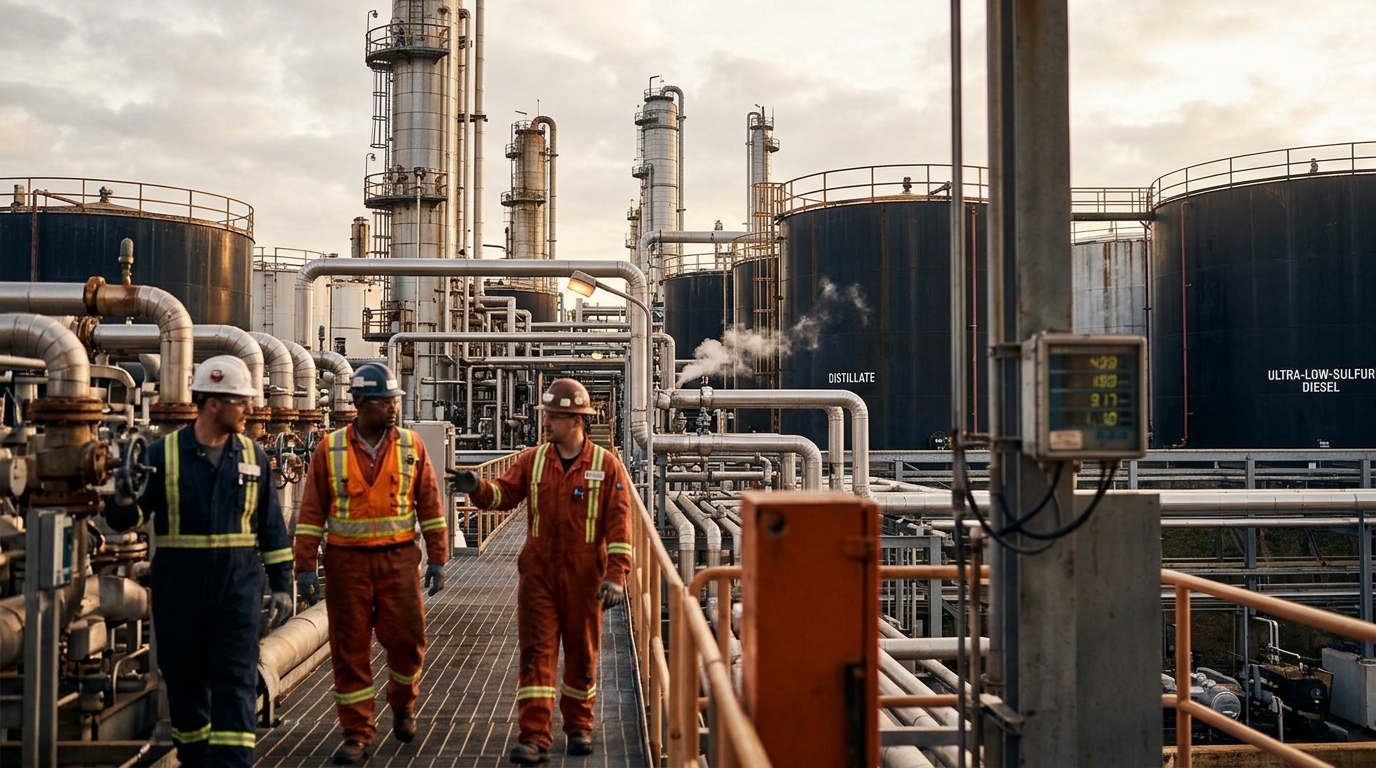
Bonus Content: Diesel at $6.28 a Gallon. Refiners Are Where the Money Is.
When news broke overnight about China’s Moonshot AI unveiling its new model…

The market gapped down 1% before most traders even poured their morning coffee…
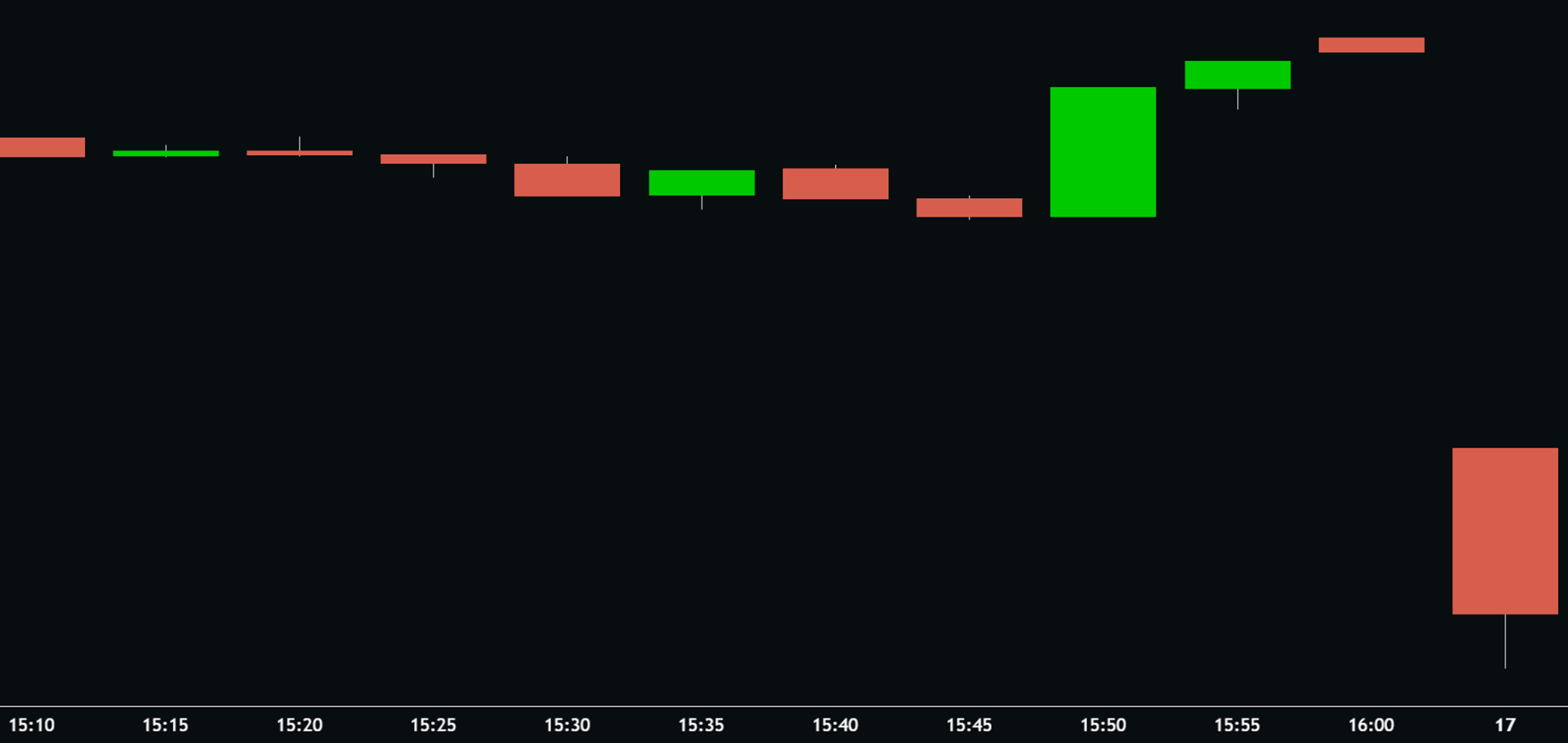
For standard portfolios, it looked like the start of another stressful day…
And over the next two hours, the market barely crawled higher… moving a tiny 0.2%…
To traditional buy-and-hold investors, a 0.2% move is practically useless…
Yet, according to our research, anyone who ignored the overnight headlines and waited until exactly 9:50 AM Eastern could have locked in a $529 payout before lunchtime… on a simple $1,000 starting stake…
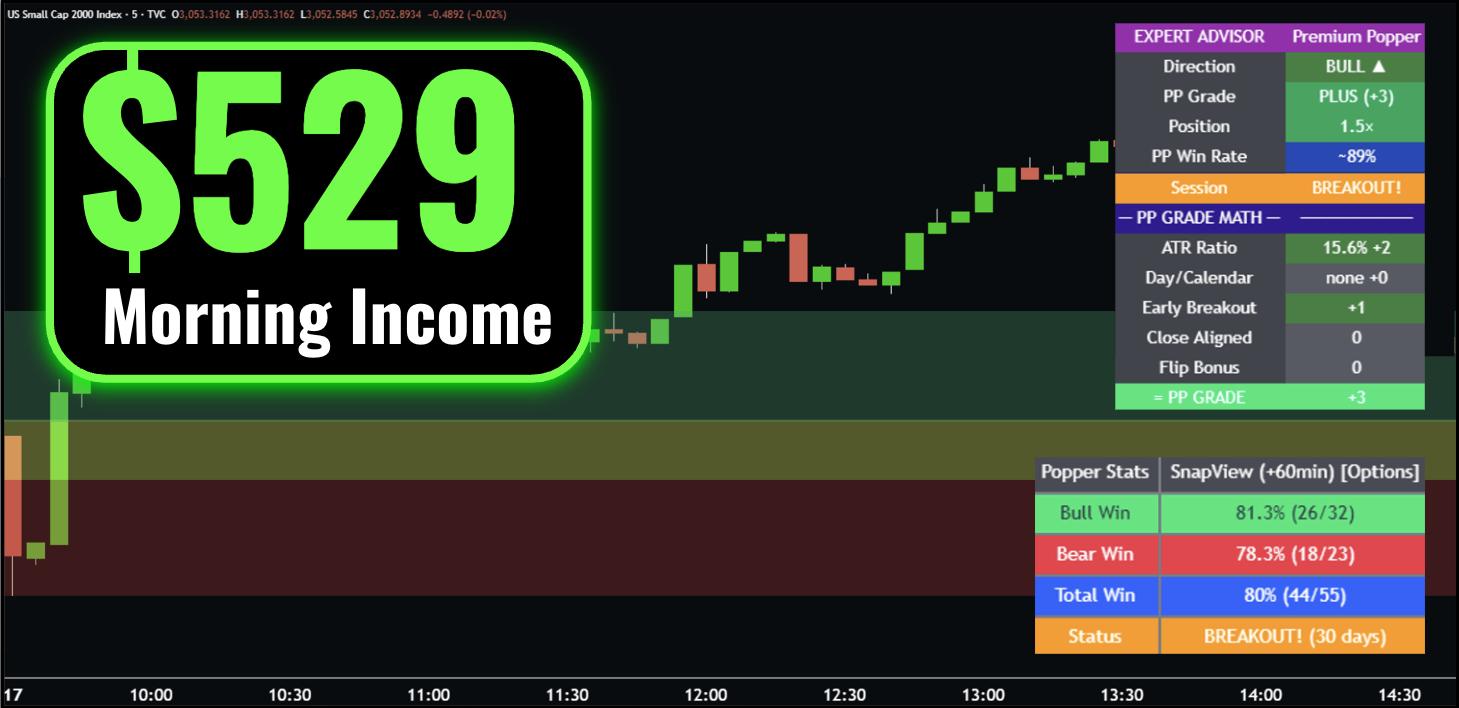
That would not have been an isolated fluke either…
Back on June 25th, when inflation surged past 4%…
And panicked investors expected a massive market beatdown… the market moved just 0.3% after the open… yet that exact same morning setup yielded another $526 payday before lunch…
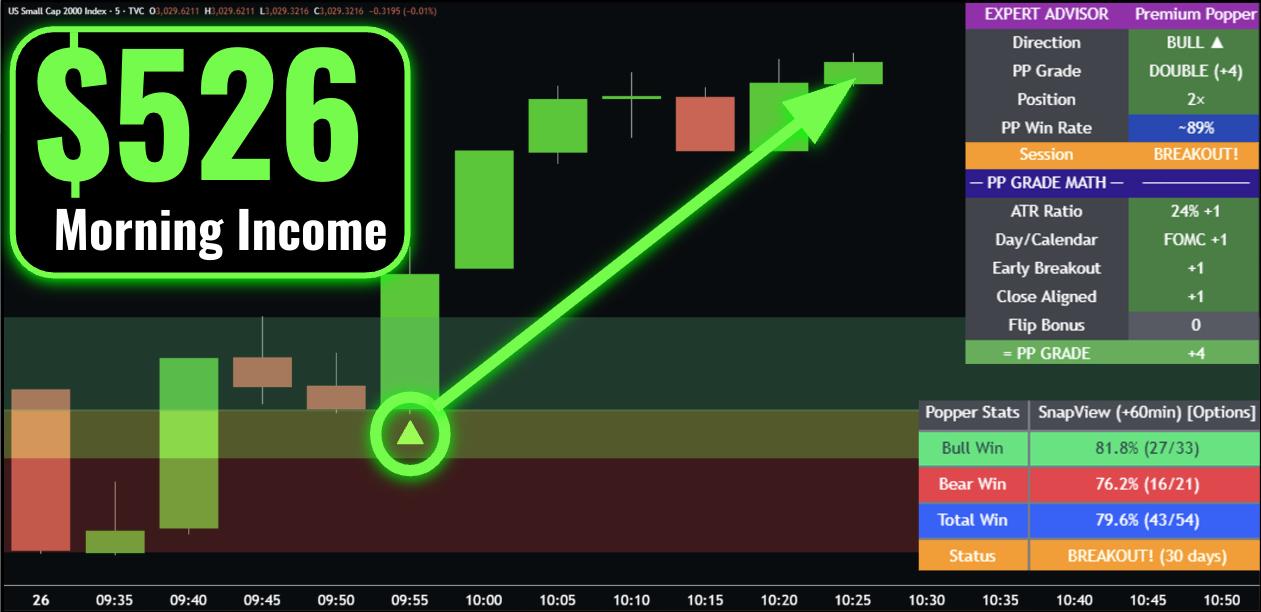
Of course, there would have been smaller gains and some that did not work out, but…
How would it have been possible to pull $500+ out of the market on a tiny fraction-of-a-percent crawl… while traditional traders are getting chopped to pieces?
It all comes down to an institutional phenomenon that happens during the first 20 minutes of every trading day…
Between 9:30 AM and 9:50 AM, Wall Street heavyweights enter a massive brawl to settle block orders… pushing nearly 25% of the entire day’s volume into a brief 20-minute window…
Right around 9:50 AM, the brawl ends… the dust settles… and the market literally hands us its direction for the rest of the morning…
By placing just one simple trade on one ticker right as that direction becomes clear…
You give yourself a shot to walk away with $500 in hand before lunch, leaving you completely free for the rest of your day…
While I cannot make any guarantees in the market…
Recently, I sat down live on camera with a former money manager to lay out the floor data behind this 9:50 AM morning phenomenon…
And how anyone with a normal brokerage account can take advantage of this step-by-step…
Tap here to watch the complete video breakdown before access is taken down.
See you there,
Silas Peters
Diesel at $6.28 a Gallon. Refiners Are Where the Money Is.
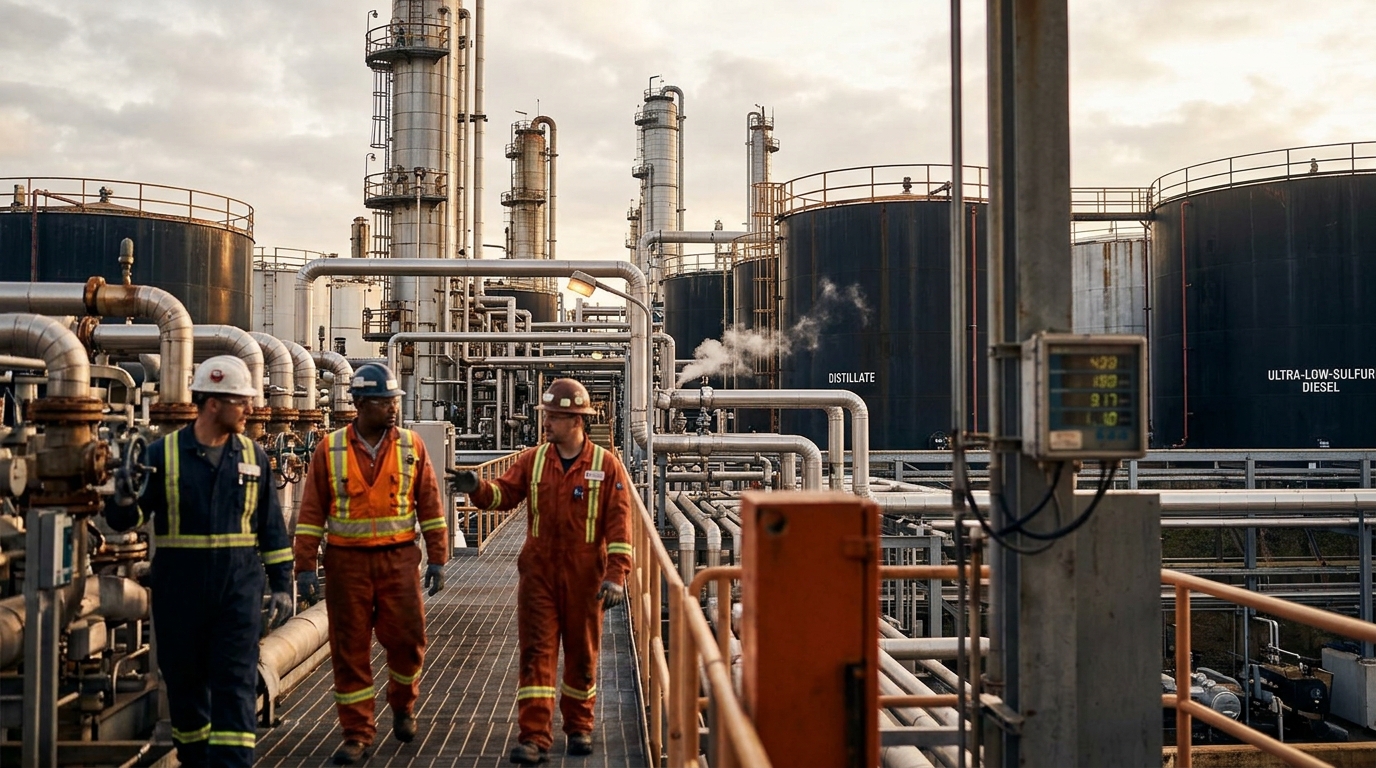
The fuel market’s most important number right now is not the Brent crude price. It is the gap between Brent and the diesel refined from it. NYMEX ultra-low-sulfur diesel futures closed at $4.710 a gallon on October 19, 2026, putting the diesel crack over Brent at $89.63 a barrel. The average U.S. on-highway diesel price reached $6.276 a gallon on October 19, up $2.656 from a year earlier, according to the EIA, which now expects East Coast distillate inventories to remain below the 2021–2025 average throughout its forecast period. That is not a temporary squeeze. It is a structural margin story, and it sits almost entirely inside the refining sector.
The Supply Hole Is Real
In its October Oil Market Report, the IEA said disruptions to Middle Eastern and Russian exports have cut global diesel and gasoil availability by about 1.7 million barrels per day in the third quarter of 2026 versus a year earlier. Refinery damage in Russia has cut capacity by as much as 60%, and Middle Eastern runs are down 2.0 mb/d, constraints that persist regardless of crude flows.
U.S. East Coast stocks of diesel and heating oil fell to their lowest September-to-December level since regional records began in 1990. The country added 1.7 million barrels of diesel and heating oil in the week to October 16, yet East Coast stocks still fell to 21.7 million barrels, their lowest autumn reading on record. New England fell to 2.46 million barrels, 44% below average and a seasonal record low. The EIA’s own winter outlook is unambiguous: East Coast distillate inventories were 32% below their five-year seasonal average in September and are forecast to remain between 10% and 30% below average into 2027.
The federal backstop is nearly exhausted. The U.S. Strategic Petroleum Reserve held 282.7 million barrels in the week ending October 16, 2026, its lowest level since October 1982, down about 132.8 million barrels from late February. Current SPR levels are at what some analysts think is the operational minimum.
Policy risk is now layered on top of the supply hole. A Treasury feasibility review of a diesel export ban would put roughly 1.6 million barrels a day of U.S. refiner exports in the crosshairs.
The IEA Response: Too Small to Close the Gap
IEA members agreed to accelerate remaining volumes already pledged under the March 2026 Collective Action. Roughly 330 million barrels have already gone out, with around 100 million barrels still pledged but not yet released. The arithmetic is sobering: even where the barrels include diesel, the scale is not enough to reset a global distillate shortage on its own. Saxo Bank analyst Ole Hansen said the market reaction suggested some disappointment over the lack of a firm commitment to release additional barrels immediately.
Refiner Financials: The Earnings Are Speaking
Valero (VLO) just delivered the clearest evidence of where the margin lives. Valero reported Q3 2026 net income of $6.8 billion, up from $1.1 billion a year earlier, with diluted earnings of $23.89 per share versus $3.53 in Q3 2025, as quarterly revenue jumped 43% to $46.1 billion. Refining margin per barrel of throughput rose to $39.24 from $13.14 a year earlier, effectively tripling in twelve months. It marked six consecutive quarters in which Valero beat Wall Street’s EPS forecast.
Marathon Petroleum (MPC) posted comparable results in Q2. MPC reported net income of $5.1 billion, or $17.73 per diluted share, with its Refining and Marketing segment generating adjusted EBITDA of $6.7 billion and refining margin of $36.33 per barrel from $17.58 a year earlier, at 94% crude capacity utilization. Phillips 66 (PSX) reports Q3 on October 28. Wall Street projects PSX will deliver $12.02 per share, representing an increase of 377% year over year. Analysts place refining margins for the Western/Pacific segment at $37.59 per barrel, versus $12.31 a year ago.
Scenario Framework
Bull Case: The first sustained cold snap across the Northeast triggers a heating-oil demand surge that East Coast stocks near 21–22 million barrels cannot absorb. The diesel crack remains above $90 through December, sustaining VLO and MPC refining margins above $35 per barrel. PSX beats its October 28 consensus on Gulf Coast throughput strength.
Base Case: Distillate stocks stay 20–30% below their five-year average through winter, consistent with the EIA’s own forecast. The IEA warns diesel markets remain under extreme pressure into 2027. The crack compresses from current levels but stays structurally elevated, maintaining refiner earnings well above 2025 baselines. VLO holds above its 50-day moving average.
Bear Case: A U.S.-Iran diplomatic breakthrough or a Trump-Putin diesel deal reopens Russian barrels faster than expected. MPC is already up 190% in 2026 and VLO 165%, leaving valuations exposed to rapid crack compression. Watch the NYMEX ULSD front-month spread: a break below $4.50 a gallon would signal the margin regime is shifting.
Active Trader Framework
The refiner trade is crowded but still directionally correct. Key levels to monitor: VLO’s 20-day VWAP as a re-entry reference after any pullback driven by IEA headline risk; MPC’s relative strength against XOM, which is a purer crude proxy and therefore less leveraged to the crack. Watch the 3-2-1 spread daily, currently near $53 per barrel on front-month futures. A move back toward $60 would confirm that the PSX earnings report is catalytic.
Volatility is elevated. Position sizing should account for the binary risk around PSX on October 28 and MPC on November 3. The trade is the distillate crack, not crude. An SPR at 282.7 million barrels and New England heating-oil stocks 44% below average do not resolve before the first hard freeze arrives. Preparation, not prediction, is what separates disciplined positioning from noise.