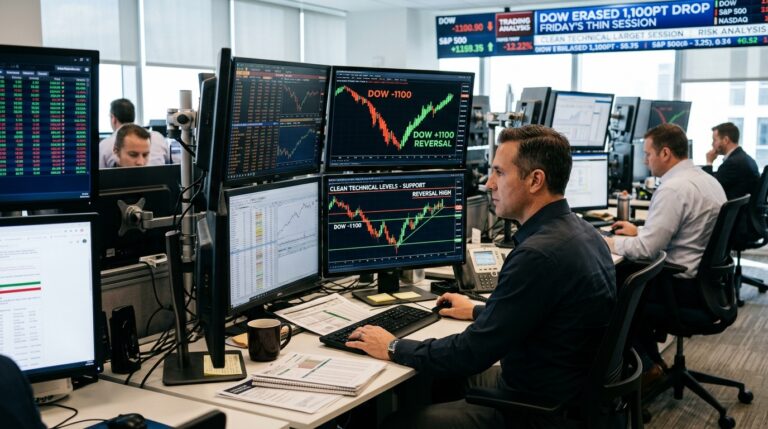
Markets greeted Wednesday’s USTR announcement as good news, and for European exporters it largely was. The pan-European STOXX 600 jumped 1.3% in morning dealing on Thursday, staging a broad-based relief bounce after coming close to its lowest level in nearly two months the session before. Germany’s DAX climbed about 1.8% and France’s CAC 40 added about 1.6%. The reason was structural, not sentimental.
Why 15% Is Not the Story
USTR determined on November 25 that the acts, policies, and practices of 14 economies relating to structural excess capacity and production in manufacturing sectors are unreasonable and burden U.S. commerce, proposing economy-specific additional tariffs that range from up to 15% to up to 35%. For the EU, Japan, South Korea, Taiwan, and Switzerland, the proposed rate is up to 15%, net of most-favored-nation rates and existing Section 301 tariffs. That netting matters enormously to corporate cost models.
White House proposals for new tariffs targeting the 14 trading partners sprang no nasty surprises for export-heavy European bourses. Crucially for corporate margins, the proposed levies would not stack on top of the 10% to 12.5% levies imposed in July on a broader group of trading partners. The USTR hearing is scheduled for January 25, implying the new rates are unlikely to be implemented before February or March 2027. That combination, incremental rather than additive and delayed by two to three months, is precisely why European technology and industrials were the first buyers on Thursday. Deutsche Bank and Standard Chartered rose roughly 3% and 2.5%, respectively, while Soitec and Infineon Technologies were each up about 4%.
Analysts at major banks have argued the macro impact is likely to be modest in part because the investigations were telegraphed well in advance, and because key imports are slated for exemptions. Articles already subject to Section 232 tariffs, including steel, aluminum, copper, semiconductors, passenger vehicles, and pharmaceutical products, are excluded from the new measures entirely.
Vietnam: Where the Real Incremental Cost Lives
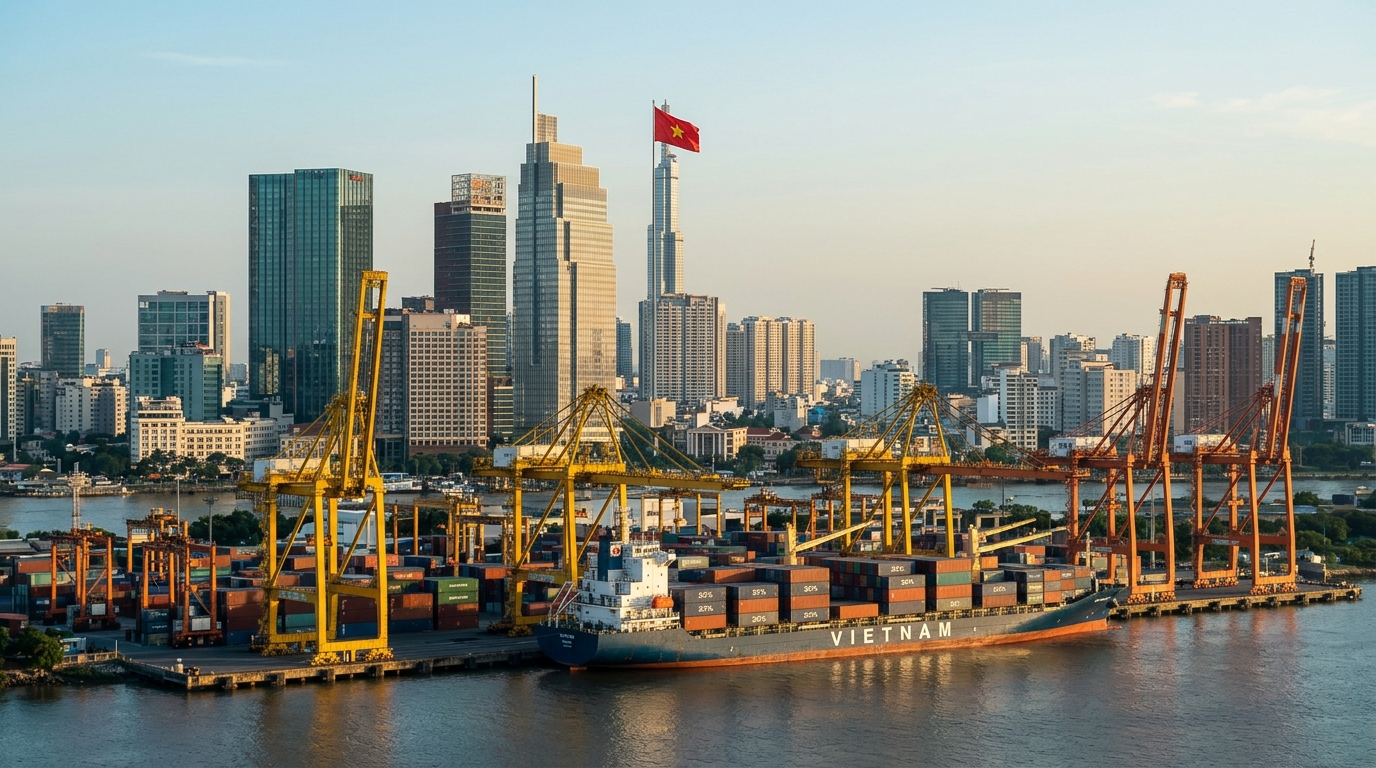
Strip the European relief away and the number that demands attention is 35%. USTR proposed additional tariffs of up to 35% on all Vietnamese goods, the highest ceiling across all 14 targeted economies. Vietnam’s rate could fall to 20% if trade talks with Washington produce an Agreement on Reciprocal Trade, but that is 15 percentage points of uncertainty sitting on top of supply chains that were already carrying scars from earlier tariff rounds.
Vietnam is a major U.S. import partner, and the proposed 35% ceiling is materially above those of its Southeast Asian peers. Vietnam is home to major export operations of multinationals including Samsung Electronics, and it plays a central role in supply chains serving U.S. brands.
That sourcing concentration creates a direct margin problem for the brands most exposed. Nike’s Vietnam and Indonesia footprint already sat at the center of a structural margin debate before the new tariff ceiling arrived.
In fiscal 2026, factories in Vietnam manufactured approximately 52% of total Nike Brand footwear, with Indonesia at 27% and China at 16%. On the apparel side, Vietnam accounted for 34% of Nike Brand production, Cambodia 15%, and China 12%. Cambodia and Indonesia sit in the proposed framework at up to 18%, net of existing Section 301 tariffs. Vietnam does not. Lululemon reports that about 40% of its products were manufactured in Vietnam, with 18% in Cambodia.
Vietnam said Thursday it was working with Washington to complete a trade deal as soon as possible, hours after the administration proposed tariffs that could hurt key export industries spanning clothing, footwear, and electronics. The concern is especially significant for electronics because Vietnamese factories use large volumes of imported components to assemble consumer devices.
Sector Positioning: Where to Focus
The asymmetry between the EU’s 15% and Vietnam’s 35% creates a clear sector-by-sector framework for traders. European capital goods and technology names, think semiconductor equipment, industrial automation, luxury, carry an incremental tariff cost that is proposed on a net basis and would not compound prior Section 301 levies. For US-listed apparel and footwear brands with deep Vietnam footprints, the calculus is different. The 35% ceiling is proposed net of existing Section 301 tariffs, but it is substantially higher than the 12.5% levy Vietnam has been carrying since the July action, and it arrives before any resolution on a bilateral deal.
In dollar terms, U.S. goods imports from Vietnam totaled $193.9 billion in 2025, making the 15-percentage-point gap between the deal rate and the no-deal rate a meaningful margin variable for every brand sourcing there at scale.
Scenario Modeling
Bull Case: Vietnam reaches an Agreement on Reciprocal Trade before the January 25 hearing, locking in the 20% rate. Supply-chain names with Vietnam exposure recover; Nike and Lululemon see gross margin pressure contained to roughly 100 to 150 basis points. STOXX 600 extends its Thursday gains toward the 640 level.
Base Case: No deal closes before the January 25 hearing. Comments run to early January and implementation slips to February or March. Nothing takes effect before the January 25 hearing. Markets price in the 20% deal scenario with a discount for execution risk. Vietnam-exposed supply-chain stocks trade range-bound with elevated implied volatility. European indices hold their Thursday gains.
Bear Case: Talks stall and USTR issues a final rule at the full 35% level by late Q1 2027. Apparel and footwear names with 40% to 55% Vietnam sourcing face margin compression that cannot be passed through quickly. Washington has also emphasized enforcement against tariff circumvention and transshipment risk, and if enforcement tightens on that front, Indonesia and Cambodia’s proposed 18% advantage could narrow too.
Active Trader Framework
Monitor the early January comment deadline and the January 25 hearing for signals on product exclusions. Vietnam’s Federal Register notice includes a large, economy-specific exemption annex, and changes to that list will determine which supply-chain names carry real incremental cost versus paper exposure. Watch the spread between Vietnam-sourced apparel brands and Indonesia-sourced peers as a live read on the deal probability the market is assigning. The 15% EU rate has cleared the air for European exporters. The 35% Vietnam ceiling has not.