August 4, 2026
BP Is Using War Profits to Rebuild Itself
The $5.7B quarter is real. The question is what BP looks like when the shooting stops.
First a note from Banyan Hill Research
You’re Being LIED To About The Iran War
Dear Reader,
Forget EVERYTHING you’ve heard about the Iran war.
Especially the reasons we’ve bombed the country.
Because THIS is the real reason.
Regards,

Addison Wiggin
Founder, Grey Swan Investment Fraternity
BP Is Using War Profits to Rebuild Itself
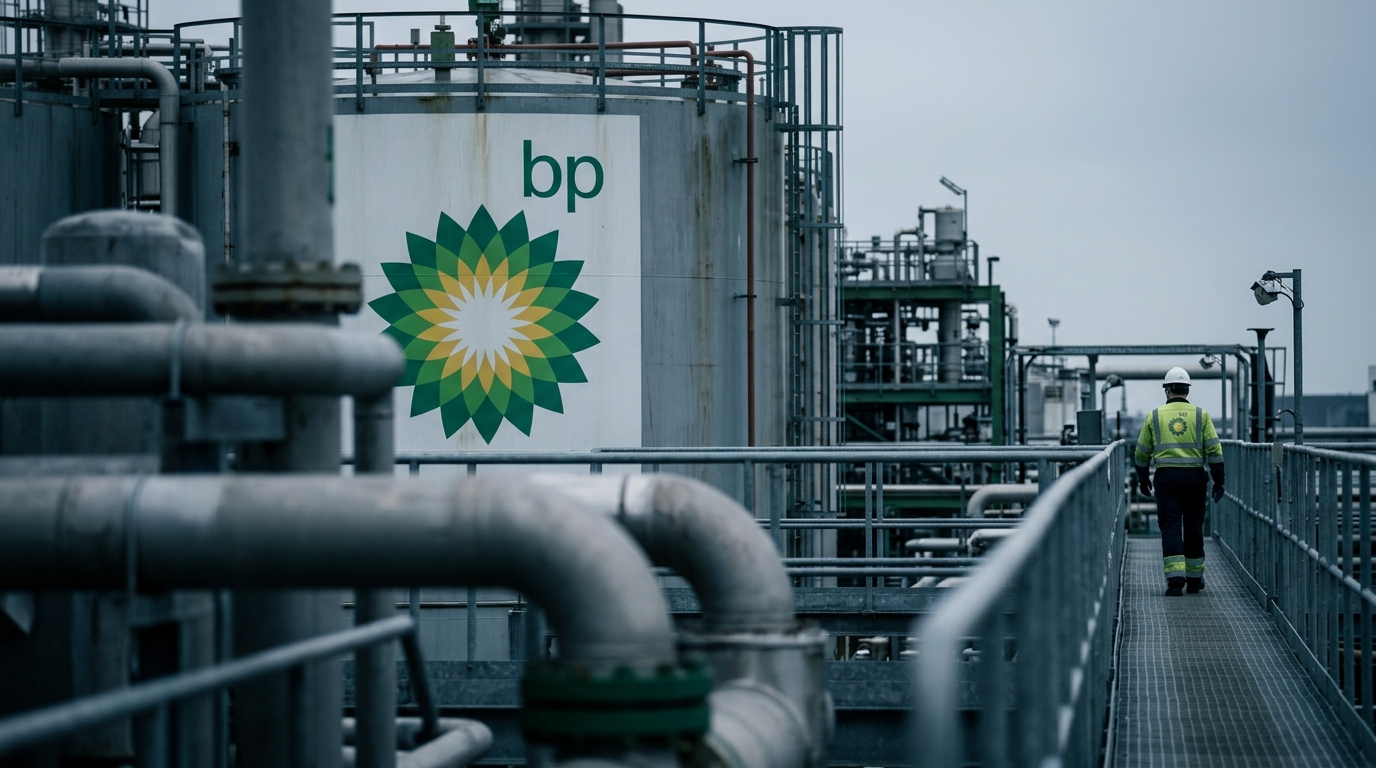
Here is the part of the BP story that is getting buried under the headline number.
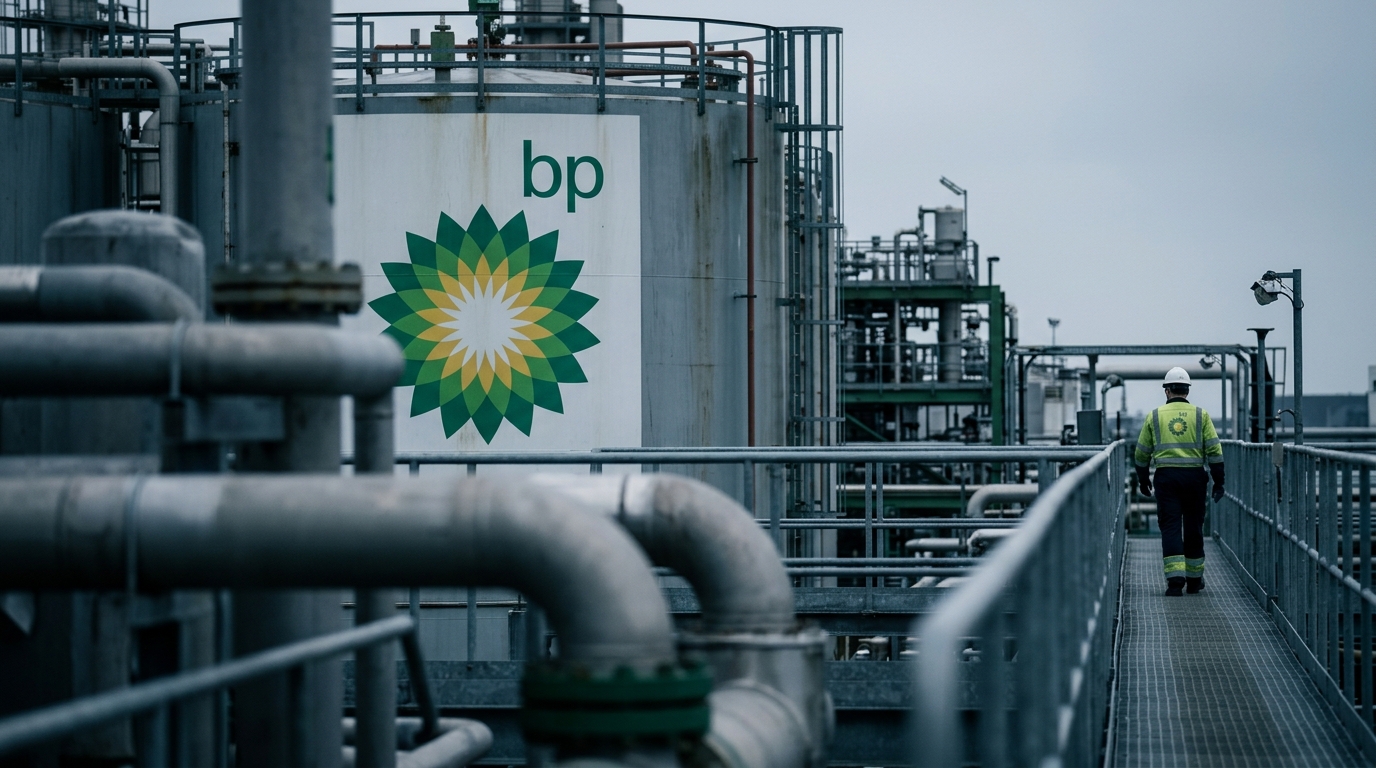
BP posted a second-quarter underlying profit of $5.7 billion, more than double the $2.4 billion it made in the April-to-June period of 2025, amid sharply higher oil and gas prices linked to the U.S.-Iran conflict. That beat the $5 billion analyst consensus by a comfortable margin. Total revenue climbed 47% to about $70 billion compared with a year earlier. On the surface, this looks like a straightforward war windfall story.
It is not. Or at least, it is not only that.
The more consequential thing happening inside BP right now is what new CEO Meg O’Neill is doing with the money and the moment. She took the top job on April 1, 2026, and she is the first externally hired chief executive in more than a century. She has been moving faster than most expected. Since assuming the chief executive role, O’Neill has streamlined BP’s operational architecture, reorganizing the conglomerate into distinct upstream and downstream divisions. That reorganization sounds like corporate boilerplate until you look at what is actually being sold.
The Divestment Push Is Accelerating
BP has begun reviewing a sale of some or all of its UK North Sea operations as part of a broader strategy to simplify operations, cut debt, and meet a $20 billion asset disposal target by 2027. The North Sea exit is striking on its own terms. ExxonMobil, Chevron, ConocoPhillips, Shell, TotalEnergies and Eni have all sold, merged, spun off or otherwise reduced their operations in the ageing basin in recent years as production falls and other locations offer more profitable projects. BP was the last major holdout. Now it is not.
Elon Musk: Buy Alert
The world’s richest man just launched a new $480 trillion disruption, which could make you massive gains this summer. It has nothing to do with space, robots or AI. It’s much, much bigger.
BP could receive a transaction value of about £2 billion (approximately $2.7 billion) from a full divestment of its UK North Sea business. That is not a transformational number in isolation. But it is part of a broader fire sale. BP said Tuesday that it is moving to divest Archaea Energy, a U.S. biogas unit it purchased for $4.1 billion in 2022. Archaea was supposed to be a cornerstone of BP’s low-carbon transition. Selling it signals something important about where O’Neill thinks the real returns are.
The company also increased its 2027 cost reduction target to $6.5 billion to $7.5 billion, and Reuters reported in March that the company planned about 700 job cuts in its production and operations division. That range is wide enough to leave room for more cuts than the market is currently pricing in.
Where the $5.7 Billion Actually Came From
The profit breakdown matters for traders trying to assess sustainability. The jump in oil and gas prices, combined with significantly higher refining margins and stronger oil and gas trading profits from a year earlier, boosted BP’s underlying earnings above analyst expectations. The surge in the underlying result mainly reflected higher liquids and gas realizations, including the impact of price lags, stronger realized refining margins, and stronger customer results.
The trading desk did heavy lifting. Pre-tax profit at the customers and products unit, which includes BP’s huge oil trading desk, was $4.95 billion, above the average estimate in a BP-provided analyst poll of $4.46 billion and $1.53 billion a year ago. That is a 224% year-over-year jump in a single business unit. BP said the oil trading contribution in the second quarter and first half was significantly higher compared with the same periods in 2025.
The operational picture was messier. Upstream plant reliability fell to 92.4% in the second quarter, from 95.7% in the previous quarter. Production declined to 2.2 million barrels of oil equivalent per day and its refineries processed less crude, partly due to planned maintenance and disruption from the conflict in the Middle East. A company simultaneously reporting record profits and declining operational reliability is worth watching. The trading desk is carrying more than its share of the result.
Net debt was $22.3 billion at the end of the second quarter compared with $25.3 billion at the end of the first quarter 2026. That is a roughly $3 billion improvement in one quarter, which gives O’Neill real balance sheet flexibility heading into the second half. BP raised its quarterly dividend by 4% to 8.66 cents per ordinary share. Modest, but directionally the right signal for income investors who have watched the stock underperform peers for years.
The Macro Scaffolding
None of this happens without the Hormuz situation. The fighting has severely disrupted shipping through the strategically vital Strait of Hormuz, a narrow maritime chokepoint that typically handles around a fifth of the world’s oil and natural gas. The International Energy Agency has forecast that global supply will fall by 3.9 million barrels per day in 2026, with the war estimated to have blocked more than 14 million barrels per day of Middle East output.
Monday: The MOST PROFITABLE Day of the Week?
Imagine making ONE simple trade every Monday morning…and potentially making 100% or MORE within 24 hours. Sounds crazy? This new algorithm spotted SEVEN 2X “Money Monday” trades in ONE MONTH.
Oil prices posted their biggest monthly gain since March in July, with Brent rising roughly 20% as the conflict escalated and disruptions spread across key shipping routes. The integrated majors are the clearest beneficiaries of that environment. The five biggest Western energy majors, BP, Chevron, ExxonMobil, Shell and TotalEnergies, reported combined net profits of almost $47 billion in Q2 as earnings multiplied amid the U.S.-Iran conflict.
Slight tangent, but it matters: U.S. President Donald Trump on Monday lashed out at U.S. oil majors Exxon Mobil and Chevron for making too much money off higher fuel prices amid the Iran war. Trump told reporters at the White House that they were making too much money based on a shortage. For a London-listed company with a new American CEO trying to rebuild investor confidence, political noise from Washington is one more variable to manage. BP is not the primary target of that criticism, but the regulatory environment around energy profits is not getting quieter.
The Real Risk: What Happens When the War Ends
This is the question the headline earnings number does not answer. Elevated oil prices tend to lift all boats in the energy sector, but being an integrated player in the market means BP will see enhanced cash flow as oil prices remain elevated, and for as long as talks between the US and Iran remain unproductive, these positive outcomes are likely to be prolonged, said Maurizio Carulli, global energy analyst at Quilter Cheviot. That second clause is doing a lot of work. Talks that remain unproductive are the precondition for everything BP just reported.
Bob Parker, senior advisor at the International Capital Markets Association, said oil prices will likely remain between $90 and $100 at least for the next couple of months until there is greater clarity on any lasting peace agreement. Parker told CNBC that even if the Strait of Hormuz is opened, the opening will likely be partial. He also highlighted significant damage to infrastructure, refineries and pipelines across the Gulf as a result of the war, coupled with ongoing security challenges for tanker traffic and depleted inventories.
Infrastructure damage creates a longer tail on the supply disruption even after a ceasefire. That is a nuanced point most coverage is skipping over.
Still, traders need to scenario-plan for a world where the conflict cools faster than the current pricing implies. The trading desk profits that made up the bulk of Q2 upside are the most cyclically sensitive part of BP’s business. Volatility creates opportunity for commodity desks. Resolution compresses that opportunity quickly.
Scenario Framework
Bull Case: The Hormuz disruption persists through Q3 and into Q4. Oil holds in the $90-plus range. BP’s trading operations continue to outperform. O’Neill completes the $20 billion divestment program ahead of schedule, net debt falls below $20 billion, and the balance sheet transformation accelerates. The stock, which has rallied sharply this year but still trades at a discount to Shell and Exxon on a forward earnings basis, closes that gap. BP’s upstream oil operations, which generated underlying replacement cost profit before interest and tax of $3.6 billion in Q2, up from $2.0 billion in Q1, sustain that improvement as price lags work through the system.
Base Case: A partial ceasefire materializes in Q3, pulling oil back toward $85. BP’s trading contribution normalizes from the elevated Q2 level. Underlying earnings step down from $5.7 billion but remain well above the $2.4 billion baseline from a year ago. The divestment program keeps net debt declining. O’Neill’s restructuring delivers gradual margin improvement, but the stock retreats somewhat from current levels as the war premium unwinds. BP expects capital expenditure in 2026 to hit $13.5 billion to $14 billion, slightly above prior guidance. That capex creep is worth monitoring if revenue softens.
Bear Case: A ceasefire holds and Hormuz reopens more quickly than expected. Oil falls back toward the $70 to $80 range that existed before the conflict. BP’s trading desk, which was the primary profit driver in Q2, faces a dramatically compressed opportunity set. Operational reliability concerns, with upstream plant reliability already down to 92.4% in Q2, become more visible without the oil price tailwind masking them. The divestment program proceeds but at lower valuations as buyers recognize the macro shift. Production at 2.2 million barrels per day is already below prior quarter levels. A peace-driven oil selloff would expose the underlying operational questions that $90 oil has been papering over.
What Traders Need to Watch
Three things matter more than the Q2 headline from here. First, Hormuz traffic data. Any sustained reopening of the chokepoint changes the calculus faster than most models are pricing in. Second, the North Sea sale process timeline. The oil major is targeting $20 billion in asset disposals by 2027 to reduce debt, lower costs and streamline its portfolio. If that program accelerates at favorable valuations, it adds a structural catalyst independent of oil prices. Third, operational reliability. The Q2 dip to 92.4% plant reliability is not alarming on its own, but it is a data point to track. A company selling assets while managing reliability issues in its retained portfolio is running two demanding processes simultaneously.
The trading desk carried Q2. The restructuring has to carry what comes next. That is a different kind of bet than just owning oil exposure through a supermajor. BP is in active transition, using war-driven cash flows to fund a strategic reinvention under a first-time CEO who has four years of underperformance to reverse and a balance sheet to repair. The $5.7 billion is real. Whether it is the floor or the ceiling of the new BP is the question that Q3 will start to answer.
For informational and educational purposes only. Not investment advice. Trading involves risk, including loss of principal.