Saudi Arabia had one workaround left. It no longer does.
Elon’s Next Big Project
This opportunity could be much bigger than anything else we’ve seen in the AI megatrend. Luke Lango believes Musk is preparing to unite the capabilities of Tesla (TSLA), SpaceX (SPCX), xAI, and X around a single sweeping vision. Part of that vision includes building enormous AI data centers in space… constructing a 100-million-square-foot semiconductor complex in Texas… and deploying armies of Optimus robots to automate much of the work. Musk’s companies cannot immediately produce all the necessary components for these projects themselves. They will need suppliers.
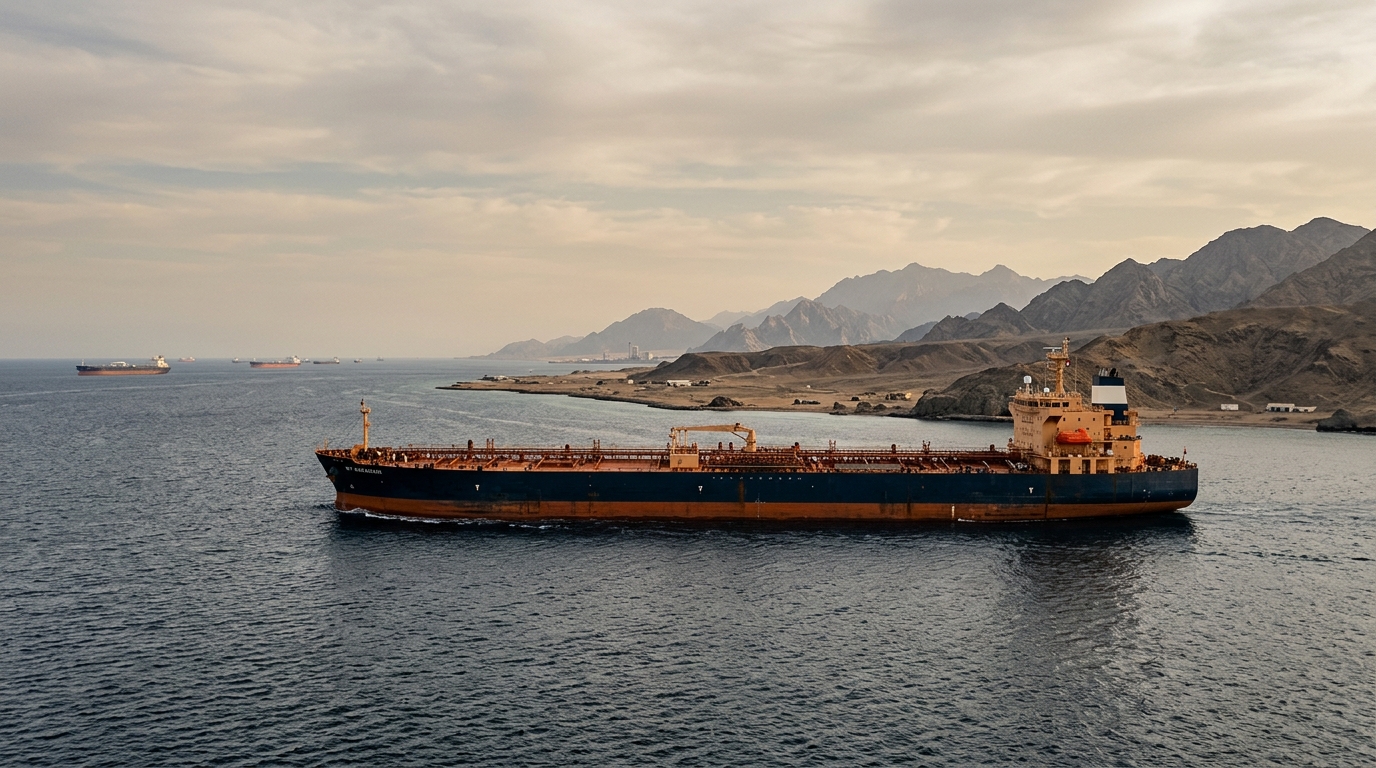
With tanker traffic through the Strait of Hormuz still heavily constrained amid the Iran war, Riyadh has leaned on the East-West Crude Oil Pipeline to move crude from the Gulf side of the kingdom to the Red Sea export hub at Yanbu. The East-West system is roughly 1,200 kilometers long and is widely cited at about 5 million barrels per day of capacity. That pipeline is now shut.
Saudi authorities said drones launched from Iraq struck the East-West pipeline, causing injuries and damage. Iraq’s prime minister’s office said a military commander responsible for operations in Maysan province was dismissed after investigations confirmed the attacks were launched from within Maysan. No group has claimed responsibility.
At the same time, Houthi forces have captured the Red Sea port of Mokha and seized Mayun, also known as Perim Island, near the Bab el-Mandeb Strait. That combination brings Houthi forces to the heart of a key global shipping choke point, but it does not, by itself, mean commercial traffic has stopped or that the group has uncontested “physical control” of both channels in a way that guarantees a full closure. Saudi Crown Prince Mohammed bin Salman pressed President Trump for U.S. strikes on Houthi positions, according to Axios. The White House has not publicly confirmed the specific details described here about targeting and intelligence arrangements.
What the Numbers Say Heading Into Monday
Brent traded above $100 this week as the Yemen and pipeline headlines escalated, but this draft’s specific Thursday and Friday closes (and the stated Friday percentage move) are not confirmed here. What is confirmed is the sequencing risk: the Saudi pipeline shutdown and the Perim Island seizure were reported late in the week, after parts of the week’s price move had already occurred, and Monday’s open is the first full session to absorb the combined headline stack.
The EIA’s September 9 Short-Term Energy Outlook, published before the pipeline attack and the Perim Island seizure, estimated global oil inventories fell by an average 3.9 million b/d in 2Q26 and would fall by an additional 3.0 million b/d on average in 3Q26. The same outlook forecast Brent averaging around $90 per barrel in the second half of 2026. Separately, RBC Capital Markets’ Helima Croft warned, as quoted by Reuters, that Brent could top $120 if the fighting in the region continues. The diplomatic meetings described in this draft may matter, but the precise “Monday in Oman” timing and characterization of those talks are not confirmed here.
Global energy demand is surging and one overlooked power source is quietly returning to the spotlight. New policy support and supply constraints are setting the stage for a surprising shift in the energy markets.
Tanker Rates: Already at Records, Now Under Fresh Pressure
VLCC earnings on the benchmark Middle East-to-China route reached a record near $800,000 per day as of September 10, according to Bloomberg. US Gulf-to-Asia charter offers have reached a record lump-sum of about $29.5 million per voyage, roughly $15 per barrel before additional war-risk costs and delay premia. Kpler analysis cited alongside that Bloomberg data projected VLCC daily earnings remaining above $100,000 through at least next year, more than double pre-conflict levels that rarely exceeded about $45,000 per day. This draft’s specific Morgan Stanley claim about “two-year VLCC leasing rates” rising 20% to 30% is not confirmed here, so it has been removed.
Frontline (FRO) closed at $48.40 on September 10 after gaining about 2.52% on the day, and the session’s high of $48.72 marked a fresh 52-week high. The draft’s specific figure of “$2.3 billion in annual tanker revenue” is not confirmed here, so it has been removed.
International Seaways (INSW) closed at $102.14 on September 10, and it touched $102.24 intraday. INSW’s P/E around this period is widely shown near 6.6 to 6.7, consistent with the draft’s 6.68 figure, but the draft’s claim that its trailing yield was “approaching 8%” and that consensus targets were lifted to $102 from $99 is not confirmed here, so those figures have been removed. Both names remain structurally levered to route-length inflation and rate volatility if Red Sea risk stays elevated.
The picture for container carriers is more complex. Maersk and Hapag-Lloyd resumed Red Sea routing for their Gemini Cooperation SE3 service in July, per a Hapag-Lloyd routing update. If carriers revert back around the Cape of Good Hope, Asia-Europe routing can add roughly four weeks versus Red Sea/Suez routing, tightening effective capacity even as newbuild deliveries continue to weigh on the longer-term rate outlook.
Scenario Framework
Bull Case: $115+ Brent, Tanker Rates Hold or Extend
Diplomacy fails to deliver a credible mechanism to stabilize transit risk. The East-West pipeline repair timeline stretches beyond two weeks and Saudi volumes cannot be meaningfully redirected to Yanbu at scale. Brent pushes deeper into the $115 to $120 zone consistent with the $120+ risk RBC highlighted. VLCC rates hold near record territory. FRO and INSW remain highly sensitive to any further freight upside.
While investors chase the next tech story, one long-ignored sector is quietly heating up. A mix of global policy, rising demand, and tightening supply could reignite this market before 2026. See what the latest research reveals.
Base Case: $104 to $112 Range, Elevated Volatility
Diplomacy produces headline relief but little enforceable change in shipping risk. The East-West pipeline returns to partial operation within 10 to 14 days. Brent chops between $104 and $112 as traders weigh Red Sea risk against demand sensitivity. The IEA has, at points in 2026, projected a roughly 2.5 million b/d decline in global oil demand for 2026 in its monthly market reporting, which would limit the upside if the shock starts to bite into consumption. Tanker names hold recent gains with high intraday volatility.
Bear Case: Diplomacy Reprices Downside
Diplomacy delivers a credible de-escalation path that meaningfully improves shipping expectations, and markets treat the Houthi gains as tactically significant but not sufficient to force a sustained disruption of traffic. Brent retreats toward the high-$90s, erasing a large portion of the week’s gains. Tanker stocks pull back sharply as route-length assumptions compress. Watch Asian-market pricing early Monday for the first read.
Active Trader Framework
The key Brent levels in this draft ($108 as resistance and $104 as support) are not verified here, so traders should anchor to the most recent confirmed highs/lows from their primary data source before Sunday’s Globex open. For tanker equities, the levels are clearer: INSW’s $106.73 high earlier this month remains a reference point, and FRO’s $48.72 intraday high on September 10 is the immediate near-term level. War-risk insurance and delay premia, which are not captured in headline VLCC freight quotes, remain an additional swing factor for realized tanker economics in this environment.
Position sizing should reflect that Monday’s open will be shaped by weekend news flow: any additional Saudi response to the pipeline attack, any further Red Sea deterioration, and any U.S.-Saudi coordination steps that are publicly confirmed. These are binary catalysts. This is not a market that rewards oversized conviction in either direction before the open.
Preparation is the edge. Know your levels, define your risk before Sunday evening, and let the structure of the open tell you what Monday’s session has priced in.