September 26, 2026
Bonus Content: The Xi Visit Is Over. Monday’s Trade Paper Moves Markets.
Dear Friend,
On June 22, the President signed two executive orders in a single Oval Office ceremony.
No primetime address. No headlines.
But together, they set in motion the biggest change to American money since 1974.
The last time this happened, it was sealed with a secret handshake in a Saudi desert. The public didn’t find out for 41 years.
This time, one $20 American company sits at the center of it. And the government just moved to take an ownership stake.
Former Wall Street banker Dylan Jovine spent 8 months tracing this story through private meetings with Congressmen. What he found should alarm you… and could make you a fortune.
“The Buck Stops Here”
Kelly Maguire
Behind the Markets
The Xi Visit Is Over. Monday’s Trade Paper Moves Markets.
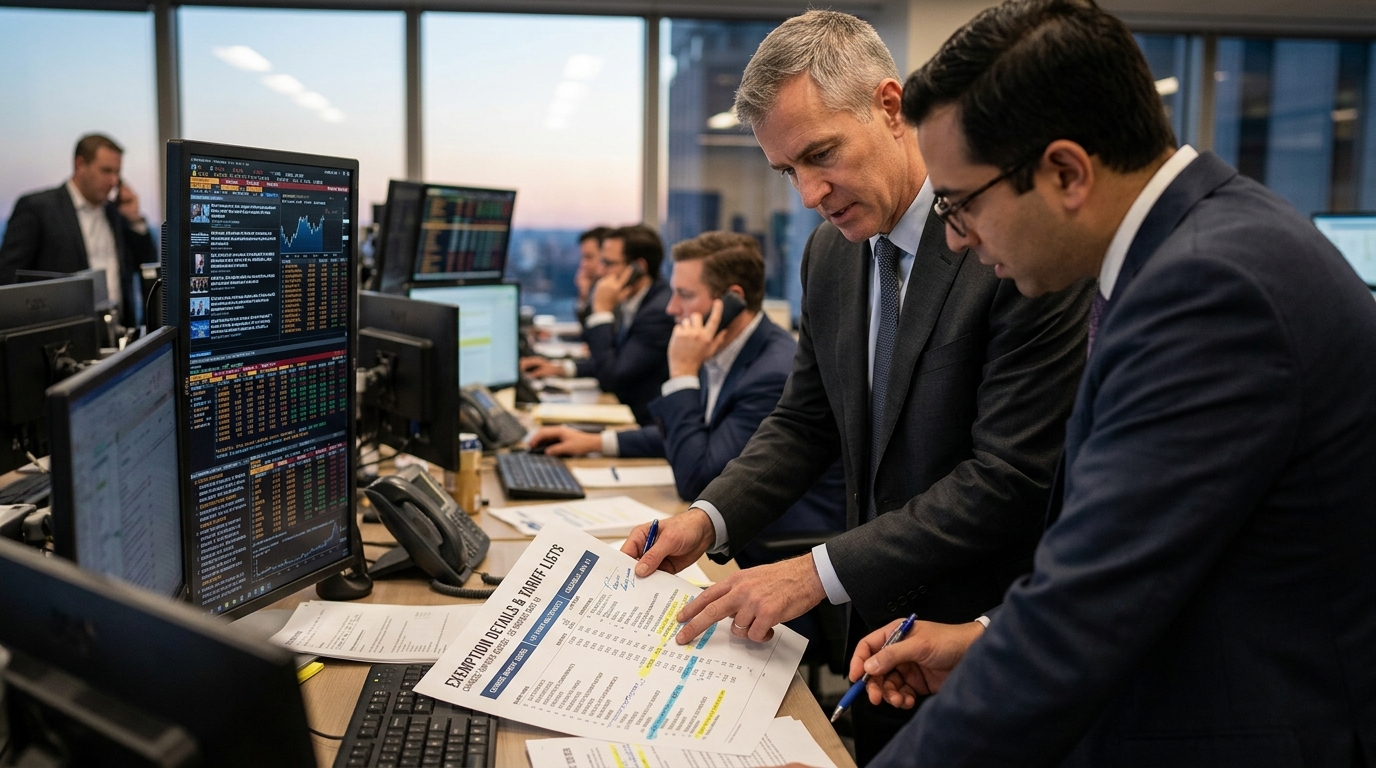
Three days of handshakes, a state dinner, and a trip to the National Archives produced one confirmed output: the U.S.-China trade truce has been extended two months, pushing the expiration from Nov. 10 to Jan. 10. Treasury Secretary Scott Bessent confirmed the timeline after talks with China’s vice premier. What it did not produce was a resolution on rare earths, a new Boeing order, or any semiconductor concession. The real tradeable event is Monday morning, when USTR Jamieson Greer has said the administration will publish a detailed paper on what was actually negotiated, including purchase commitments and additional tariff exemptions across specific goods categories.
An administration source told Fox Business that the Monday document will describe what they characterized as “historic purchases” and will include additional tariff exemptions for selected goods. Public reporting indicates the framework is targeted and product-specific, but the exemption lines are not yet public, which is precisely why Monday’s open is a discrete risk event rather than a drift.
Which Sectors the Exemptions Hit First
Agriculture is the cleanest beneficiary, and it is already partially priced. China is tracking toward its 25 million-ton annual soybean commitment, and ADM raised full-year adjusted EPS guidance to $5.15–$5.60 from $4.15–$4.70. Bunge carries comparable grain and oilseed exposure through its post-Viterra footprint. Both stocks have run hard: YTD gains of roughly 48% for ADM and roughly 43% for Bunge reflect substantial diplomatic optimism already embedded. The Monday question for ag processors is whether China extends commitments to sorghum and corn volumes, or whether soybeans remain the ceiling.
Deere is the corrective data point. The company still projects U.S. and Canada large-agriculture equipment sales to fall 15%–20% in 2026, with CEO John May describing farm profitability as muted. Equipment demand lags crop income by at least one planting cycle, so even a strong soybean commitment does not move combine orders at Monday’s open.
Boeing’s position is more complicated than the headline suggests. CEO Kelly Ortberg has guided the market away from a single-announcement event, saying individual Chinese airlines will place orders at their own pace. No new large order emerged from the state visit, and the focus has now narrowed to closing the existing 200-jet commitment rather than expanding it.
The Rare Earths Ceiling
The unresolved file that caps the Monday move is rare earths. China controls a dominant share of global rare earth processing, and the current suspension of export controls runs only through Nov. 10, 2026. Nothing from the state visit changes that date.
MP Materials (MP) trades in a structurally contradictory position: it surged in early September when China blocked shipments, then fell in mid-September when summit optimism returned. With about 20% of MP’s float sold short, any Monday language that explicitly extends or tightens rare earth suspension terms generates outsized moves in both directions. The stock’s 52-week range of $37.81–$100.25 captures how uncertain the policy path remains.
Nvidia: Monday Is Not the Catalyst
Nvidia has said it does not yet know whether any imports will be allowed into China under current licensing conditions. CFO Colette Kress confirmed the company “do[es] not yet know whether any imports will be allowed into China.” The AI demand story does not require a China resolution. Monday’s trade paper is unlikely to move semiconductor export-control language, which remains tied to national security classifications outside the trade file.
The Iran Linkage: A New Variable
Ambassador David Perdue disclosed Friday that Trump told Xi directly that Chinese assistance to Iran, whether direct or indirect, is “totally unacceptable.” Perdue said Beijing provided assurances it is not aiding Tehran and that the U.S. has seen some behavioral change. This linkage between the trade file and the Iran conflict introduces a contingent risk: if evidence of Chinese arms or intelligence support surfaces, it provides political cover to suspend trade concessions at any point before Jan. 10.
Scenario Framework for Monday’s Open
Bull Case: The Monday document includes tariff exemptions on Chinese-manufactured industrial inputs and reaffirms the 25 million-ton soybean target plus extensions to corn. ADM, Bunge, and Boeing supply-chain names gap higher. MP Materials slides on any rare earth language that signals continued suspension.
Base Case: The document confirms agricultural purchase commitments and limited tariff exemptions on non-strategic goods. Markets digest the news with modest sector rotation into ag processors and away from domestic rare earth producers, with no meaningful semiconductor movement. The Jan. 10 expiration keeps uncertainty embedded.
Bear Case: The Monday paper is thinner than administration language implied, or rare earth suspension language is vague enough to read as deterioration. The Iran linkage draws scrutiny. Risk-off rotation hits industrials and ag names that have pre-run the optimism. MP and USAR bounce sharply on restored scarcity premium.
Trader Positioning Framework
The document lands before Monday’s open. The first 30 minutes of price action will reflect how specific the exemption language actually is relative to the “historic purchases” characterization. Watch ADM and Bunge volume at the open against their respective 20-day averages as a real-time read on whether institutional desks are adding or trimming into the news. For MP Materials, the $55 level served as a recent pivot; a close below it on Monday would suggest the rare earth truce extension was not extended in the document. The Jan. 10 hard deadline means any position sized around this catalyst carries a defined re-evaluation point. Preparation, not prediction, is the framework that survives the next 72 hours.