
October 4, 2026
Bonus Content: European Gas Is Up 138% and Qatar Extends Force Majeure
Quick one.
You can grab my Smart Trade Options Checklist free today – normally $29.97.
It’s a one-page filter. Seven checks. Run it before you place any options trade and you’ll catch the bad ones before they cost you.
Print it. Keep it next to your screen. Use it on every trade.
Download your free copy right here.
Heads up: That link expires soon.
Good Trading,
Bill Poulos
P.S. The download link expires soon. Once it’s gone, the checklist goes back to $29.97. Grab it here.
European Gas Is Up 138% and Qatar Extends Force Majeure
The heating season began October 1. Qatar’s LNG is still not arriving. European industrials have stopped hedging. That combination is not a risk to monitor from the sidelines, it is an active market condition demanding a framework right now.
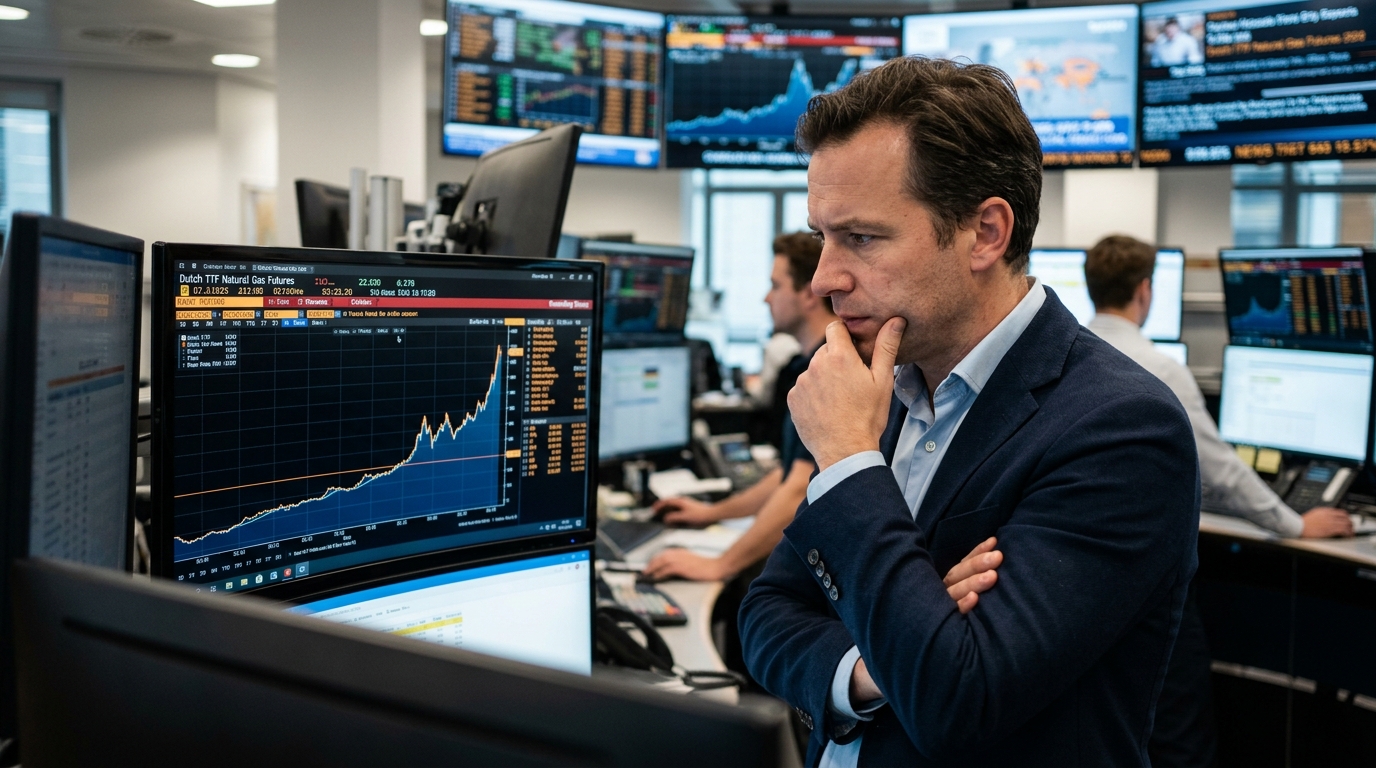
- Dutch TTF closed October 2 at €74.76/MWh, up 137.8% year on year and 4.1% month on month
- QatarEnergy notified Pakistan, Bangladesh, and at least one Indian buyer on September 28 that cargo cancellations run through November; Italy’s Edison says deliveries stay suspended into early December
- Edison says the force majeure has now halted 29 cargoes, representing about 3.8 bcm of gas, from early April through early November
- As of September 28, EU storage was about 71.3% full, roughly 15 points under the five-year average for the date and the lowest for that point in the year since the current transparency series began in 2011
- Goldman Sachs expects TTF averages about €70/MWh in Q4 2026, with a roughly €105/MWh peak-winter scenario if Hormuz normalization proves slower
- Goldman’s working assumption is that Persian Gulf LNG exports remain well below normal, and hedging among European industrial users has effectively paused
- Shell has said full repairs to the damaged facilities could take until Q1 2027
Market Context
QatarEnergy’s original force majeure, triggered by missile attacks in March that damaged facilities at Ras Laffan, cut Qatar’s total LNG export capacity by about 17%. That was seven months ago. The market assumed a recovery arc. Instead, QatarEnergy has extended force majeure on LNG shipments to Asia and Europe through November and into early December, with Pakistan, Bangladesh, India, and Italy’s Edison among the buyers affected.
Persian Gulf LNG exports are still running far below normal following the February 2026 war shock. The physical market has adjusted slowly; the financial market is now doing the heavy work. TTF’s 52-week range spans from €26.55 to €83.78/MWh, with a one-year change of 137.8%.
The Storage Problem Is Structural
As of September 28, EU gas storage was about 71.3% full, below the five-year average for the date. Germany was also well below the EU average in mid-September. The lower the November starting point, the more winter demand has to be met by imports in real time. That is not a buffer, it is a forcing function on price.
Assuming winter temperatures remain around the 10-year average, Goldman Sachs expects EU inventories to be only about 19% full by the end of March 2027. A single-standard-deviation cold event would materially worsen that outcome.
Sector and Stock Implications
The unhedged industrial base is the clearest pressure point. Goldman’s Samantha Dart, co-head of Global Commodities Research, noted that hedging among European industrial clients has somewhat paused. For gas-intensive manufacturers, that is a raw cost exposure arriving at the worst moment. On August 12, BASF permanently closed its last two ammonia units at Ludwigshafen, with ammonia production at the site now dropped to zero, a direct consequence of European natural gas running far above U.S. levels earlier this year.
On the supply side, Cheniere Energy serves as the primary export gateway for North American LNG heading to European terminals, purchasing domestic feedgas at Henry Hub pricing and processing it into export cargoes, capturing significant margins on uncontracted volumes when European gas trades at elevated premiums. Shell, a partner in Qatari LNG ventures, has estimated that full repairs to the damaged facilities could take until Q1 2027. Uniper, Germany’s largest gas storage operator, sits directly in the path of any winter shortage. Engie carries integrated exposure across French retail and wholesale LNG portfolios.
Technical Framework
Key resistance levels for the TTF October contract stand at €74.52, €76.82, and €79.23/MWh, with support at €69.80, €67.39, and €65.09/MWh. Price has been compressing below the September high of €75.33. Volume-weighted momentum since July has been structurally bullish: the contract is up 24.7% in one month and 55.5% in three months. A clean break above €76.82 opens a run toward the 52-week high near €83.78 and keeps a Goldman-style €100-plus stress scenario in play for front-month pricing if flows fail to normalize.
Scenario Modeling
Bull Case
Qatar extends force majeure again in November. A colder-than-average November across Northwest Europe pulls storage materially lower into December. TTF breaks above €83.78 and trades toward €100/MWh. Cheniere and Shell benefit from widening transatlantic arbitrage. Engie’s LNG trading book captures outsized margin.
Base Case
Goldman Sachs expects prices to average about €70/MWh in the fourth quarter of 2026, while warning that a faster recovery in LNG flows could trigger a sharp decline. Storage ends winter near 19–22% full. Spot premiums remain, but industrial demand destruction caps the ceiling. TTF trades the €65–80 band with elevated volatility on each Hormuz headline.
Bear Case
LNG flows through the Strait of Hormuz remain only a fraction of normal, but a faster ramp-up in flows could bring prices down rapidly, resulting in peak winter prices of about €50/MWh. Any credible ceasefire or U.S. Navy escort announcement would trigger a rapid reversal from current levels.
Active Trader Strategy Framework
The asymmetry here runs upward. European industrials are unhedged into a winter where storage is starting from unusually low levels for this point in the year and the primary swing supplier is still operating at reduced capacity. Traders monitoring TTF exposure through Shell, Engie, or Cheniere should be watching the €69.80 support level as a key risk anchor, a breach there would signal demand destruction is arriving faster than the base case assumes.
Volatility is elevated and likely to remain so. The risk to prices can go both ways: Goldman estimates weather alone could raise the average winter price forecast 75% with a one-standard-deviation cold winter, and drop it 30% with a one-standard-deviation warm winter. Position sizing should reflect that range. Options structures that benefit from continued upside while capping downside exposure are the tools Goldman’s own clients are reportedly using.
Preparation, not prediction. The data says storage is thin, supply is impaired, and industrial users are exposed. How cold November runs will do more than any single trade to determine whether the bull case or base case resolves. Know the levels, manage the risk, and let the market confirm the direction before extending size.