October 5, 2026
Bonus Content: Samsung May Post Korean Corporate History’s Biggest Profit

Patriots’ Most Trusted Gold Company
Since 2000, Gold Is Up 1,395%. The S&P Is Up 425%.
For U.S. savers age 55+ with $50,000 or more in an IRA, 401(k) or savings. Free of charge, no obligation to buy anything.
Same twenty-six years. Same two dot-com and 2008 collapses. Two very different lines on the chart.1,2 Most Americans have never seen them put side by side – and almost nobody was told they are allowed to hold the better-performing one inside a retirement account.
Two lines on the same chart
In December 1999 gold traded near $290 an ounce and the S&P 500 closed the year at 1,469. Since then gold has multiplied roughly fifteen times over. The S&P has multiplied about five.1,2
Be fair about the comparison: that S&P figure is the price index and does not include reinvested dividends, which would lift it meaningfully.2 Even allowing for that, the gap over a quarter century is not a rounding error.
The reason has less to do with gold than with the dollar. Over those same twenty-six years the money supply expanded, two crises were met with emergency printing, and the national debt crossed $40 trillion. Gold did not get more valuable so much as dollars got less so – and gold is the one asset that cannot be issued by anybody.
Right now gold sits below its January 2026 peak while the world’s central banks keep adding more than a thousand tons a year, and published bank targets still run from roughly $4,900 to $6,300.3,4 Those are opinions, not promises. But a quiet stretch is a better time to read up than a panic. Get the free 2026 Gold IRA Guide.
The free 2026 Gold IRA Guide walks through exactly how a rollover from an IRA, 401(k) or TSP works, which metals the IRS allows, how insured depository storage works, and the mistakes that cost retirees the most. It is free and it takes about thirty seconds to request.
Claim Your Free 2026 Gold IRA Guide →


Rock legend Ted Nugent and former White House Press Secretary Sean Spicer are official endorsers and clients of Bishop Gold Group. 10 years in business ⢠5-star rated on Trustpilot and Google ⢠Mint Authorized Dealer
Prefer to speak to someone? U.S.–based specialists, no pressure, no jargon.
Mon-Fri ⢠7am-5pm PT
Sources
1 LBMA gold price, 31 December 1999 ($290.25/oz) to September 2026. Past performance is not a guarantee of future results.
2 S&P 500 price index, 1,469.25 close on 31 December 1999 to 7,707 in September 2026 – a price-only comparison that excludes reinvested dividends, which would raise the S&P figure materially.
3 Published year-end gold price forecasts as reported 2026: Goldman Sachs, J.P. Morgan, UBS and Bank of America, spanning roughly $4,900–$6,300/oz. Analyst forecasts are opinions, not guarantees.
4 World Gold Council, Gold Demand Trends, annual central bank net purchases 2022-2024.
Past performance is not a guarantee of future results. Precious metals are volatile and can decline in value. This comparison is historical and is not a prediction or a recommendation to buy or sell any asset.
Samsung May Post Korean Corporate History’s Biggest Profit
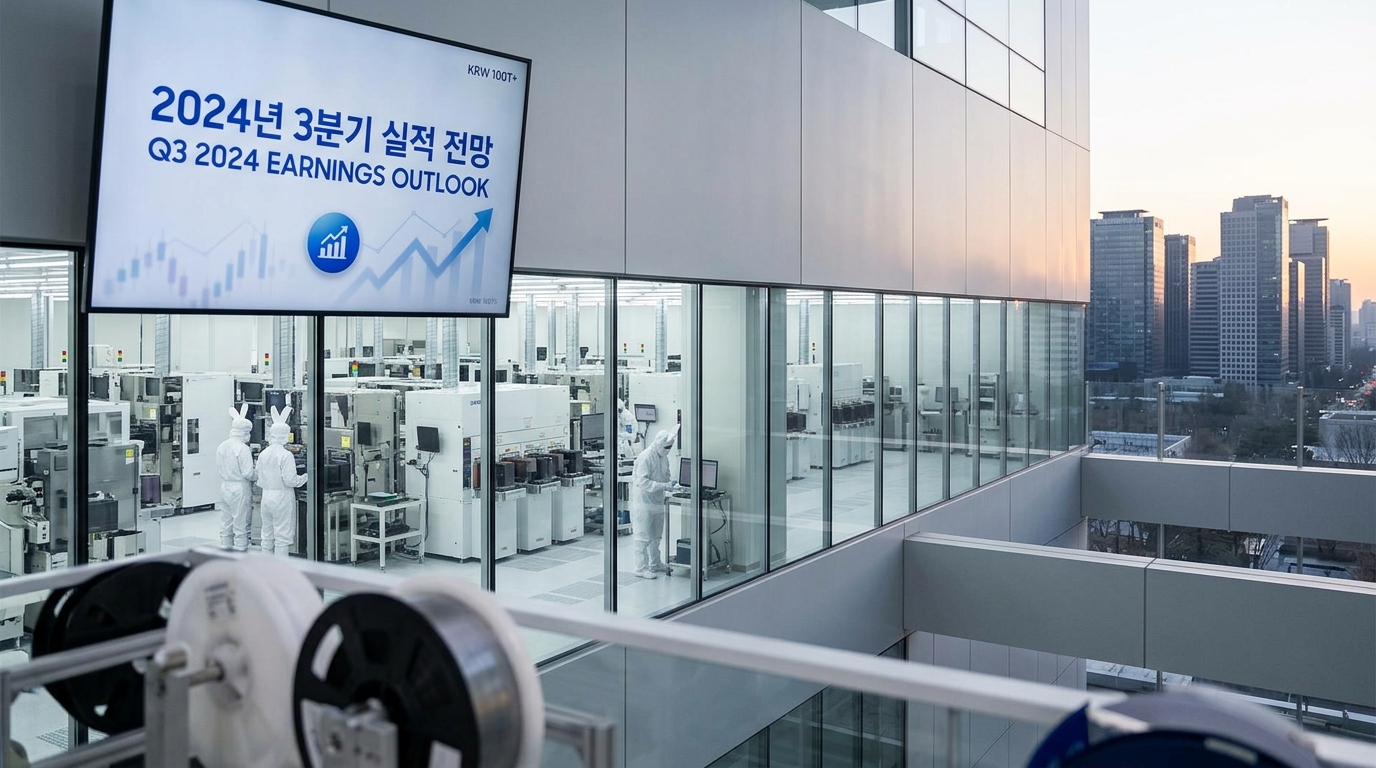
The preliminary guidance drops Wednesday, October 8. Samsung Electronics has not confirmed the date, but Seoul Economic Daily reported it on October 4, and the pattern holds: Q2 guidance landed July 7, and Korean press expects Q3 to follow within days of that precedent. Korean markets were closed Monday for the holiday, compressing reaction time for positioning.
The number matters far beyond Seoul. Samsung reports before anyone else in the AI memory chain. Whatever operating profit it posts Wednesday becomes the first hard data point of Q3 earnings season for global memory, arriving ahead of SK Hynix’s October 27 report and Micron’s December quarter. Wednesday is the opening statement.
What the Brokers Are Saying
Broker estimates cluster around KRW 104 trillion to KRW 111 trillion of operating profit, which would be a first above KRW 100 trillion for the company. The FnGuide one-month consensus, as reported by Korea JoongAng Daily on October 2, stood at KRW 106.94 trillion of Q3 operating profit and KRW 200.77 trillion of revenue.
That consensus, however, has a dispersion problem. The won’s faster-than-expected rise has led 13 of the 17 analysts tracked by FnGuide to put their estimates below KRW 110 trillion. The other four who forecast higher figures published their projections in July. The lower estimates factored in the effect of the strengthening local currency on chip orders, which are mostly placed from overseas and are largely sold in dollars, with earnings reported in won.
Citi recently put Samsung’s third-quarter operating profit at KRW 104.1 trillion, down from an earlier forecast of KRW 115.5 trillion, while Kiwoom Securities expects about KRW 107 trillion after cutting its estimate from KRW 122 trillion. IBK Investment and Securities sits at the conservative end of the range: IBK maintained its Buy rating and KRW 460,000 target on October 3, projecting Q3 revenue of KRW 195.2 trillion and operating profit of KRW 101.7 trillion, representing increases of 13.8% and 13.6% from Q2.
For context: Q2 consolidated revenue was KRW 171.5 trillion, another all-time quarterly high at the time, with operating profit reaching KRW 89.5 trillion. A result at even the low end of consensus would represent roughly 16% sequential growth in operating profit.
The Memory Complex: Micron Already Spoke
Micron reported September 30 and delivered a strong beat. Micron’s fiscal Q4 revenue was $54.23 billion, up from $11.32 billion a year earlier, with adjusted EPS of $33.42.
In Q2, SK Hynix held 50% of HBM revenue, Samsung 33%, and Micron 18%, according to Counterpoint data reported in Korean media in early September. Samsung’s HBM4 ramp through Q3 is the key variable for whether that share shifts. On its Q2 earnings call in late July, Samsung said HBM4 sales should increase by more than threefold quarter over quarter in Q3, with HBM4 making up well over 60% of total HBM revenue in the second half.
Technical Framework: 005930.KS
Samsung closed at KRW 276,000 on October 1, 2026, trading in Seoul under the ticker 005930, up 2.79% that day after record Korean chip exports and strong results from Micron. The record intraday high is KRW 374,500, set June 19. The stock sits roughly 26% below that peak.
Key levels to monitor: the KRW 310,500 to KRW 321,500 zone is the next major resistance area, with the question being not simply whether price can break through but whether it can convert that zone into support after a breakout. Near-term support is referenced at the KRW 268,500 to KRW 287,000 band, which contains the current short-term decision zone. A close below KRW 268,500 on a disappointment would open a retest of KRW 251,000 to KRW 261,500.
Scenario Modeling
Bull Case
Operating profit comes in at or above KRW 110 trillion, revenue clears KRW 200 trillion. HBM4 commentary confirms accelerating customer adoption. KOSPI, which closed at 6,971.35 on October 1, presses toward the 7,000 level, as some strategists have tied Samsung’s preliminary release to a test of KOSPI 7,000. 005930 targets KRW 310,000 to KRW 320,000. IBK’s KRW 460,000 12-month target re-enters active discussion.
Base Case
Operating profit lands KRW 104 trillion to KRW 108 trillion, in line with the FnGuide median. The milestone is cleared but won headwinds and bonus provisions hold the upside. The stronger won and performance-bonus provisions could limit the quarterly margin to around 52.1%, down 0.1 percentage point from Q2. 005930 holds KRW 276,000 to KRW 295,000 and drifts toward SK Hynix’s October 27 report as the next catalyst.
Bear Case
Operating profit comes in below KRW 100 trillion, missing the historic threshold and the full broker range. Won appreciation and bonus costs were sharper than modeled. Micron has said it expects memory and storage supply-demand conditions to be much tighter in fiscal 2027 and 2028 than they were in 2026, but near-term margin compression would dominate the session. 005930 breaks below KRW 268,500, testing KRW 251,000.
Active Trader Strategy Framework
Wednesday’s two-line release, revenue and operating profit only, lands before Seoul opens. The reaction in SSNLF and MU during U.S. hours Tuesday evening and the KRX open Wednesday morning will be the first signal. Position sizing ahead of a binary event of this magnitude deserves tight pre-defined risk parameters, particularly given the stock’s history: shares fell 13.39% on July 28 after fears over Chinese memory capacity, and fell 6.92% on Q2 guidance day despite that guidance beating prior estimates.
Watch the KRW/USD exchange rate as an overlay. Because Micron’s fiscal calendar differs from Korean chipmakers and it reports about a month earlier, it is widely viewed as a bellwether for memory-chip earnings. That bellwether already cleared its bar. Samsung’s Wednesday number determines whether the AI memory cycle is resetting the whole complex upward or whether currency and cost headwinds are carving into margin faster than demand can compensate.
Preparation, not prediction. Know your levels, know your scenario, and let Wednesday’s number do the talking.